

Maddy summaryHB 2635 sets specific classroom size limits for West Virginia public schools in kindergarten through sixth grade, requiring counties to maintain ratios of no more than 20 students per teacher in kindergarten (with one aide for classes over 10 students) and 25 students per teacher in grades 1-6 (with aides for grades 1-3 starting 2023-2026). It mandates that if classrooms exceed these limits, they must be split into two equally sized classes by the 2025-2026 school year to preserve aide coverage and individualized teacher time. County boards must implement these changes or use full/part-time interventionists as alternatives, and teachers in oversized classrooms face additional pay based on the excess student count. The bill directly affects K-6 public schools, teachers, and aides across West Virginia, with compliance deadlines phased through 2026.
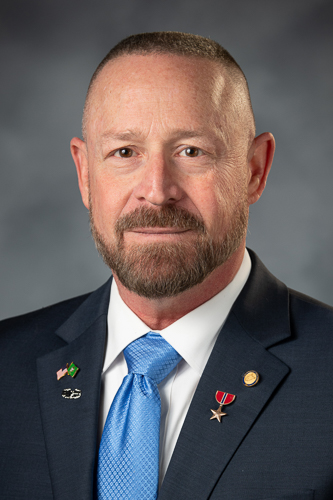
Del. Doug Smith
Sponsored bills
Maddy summaryHJR 40 proposes a constitutional amendment to change how members of the West Virginia State Board of Education are selected. It would replace the current system of nine appointed members with a hybrid model: five members elected on a partisan basis from five geographic regions (serving staggered four-year terms), and four members appointed by the Governor with Senate consent. The amendment would require the Board to submit any rules or policies they create to the Legislature for review, approval, amendment, or rejection. If approved by voters in the 2026 general election, these changes would take effect with the 2028 general election, modifying the current appointment system for the Board.
Maddy summaryHB 2664 changes how county school board members are elected in West Virginia. It requires each school board to have five members: two elected by all voters in the county ("at large"), and three elected based on the voter's magisterial district (local voting area). The bill specifies that the three district members cannot all come from the same magisterial district, though it doesn't require every district to have representation. This directly affects county school boards and voters across West Virginia, altering the election process to include more localized representation.
Maddy summaryHB 3221, the Burial Equity Act, expands burial benefits in West Virginia state cemeteries to include eligible former National Guard and military reserve members (such as Individual Mobilization Augmentees and Active Guard Reserve), their spouses, and dependent children. It sets specific eligibility criteria: four years of service, two years of West Virginia residency before death (or service in West Virginia units), and a non-dishonorable discharge, with retroactive application for deaths after March 15, 2022. The bill creates a Burial Equity Grant Program administered by the Veterans Affairs department, offering up to $1,000 per family to cover burial costs on a first-come, first-served basis. It also establishes a dedicated Burial Equity Fund, initially funded with $50,000 from the legislature, to support these grants using state appropriations, federal funds, and private donations.
Maddy summaryHB 2117 changes the deadline for submitting mail-in ballot applications in West Virginia. It requires most voters' applications to be received by the sixth day before an election, while qualified first responders must submit theirs by 5:00 p.m. the day before the election. The bill maintains the same deadline (six days before) for overseas and uniformed services voters. This affects all voters requesting mail-in ballots, adjusting the timing for when applications must be accepted by election officials.
Maddy summaryHB 2187 would allow K-12 teachers in West Virginia who hold valid concealed handgun permits to carry concealed firearms on school grounds when designated as "school protection officers" by their school. The bill amends state law to create this exception, explicitly permitting teachers (but not all staff) to carry concealed weapons as part of their role, provided they meet standard concealed carry requirements. This changes existing rules that generally prohibit firearms on school premises, except for specific exemptions like law enforcement. The bill is currently under review by the House Judiciary Committee after initial referral to Education.
Maddy summaryHB 2437 clarifies enhanced penalties for crimes involving fentanyl, specifically targeting individuals convicted of possessing, delivering, or manufacturing fentanyl as a Schedule II substance. It increases penalties for these offenses: a $50,000 fine or 3-15 years in prison (instead of the standard $25,000 fine or 1-15 years), directly affecting those convicted of fentanyl-related crimes. The bill amends West Virginia law to explicitly state these higher penalties when fentanyl - alone or mixed with other substances - is the Schedule II controlled substance involved. It does not change penalties for other drugs or create new offenses, only clarifying existing sentencing for fentanyl cases. The bill passed the House on March 5, 2025, and is now pending in the Senate.
Maddy summaryHB 2065 would allow Gold Star parents (mothers or fathers of veterans killed in combat) to receive one free Gold Star Family license plate for personal use, exempting them from standard vehicle registration fees. The bill defines a "Gold Star parent" as a parent of a veteran eligible for a gold star lapel pin under federal law (10 U.S.C. § 1126). This extends the existing fee exemption for Gold Star spouses (widows/widowers) to include parents, applying to a single vehicle registered in the parent's name.
Maddy summaryHB 2968 ends West Virginia's Public Employees Insurance Association (PEIA) as a state-run healthcare plan and allows it to operate as a private insurance company. Instead of employer payments going to PEIA, the bill requires employers to pay $1,100 monthly directly into employees' Health Savings Accounts (HSAs) for healthcare premiums or related costs. Employees can choose to use these HSA funds for any healthcare provider or continue using PEIA as a private insurer. The change takes effect on July 1, 2025.
Maddy summaryHB 2965 redirects employer payments currently made to West Virginia's Public Employees Insurance Association (PEIA) into a Health Savings Account (HSA) for state employees. Starting July 1, 2025, eligible employees would receive $1,100 monthly into their HSA, which they can use to pay for healthcare insurance premiums and related expenses. Employees would choose their own healthcare plans using these funds instead of being enrolled in PEIA. The bill changes how employer contributions are delivered but does not alter existing insurance coverage options.