

Maddy summaryHR 14 is a House Resolution requesting Wayne County Commission to allocate up to $10,000 for a feasibility study on a connector road between Beech Fork State Park campground and marina. The resolution urges collaboration with the KYOVA Interstate Planning Commission, which has pledged $90,000 (90% of study costs) if the county provides the 10% match. It does not fund the road construction but seeks to evaluate the project's viability to potentially boost tourism, improve emergency response times, and support local economic development in Wayne County.
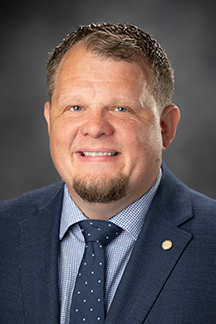
Rep. Ryan Browning
Sponsored bills
Maddy summaryThis resolution requests that the West Virginia Division of Highways name a specific segment of Route 20 in Webster County (from the Upshur/Webster County line to Mount Zion Road) as the "U.S. Army Sergeant Major Charles Grant Hoke Memorial Road." It commemorates Sergeant Major Charles Grant Hoke, a WWII and Korean War veteran with multiple military awards, who was born in Upshur County and raised in Cleveland, Webster County. The resolution asks the Division of Highways to install signs identifying this road segment and directs the House Clerk to forward the resolution to the agency. This is a commemorative measure with no funding or policy changes, directly affecting the named road segment in Webster County.
Maddy summaryThis bill's actual text (HB 3446) does not address FAFSA submission. Instead, it amends West Virginia Code §18-5G-3 to revise public charter school requirements, including governance, curriculum, and student eligibility criteria. The bill focuses on charter school operations - such as requiring them to follow state education standards, not charging tuition, and providing services for students with disabilities - rather than student financial aid applications. The title mentioning FAFSA appears inconsistent with the bill's actual legislative content. No provisions related to FAFSA submission prior to graduation are included in the bill text provided.
Maddy summaryThis bill amends West Virginia law to explicitly include federal correctional facilities within the definition of "correctional facilities" for existing laws against smuggling contraband. It makes it illegal to deliver weapons, drugs, alcohol, escape tools, dangerous materials, or telecommunications devices into federal prisons in West Virginia without authorization, with penalties ranging from misdemeanors (up to $500 fines and 1 year in jail) to felonies (up to 10 years in prison). The law directly affects individuals who attempt to smuggle such items into federal correctional institutions within the state, including visitors, staff, or outsiders. It expands existing state penalties - previously limited to state facilities - to cover federal prisons, without creating new exemptions or altering inmate rights.
Maddy summaryHB 2787 permits West Virginia county commissions to lease, rent, or allow the use of county-owned wireless towers (or portions) to private entities, subject to specific security and eligibility requirements. It prohibits leasing to entities associated with foreign adversaries, terrorist organizations, or those engaging in unconstitutional surveillance, and mandates non-compromised cybersecurity measures to protect critical infrastructure like voting systems. Public safety agencies (including 911, law enforcement, and emergency services), the West Virginia Department of Highways, and other state agencies may use tower space without charge, provided they meet the same security standards as other lessees. The bill also restricts the use of foreign-owned or foreign-produced technology that could threaten critical infrastructure, ensuring local control over tower usage while prioritizing security.
Maddy summaryHB 3013 requires movie theater chains operating six or more theaters across multiple locations in West Virginia to provide open captioning for at least two weekly showings of films that include open captioning in their production. It also mandates that theaters offer audio description upon request for films that feature audio description. The law excludes drive-in theaters and prohibits requiring new equipment purchases if it would create an undue financial burden on theaters. This bill directly affects larger theater chains and aims to improve accessibility for deaf, hard-of-hearing, blind, and low-vision patrons.
Maddy summaryHCR 78 is a non-binding resolution urging West Virginia's Division of Highways to prioritize completing I-73 (the "King Coal Highway") across Wayne, Mingo, McDowell, Mercer, and Wyoming counties. It requests the highway agency treat the project as a high priority to improve economic development and emergency access, especially after recent flooding exposed transportation challenges in the region. The resolution asks the state to provide necessary funding and executive support to expedite the highway's completion but does not allocate new funds or create new law. It directly affects the Division of Highways and residents of the five specified counties by formally advocating for this infrastructure project.
Maddy summaryHB 2958 clarifies trespassing rules for West Virginia college campuses by defining "residence halls" (student housing) and "student facilities" (campus venues serving alcohol to students). It states that entering these areas without authorization is trespassing - even if no disruption occurs - and allows campus staff to immediately ask unauthorized individuals to leave. Repeat offenses carry escalating fines: $100 for first, $250-$500 for second, and up to $1,000 or 30 days in jail for third offenses. This directly affects students, visitors, campus security, and enforcement personnel at public colleges and universities.
Maddy summaryHouse Resolution 12 urges West Virginia's members of Congress to oppose a potential federal funding cut for the Local Food for Schools and Child Care (LFSCC) program. The LFSCC program provided $660 million over three years to help schools and child care sites purchase locally grown food, directly supporting farmers, ranchers, and local food businesses. This resolution expresses concern that terminating the program would harm rural economies and child nutrition efforts, as the funding was specifically used for fresh, minimally processed foods in school meals. The resolution does not create new policy but requests action from West Virginia's congressional delegation to preserve existing funding.
Maddy summaryHCR 40 is a resolution directing West Virginia's Economic Development Authority to identify land near Flatwoods for a tourism and entertainment complex modeled after attractions like Pigeon Forge, Tennessee. It requires the Authority to locate suitable sites, secure funding, and recruit private and public developers to build facilities for tourism, entertainment, and amusement. The bill specifically targets the Flatwoods area near Interstate 79 exit 67, citing its central location and access to major regional cities. This resolution aims to replicate economic benefits seen in neighboring states through new tourism infrastructure, directly affecting Flatwoods and surrounding communities.