

Maddy summaryHB 4626 establishes a West Virginia grant program to fund U.S. Food and Drug Administration (FDA) drug development trials using ibogaine, a substance being studied for treating opioid use disorder and other neurological/mental health conditions. The program requires applicants (e.g., pharmaceutical companies or research organizations) to demonstrate capacity to conduct FDA trials, secure approval for ibogaine as a medication, and commit to establishing a state presence, securing insurance coverage, and ensuring treatment access for uninsured patients. Applicants must submit detailed trial designs, safety protocols, and plans for intellectual property rights and post-approval implementation, with grants administered through a state selection committee. The bill does not approve ibogaine but aims to accelerate its development pathway through state-funded trials.
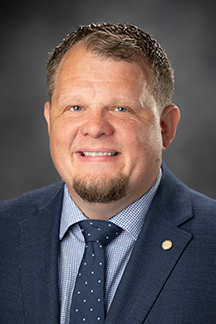
Rep. Ryan Browning
Sponsored bills
Maddy summaryHB 5510 removes a requirement that private wedding venues in West Virginia must own or lease at least two acres of land in a rural area to operate. This change directly affects private wedding venues, particularly those in rural locations that previously faced this land-use barrier. The bill amends West Virginia Code §60-7-2 (relating to private club licenses) to eliminate the two-acre minimum, simplifying licensing for these venues. The policy change takes effect July 1, 2026, after passing through legislative committees.
Maddy summaryThe West Virginia Aerospace and Advanced Manufacturing Growth Act creates a new program within the West Virginia Department of Commerce to support aerospace and advanced manufacturing businesses. The program will identify qualifying projects (including manufacturing, maintenance, and research of aircraft components), assign a dedicated liaison to assist with development and access to existing state tax incentives, and maintain confidential records of these projects. It also establishes a workforce training program to develop skilled workers for the aerospace industry. This bill directly affects aerospace companies and projects operating in West Virginia, such as those involved in aircraft assembly, engine production, and component manufacturing.
Maddy summaryHB 5319 amends West Virginia law to prohibit camping or storing personal property (like tents, sleeping gear, or camp equipment) on specific public property without authorization. It directly affects individuals using state capitol grounds, courthouses, municipal offices, parks, streets, or trails without written permission from the relevant government body. Key provisions define "camp" and "personal property," ban unauthorized use in designated areas, and classify violations as misdemeanors punishable by fines ($25-$100), up to 30 days in jail, or both. Each day of violation counts as a separate offense, and unauthorized structures are deemed public nuisances subject to removal.
Maddy summaryHB 5091 amends West Virginia's Real Estate License Act to clarify and strengthen duties for real estate licensees (brokers, associate brokers, and salespersons). It requires licensees to provide written disclosures about agency relationships, brokerage services, and compensation before any contract, and to give each signing party a copy of the contract at the time of signing. The bill prohibits requiring buyer's agency agreements before a purchase offer is signed, mandates contracts include definite expiration dates, and bans fees for representation after a contract expires if a consumer switches brokers. These changes directly affect real estate licensees and consumers in West Virginia property transactions by increasing transparency and preventing unfair contract terms.
Maddy summaryHB 5525 creates the "Southern West Virginia Clean Water Fund" to improve drinking water in 13 specific counties (Boone, Fayette, Greenbrier, Lincoln, Logan, McDowell, Mercer, Mingo, Monroe, Raleigh, Summers, Wayne, and Wyoming). The bill requires water utilities to conduct quarterly contaminant testing, replace lead service lines by 2035 (with financial help for low-income households), and implement advanced filtration systems where water quality fails state standards. It appropriates $10 million in state funds for infrastructure upgrades, mandates public reporting of test results within 30 days, and imposes fines (reinvested into the fund) for violations of safe drinking water limits. The law also requires annual infrastructure assessments and updates to contaminant standards every three years based on scientific research.
Maddy summaryHB 4772 requires West Virginia's Medicaid agency to verify enrollee status monthly by matching Medicaid records against state death records (from the Office of Vital Statistics) and the federal Social Security Death Master File. If a person has died, their Medicaid coverage must be terminated immediately, effective the date of death, stopping all future payments. The bill mandates data-sharing agreements with federal agencies, annual audits by the state Inspector General, and yearly reports to the legislature on the number of deceased enrollees removed and estimated cost savings. This directly affects deceased Medicaid recipients (whose records are automatically removed) and aims to prevent unnecessary payments, saving state funds.
Maddy summaryThis House resolution formally recognizes President Donald J. Trump for various policies and actions that the West Virginia House of Delegates claims have benefited the state. The document highlights specific initiatives including regulatory reforms in the energy sector, tax relief measures, funding for rural healthcare, and programs aimed at reducing prescription drug costs and establishing investment accounts for newborns. It also cites border security improvements and drug control efforts as contributing factors to public safety and economic well-being. The resolution expresses appreciation for these actions and requests that the formal recognition be sent to the President.
Maddy summaryThis House Resolution honors the life and legacy of the late West Virginia legislator Larry D. Kump, who passed away on February 28, 2026. The resolution formally expresses the House of Delegates' condolences to Kump's family and acknowledges his service as a representative for Berkeley County across three different terms. It recognizes his career in criminal justice and mediation, his commitment to limited government, and his role as a devoted family member and church leader. The document is a ceremonial tribute rather than a law that changes policy or affects public programs.
Maddy summaryThis House Resolution urges the Capitol Building Commission and Department of Administration to assess and address hazardous trees along California Avenue and Kanawha Boulevard on the State Capitol Complex grounds. The resolution requests an immediate evaluation of trees that have caused property damage through falling limbs and broken trunks over the past two years. It specifically asks officials to trim trees back to the grass side of sidewalks or remove and replace hazardous trees to protect public safety and state property. This non-binding resolution directs state agencies to take preventative maintenance actions without mandating specific enforcement measures.