

Maddy summaryThis House resolution formally recognizes President Donald J. Trump for various policies and actions that the West Virginia House of Delegates claims have benefited the state. The document highlights specific initiatives including regulatory reforms in the energy sector, tax relief measures, funding for rural healthcare, and programs aimed at reducing prescription drug costs and establishing investment accounts for newborns. It also cites border security improvements and drug control efforts as contributing factors to public safety and economic well-being. The resolution expresses appreciation for these actions and requests that the formal recognition be sent to the President.
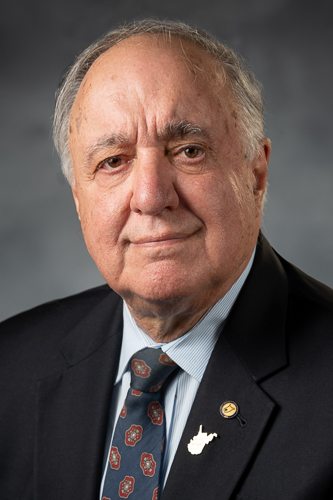
Del. Mark Zatezalo
Sponsored bills
Maddy summaryThis House Resolution honors the life and legacy of the late West Virginia legislator Larry D. Kump, who passed away on February 28, 2026. The resolution formally expresses the House of Delegates' condolences to Kump's family and acknowledges his service as a representative for Berkeley County across three different terms. It recognizes his career in criminal justice and mediation, his commitment to limited government, and his role as a devoted family member and church leader. The document is a ceremonial tribute rather than a law that changes policy or affects public programs.
Maddy summaryHouse Resolution 13 is a West Virginia legislative resolution endorsing federal legislation (H.R. 5966), which would create the Ohio River Basin Restoration Program. If enacted, the program would fund projects to improve water quality, restore fish habitats, enhance flood resiliency, and expand recreational access across the Ohio River basin. It directly affects West Virginia residents who rely on the river for drinking water (700,000 people), economic activity, and recreation along its 277-mile border. The resolution clarifies the program would be non-regulatory, not creating new permits or legal claims, and aims to deliver clean water and economic benefits to communities in the Ohio River watershed.
Maddy summaryThis House Resolution urges the Capitol Building Commission and Department of Administration to assess and address hazardous trees along California Avenue and Kanawha Boulevard on the State Capitol Complex grounds. The resolution requests an immediate evaluation of trees that have caused property damage through falling limbs and broken trunks over the past two years. It specifically asks officials to trim trees back to the grass side of sidewalks or remove and replace hazardous trees to protect public safety and state property. This non-binding resolution directs state agencies to take preventative maintenance actions without mandating specific enforcement measures.
Maddy summaryThis is a non-binding House Resolution (HR 15), not a bill with legislative effect. It expresses the West Virginia House of Delegates' support for extending Interstate 68 from Morgantown, West Virginia, to Kent, West Virginia, then crossing into Ohio toward I-77 and I-75. The resolution urges federal, state, and local government bodies to secure funding for this corridor, which is framed as a project to boost economic growth and job creation in the Shale Crescent energy manufacturing region. It does not create new laws, funding, or requirements.
Maddy summaryHCR 22 is a concurrent resolution requesting the Joint Committee on Government and Finance to study policy options that could accelerate the ordering and deployment of electric generation equipment in West Virginia. It specifically asks the committee to examine mechanisms like state-backed deposit guarantees, regulatory frameworks for cost recovery, and accelerated depreciation schedules to reduce delays in equipment procurement. The study aims to support grid reliability, economic growth, and West Virginia’s goal of reaching 50 gigawatts of generation capacity by 2050, while protecting ratepayers and taxpayers. It does not create new laws but seeks recommendations for potential legislative action based on the committee’s findings.
Maddy summaryHB 4997 prohibits individuals convicted of terroristic threats involving schools or children (under §61-6-24(b)) from residing within 1,000 feet of any educational facility, including public/private schools, preschools, or daycares where children are regularly present. This residency restriction applies automatically during probation or parole, or as a sentencing condition if no supervision is ordered. Violations are classified as felonies punishable by 1-5 years in prison, up to $10,000 in fines, or both, and may lead to revocation of probation. The bill uses GIS or property records to measure proximity and aligns with existing sex offender residency rules under §62-12-26.
Maddy summaryThis is a commemorative House resolution honoring former West Virginia House Speaker and Chief Justice Timothy P. Armstead following his passing. It memorializes his service, names a conference room in the House as the "Speaker Tim Armstead Memorial Conference Room," and extends condolences to his family. The resolution does not create new laws or affect policy - it formally recognizes his legacy and contributions to West Virginia.
Maddy summaryThis House Resolution (HR 6) expresses the West Virginia House of Delegates' support for developing natural gas pipeline infrastructure, specifically an intra-Panhandle pipeline connecting western gas fields to the Eastern Panhandle. It aims to improve access to locally produced natural gas for residents, support industrial and commercial growth, and create jobs across the state. The resolution highlights West Virginia's status as a top natural gas producer and notes that existing pipelines transport most output out of state, while Maryland's opposition to pipeline extensions is cited as a barrier. It does not create new laws or funding but urges responsible infrastructure expansion to boost economic development. As a procedural resolution, it has no direct legal effect but signals legislative backing for pipeline projects.
Maddy summaryHB 4011 creates a certification framework for verifying that recycled materials used in manufacturing actually contribute to the final product, through third-party certification of "mass balance attribution." This directly affects manufacturers who want to use recycled feedstock (like plastic waste) in new products, as it standardizes how recycled content is measured and verified. The bill amends West Virginia's solid waste laws to clarify that advanced recycling facilities (which convert waste plastics into raw materials) are not considered waste disposal sites, supporting their role in recycling. By streamlining certification, the bill aims to reduce barriers for businesses adopting recycled materials in production.