

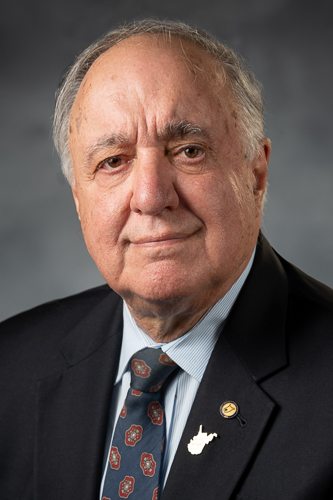
Photo of Mark Zatezalo
R West Virginia House · District 2

Rep. Mark Zatezalo

Compare
Total votes
3,047
all sessions
Attendance
98%
61 missed
Near the chamber average
With party
97%
of cast votes
Higher than 93% of chamber peers
Bipartisan score
2%
crosses aisle rarely
Lower than 91% of chamber peers
Sponsored
315
bills & resolutions
Lower than 90% of chamber peers
Committees
5
assignments
315 bills and resolutions

Sponsored bills

Total
315
Primary
14
Co-sponsor
301
This page
315
matching current filters
Co-sponsor HB 5685
Signed into law · West Virginia House · Co-sponsor
Relating to authorizing bonds for improvements to the West Virginia Science and Culture Center

Maddy summaryHB 5685 authorizes up to $150 million in bonds to fund improvements at the West Virginia Science and Culture Center and other state historical sites acquired for preserving West Virginia history. The bill creates a dedicated "Cultural Center Improvements Revenue Debt Service Fund" to be financed annually by $12 million from the State Excess Lottery Revenue Fund (starting fiscal year 2026), with bonds maturing within 20 years. The Economic Development Authority must issue these bonds to cover capital improvements, and the fund will prioritize debt service payments. This directly affects the Science and Culture Center, other historical sites, and taxpayers through lottery revenue allocations.

Signed into law Aug 13, 2026 1 co-sponsor
Co-sponsor HB 5406
Signed into law · West Virginia House · Co-sponsor
Relating to driving under the influence

Maddy summaryHB 5406 updates West Virginia's DUI laws by shifting authority for chemical testing oversight from the Bureau of Public Health to the West Virginia State Police Forensic Laboratory. It eliminates outdated references to urine testing, removes propoxyphene from drug testing requirements, and permits trained phlebotomists to collect blood samples for analysis. The bill also corrects blood alcohol concentration thresholds for juvenile drivers and clarifies that refusing only a blood test - without refusing a breath test - will not automatically trigger license revocation. These changes streamline DUI testing procedures for law enforcement and ensure current medical standards are reflected in the law.

Signed into law Jun 29, 2026 1 co-sponsor
Co-sponsor HB 4756
Signed into law · West Virginia House · Co-sponsor
To provide automatic treble damages anytime a non-English speaking commercial truck driver causes an accident in WV

Maddy summaryHB 4756 requires commercial truck drivers in West Virginia who cannot comprehend English to pay triple the standard compensation for all accident-related damages and medical expenses if they cause an accident. It directly affects non-English-speaking commercial truck drivers and their employing companies. The bill’s key provision replaces standard damages with automatic "treble damages" (triple the usual amount) for qualifying accidents, without requiring separate legal proceedings. This policy change specifically targets language barriers in commercial driving incidents, mandating higher financial accountability for drivers unable to understand English during operations.

Signed into law Jun 29, 2026 1 co-sponsor
Co-sponsor HB 4696
Signed into law · West Virginia House · Co-sponsor
Authorize the Department of Environmental Protection to deposit funds granted pursuant to federal programs

Maddy summaryHB 4696 authorizes West Virginia's Department of Environmental Protection to deposit federal grant funds - specifically from programs like the Infrastructure Investment and Jobs Act and the Safeguarding Treatment for the Restoration of Ecosystems from Abandoned Mines Act - into the state's existing Abandoned Land Reclamation Fund. This bill modifies state law to allow these federal funds to be added to the fund, which is used for cleaning up environmental damage from past coal mining, including restoring land, treating water pollution from mine drainage, and sealing abandoned mine sites. The bill does not change how the funds are spent but clarifies where they must be deposited. It directly affects communities impacted by historical mining, particularly those dealing with water quality and land degradation.

Signed into law Jun 29, 2026 1 co-sponsor
Co-sponsor HB 4996
Signed into law · West Virginia House · Co-sponsor
Relating to bail in cases involving terroristic threats to schools or children

Maddy summaryHB 4996 requires courts to impose mandatory bail conditions for defendants charged with terroristic threats against schools or child-focused facilities (like preschools or daycares). It prohibits defendants from residing within 1,000 feet of the threatened facility or any similar educational location where children are regularly present. Additional conditions may include GPS monitoring to enforce exclusion zones, no contact with students/staff, or home incarceration outside the restricted area. Violations trigger immediate arrest, bail forfeiture, or custody remand, with courts using GIS or property records to measure proximity. The bill directly affects individuals facing charges under §61-6-24(b) related to school threats.

Signed into law Jun 29, 2026 1 co-sponsor
Co-sponsor HB 5398
Failed · West Virginia House · Co-sponsor
Relating to dates and deposits for Oil and Gas Well Plugging

Maddy summaryHB 5398 modifies West Virginia's oil and gas well plugging funding mechanism to enable access to federal matching funds. It requires that if the state's well-plugging fund holds less than $6 million in unencumbered funds by September 30 each year, the state can receive federal money to plug abandoned oil and gas wells. The bill amends tax provisions related to oil and gas production but focuses on the fund's balance threshold as the key trigger for federal funding eligibility. This directly affects the state's oil and gas well plugging program and its ability to secure federal resources for abandoned well remediation.

Failed Mar 14, 2026 1 co-sponsor
Co-sponsor HB 4012
Failed · West Virginia House · Co-sponsor
Relating to reducing the regulatory burden on utility companies when constructing and maintaining electric power generation and transmission facilities within this state

Maddy summaryHB 4012 reduces regulatory requirements for utility companies building or maintaining electric power generation and transmission facilities in West Virginia. The bill waives the need for a certificate of public convenience and necessity for projects approved by the Infrastructure and Jobs Development Council, streamlining approvals for these projects. It also shortens the Public Service Commission’s decision timeline, reducing the maximum processing time for large projects (over $50 million) from 400 days to 270 days. This directly affects utility companies seeking to develop or upgrade electric infrastructure within the state.

Failed Mar 14, 2026 1 co-sponsor
Co-sponsor HCR 29
In committee · West Virginia House · Co-sponsor
Requesting Joint Committee study the feasibility of establishing a flexible, short-duration, on-demand respite care program for seniors and caregivers

Maddy summaryThis bill asks a state committee to study whether West Virginia should create a flexible respite care program for seniors and their caregivers. The proposed program would allow families to schedule short-term, on-demand assistance for specific needs like medical appointments or personal obligations, rather than being limited to fixed weekly service blocks. The study will examine costs, potential savings from delaying nursing home placement, and how to fund and manage the program, especially in rural areas with fewer resources. If the committee finds the idea feasible, it will recommend new legislation to establish the program.

In committee Mar 5, 2026 1 co-sponsor
Co-sponsor HB 5413
Passed · West Virginia House · Co-sponsor
Relating to the Central Abuse Registry

Maddy summaryHB 5413 creates a Central Abuse Registry managed by the West Virginia State Police to track individuals convicted of abuse, neglect, or misappropriation of property involving children, incapacitated adults, or adults receiving behavioral health services in specific settings like residential care facilities, day care centers, or home care. It requires registrants to provide personal details (name, DOB, SSN) and pay an annual $125 fee to the circuit clerk, with fees funding mental health services for State Police employees. The registry combines existing requirements, so those already registering as sex offenders only pay one $125 fee instead of separate fees. Failure to pay the fee does not violate supervised release, but unpaid fees may result in a recorded judgment lien.

Passed Mar 4, 2026 1 co-sponsor
Co-sponsor HB 4471
Passed · West Virginia House · Co-sponsor
Approved sewage systems for rental property

Maddy summaryHB 4471 requires all rental properties in West Virginia to have approved sewage systems instead of straight piping sewage. It specifically applies to landlords of rental properties, including those previously used as primary owner-occupied homes that are now rented. The bill mandates that these properties must update plumbing to current standards and install approved sewer systems. This policy directly affects landlords and rental property owners by setting new infrastructure requirements for sewage handling.

Passed Mar 4, 2026 1 co-sponsor
Showing 1 to 10 of 315 bills
1 2 3 32 Next