

Maddy summaryHB 5207 strengthens animal welfare protections in West Virginia by requiring owners to confine unspayed female dogs during heat cycles and establishing a clear duty of care for companion animals. The bill creates new criminal penalties for animal hoarding and unlawful confinement, increases fines for repeat cruelty offenses, and mandates humane officers to report suspected abuse of vulnerable humans (like children or elderly adults) to relevant agencies. It also updates facility requirements for stray and abandoned animals, including public access to shelters, and revises humane officers' duties and enforcement procedures. These changes directly affect pet owners, animal shelters, law enforcement, and courts handling animal welfare cases.
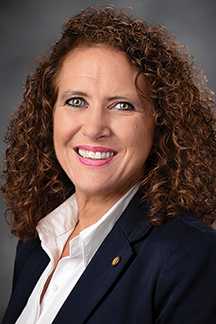
Del. Kathie Hess Crouse
Sponsored bills
Maddy summaryThis House Resolution (HR 11) encourages West Virginia's K-12 students to design a new state highway route number shield for the 2026 anniversaries of the U.S. founding (250th) and the U.S. numbered highway system (100th). It directs the West Virginia Division of Highways and Department of Tourism to hold a statewide student design competition, requiring the shield to maintain federal safety standards for legibility while incorporating West Virginia identity. The winning design would be implemented gradually on state highways starting July 2027, replacing existing signs only as they wear out, and the student designer would receive legislative recognition. The resolution is procedural and non-binding, focusing on celebration and civic engagement rather than new policy.
Maddy summaryHR 9 is a ceremonial resolution honoring the late West Virginia House Delegate Douglas John Skaff Jr. It expresses the House of Delegates' condolences to his family and commemorates his service, including his roles as a delegate representing multiple districts and as Minority Leader. The resolution has no policy impact - it is purely symbolic, acknowledging his career in public service, business, and community leadership. It was unanimously adopted by the House on February 5, 2026, the same day it was introduced.
Maddy summaryThis is a symbolic House Resolution (not a bill), introduced by multiple West Virginia delegates. It designates the month of June as "Fidelity Month" to promote the values of faith, family, and patriotism across the state. The resolution cites declining support for these values in polling and research, and calls for the state to "rededicate" itself to them during June. It has no binding policy requirements or direct impact on specific groups; it is purely a commemorative gesture.
Maddy summaryThis West Virginia House resolution states that the U.S. national debt (over $38 trillion in 2026) poses a national security threat, citing foreign debt ownership, projected Social Security/Medicare shortfalls, and warnings from military/intelligence leaders. It urges Congress to establish regular budgeting procedures but does not create new laws or alter federal spending. As a symbolic resolution, it has no direct legal effect on national debt policy or federal budgets. The resolution focuses on raising awareness rather than implementing concrete changes.
Maddy summaryHB 4152, the Workforce-Education Partnership Act, allows West Virginia business owners to contract employees to vocational programs or high school classes while the employees retain full-time status and benefits. Businesses receive a 100% tax credit on wages paid during participation, capped at $50,000 per business annually and $5 million statewide yearly. Employees must meet program qualifications and cannot replace certified teachers in core subjects, but may provide specialized training in fields like trade skills or healthcare. The law ensures fiscal responsibility through strict caps and uses existing state resources to minimize administrative costs.
Maddy summaryHB 4467 amends West Virginia law to allow pregnant employees and new mothers working in public school systems to use their existing sick leave bank for maternity leave. It specifically prohibits county school boards from banning this use of sick leave for maternity purposes. The bill clarifies that school employees may contribute up to two days of personal leave annually to the sick leave bank, but cannot be forced to contribute. This policy change directly affects all full-time public school employees in West Virginia who are pregnant or have newborn children.
Maddy summaryHB 5020 prohibits individuals on the state sex offender registry, convicted of sexual assault, or convicted of juvenile abuse from entering public school property or attending school events. It directly affects these individuals and requires schools to hold parent-teacher conferences with them via phone or virtual meeting instead of on-site. Violating this ban is a misdemeanor for a first offense (up to six months in jail) and a felony for repeat offenses (one to five years in prison). The bill also allows the State Board of Education to create implementing rules.
Maddy summaryHB 5031 requires West Virginia's Fatality and Mortality Review Team (under the Department of Health) to have access to vaccination records during death investigations. The bill amends state law to explicitly include vaccination records as a type of medical information the team may request from government agencies. State, county, and local agencies must provide these records upon written request. This change directly affects the review team's ability to gather data for forensic and public health research, while requiring health and government agencies to share vaccination history in death cases. The bill standardizes reporting practices by adding vaccination records to the types of information investigators can access.
Maddy summaryHB 5036 prohibits West Virginia courts and agencies from enforcing any legal system not created through the state legislature, Congress, or recognized common law. It makes contracts, arbitration agreements, or private adjudication unenforceable if they violate constitutional rights, deny court access, or restrict due process. The bill specifically bars recognition of family law decisions (like custody or inheritance) based on unauthorized legal systems and creates a private legal remedy for people harmed by such enforcement. It explicitly preserves private religious practices and compliant arbitration while targeting "parallel legal systems" that bypass democratic legislative processes.