

Maddy summaryHB 4140 allows West Virginia county commissions to post legal advertisements (such as public notices or court-related announcements) on their official websites instead of publishing them in local printed newspapers. This change becomes effective July 1, 2026, and applies directly to county commissions, which would no longer be required to pay for newspaper publication for these notices. The bill modifies existing law to permit this digital alternative while maintaining the requirement that counties already maintain public websites with specific information (like meeting schedules and contact details) as mandated by §7-1-3rr. It does not require counties to switch to online posting but provides them with this option.
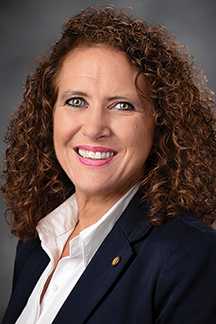
Del. Kathie Hess Crouse
Sponsored bills
Maddy summaryHB 4171 clarifies how sex is classified on original West Virginia birth certificates and establishes requirements for changing sex designation on driver's licenses, ID cards, or instruction permits. The bill directly affects residents seeking to update their gender marker on official state-issued identification documents. It amends existing laws (§16-5-10 and §17B-2-6) to define the process for revising sex designations, though the specific procedural steps are not detailed in the provided text. The legislation focuses on standardizing the administrative process for these changes, without altering birth certificate classification for new births.
Maddy summaryHB 4093 would amend West Virginia law to permit individuals aged 21 or older with a valid concealed handgun permit to carry a concealed firearm in public primary and secondary school buildings and grounds. This directly affects licensed handgun carriers who currently face restrictions on school property under existing law. The bill removes the prohibition for permit holders by adding them to the list of exempt individuals under §61-7-11a(b)(2)(L), while requiring concealed handguns in vehicles to be stored out of view and secured in locked compartments when not in the driver's seat. The change applies only to public schools; private schools retain the authority to maintain their own firearm policies.
Maddy summaryHB 4099 prohibits West Virginia from recognizing driver's licenses issued by other states to individuals who cannot prove lawful presence in the U.S. (such as licenses marked for undocumented immigrants or issued exclusively to them). It makes these licenses invalid for driving in West Virginia, requiring law enforcement to issue citations for driving without a valid license when such a license is presented. The state’s motor vehicle department must maintain an online list of out-of-state license types deemed invalid under this law. This bill directly affects undocumented immigrants who hold out-of-state licenses and would be unable to legally operate vehicles in West Virginia under this policy.
Maddy summaryHB 4185 would repeal West Virginia's law (§61-7-9) that prohibits possessing fully automatic weapons, making such possession legal under state law. This change directly affects individuals in West Virginia who currently face state-level restrictions on owning machine guns. The bill's sole mechanism is removing the specific statutory language that made machine gun possession unlawful, without adding new regulations or exceptions. The repeal would align West Virginia's state law with federal regulations, where fully automatic weapons are generally legal for licensed owners.
Maddy summaryHB 4060 requires most West Virginia businesses selling food or goods/services in physical locations to accept cash as payment, prohibiting them from forcing customers to use credit cards or digital payments. This applies to restaurants, retail stores, and similar in-person establishments but excludes online, phone, or mail-order transactions. The West Virginia Treasurer's Office may create exemptions for specific cases, such as very small transactions or certain business types, through regulations. Violating the law could result in a $500 fine for businesses.
Maddy summaryHB 4170 prohibits merchants from charging fees to cash checks issued by state or federal government entities, such as unemployment benefits or tax refunds. This directly affects individuals who receive government-issued checks and need to cash them at retail stores or check-cashing services. The bill amends existing law to explicitly state that merchants cannot charge fees for this specific service, while maintaining standard fee limits for other check-cashing transactions. It does not change rules for cashing personal or business checks. The law aims to reduce costs for residents relying on government payments.
Maddy summaryHB 2451 exempts home-based business owners (specifically sole proprietors and independent contractors) earning under $2,500 annually in gross revenue from requiring a municipal business license, provided they don't maintain a permanent physical location within city limits. It also establishes a revenue threshold for exempting small businesses from municipal business and occupation taxes. The bill amends existing tax codes to clarify these exemptions and creates the "Small Business Protection Act" to formalize these changes. This directly affects low-revenue home-based entrepreneurs in West Virginia municipalities. The law takes effect July 11, 2025.
Maddy summaryHB 2484 clarifies the probationary period for paid municipal firefighters, directly affecting firefighters employed by local governments. The bill defines the specific timeframe during which these firefighters are considered probationary before gaining full job security. This clarification ensures consistent application of probation rules across municipal fire departments and became law as Chapter 68 of the 2025 Regular Session.
Maddy summaryHB 2752, titled "Relating to motorcycle safety," was enacted into law on April 25, 2025 (Chapter 185, Acts, Regular Session, 2025). The provided context does not include the bill's specific provisions, policy details, or affected parties. Without additional information on its content - such as helmet requirements, licensing changes, or safety equipment mandates - it is not possible to summarize what the bill does or who it directly affects. Legislative summaries require specific policy language to describe mechanisms or provisions, which are not included in the given context. For the actual content, refer to the full text of Chapter 185 or the bill's legislative history.