

Maddy summaryHB 4163 requires all West Virginia public agencies to maintain a publicly accessible online database tracking Freedom of Information Act (FOIA) requests and outcomes. It protects the privacy of individuals making FOIA requests by mandating that their names, contact details, and other personal information be redacted from all public records and databases. Agencies must update their online FOIA logs within 90 days of the law’s passage and face penalties, including potential damages of up to $5,000 per violation, for failing to redact personal information. This bill directly affects government agencies handling FOIA requests and all residents who submit such requests.
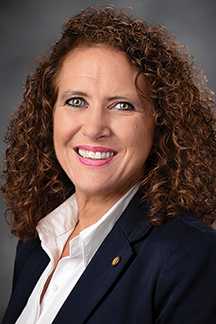
Del. Kathie Hess Crouse
Sponsored bills
Maddy summaryHB 4078 would repeal §55-2-1 of West Virginia's code, which currently sets a time limit for lawsuits seeking to enter or recover land. This change would remove a specific statute of limitations for land-related legal actions, directly affecting property owners or parties involved in land disputes who might otherwise face time restrictions. The bill's key mechanism is the complete removal of this code section, eliminating the deadline for filing such lawsuits. As a procedural repeal, it does not create new rules but alters existing legal procedures governing land claims.
Maddy summaryHB 4188 creates a nonrefundable tax credit for businesses that donate to pregnancy or birthing centers in West Virginia. Businesses can claim a credit equal to their donation amount, provided they submit proof of the contribution to the Tax Commissioner. The credit reduces the business's state tax liability but cannot be refunded if it exceeds the tax owed. This policy directly affects businesses making qualifying donations, aiming to incentivize financial support for these community health services.
Maddy summaryHB 4069 would remove West Virginia's current requirement that motorcycle operators and passengers wear helmets meeting specific safety standards (ANSI Z90.1, DOT FMVSS 218, or Snell) and eye protection meeting ANSI Z2.1 standards. The bill specifically targets sections (a) and (b) of existing law §17C-15-44, which mandate these safety equipment requirements. If passed, this change would directly affect all motorcycle riders and passengers in West Virginia, eliminating the legal obligation for helmets and eye protection. The bill does not alter other motorcycle safety rules, such as handlebar height limits, seating positions, or rearview mirror requirements.
Maddy summaryHB 4061 requires West Virginia's Public Employees Insurance Agency (PEIA) and other health insurers to pay mental health and behavioral health providers the same rate as medical/surgical providers for comparable services. This applies to licensed practitioners (like therapists and counselors) covered under the bill’s definitions of "serious mental illness." Insurers must submit claims using standard codes and identifiers, and cannot reduce payments to physicians to comply with this law. The bill directly affects mental health providers and insurers by mandating equal reimbursement rates for services like therapy and counseling, aligning them with physical health care payments.
Maddy summaryHB 4070 would classify individuals who have naturally developed immunity from a communicable or infectious disease as "fully vaccinated" for all purposes, requiring them to be treated equally or preferentially compared to those with vaccine-induced immunity. The bill applies to all communicable or infectious diseases and directly affects people who recovered from an illness without vaccination. It changes how immunity is legally recognized in West Virginia, making natural immunity equivalent to vaccine immunity in policy implementation. This does not eliminate vaccination requirements but reclassifies natural immunity as meeting the "fully vaccinated" standard.
Maddy summaryHB 4073 would add religious exemptions to West Virginia's school immunization requirements, allowing parents to exempt their children from mandatory vaccines (chickenpox, measles, polio, etc.) based on religious beliefs. To qualify, parents must submit a notarized "Certificate of Religious Exemption Form" to the school, which the state commissioner would review. The bill does not change the required vaccines or medical exemption process, but explicitly adds religious exemptions to the existing framework. This directly affects school-age children, parents seeking exemptions, and schools verifying immunization status for enrollment.
Maddy summaryHB 4075 requires all health insurers in West Virginia to cover biodentical hormones when medically necessary and prescribed by a licensed physician after a thorough evaluation of the patient's symptoms or test results. The bill applies to all health insurance policies, including group plans, nonprofit corporation contracts, hospital service policies, health care corporations, and health maintenance organizations (HMOs). Insurers must provide this coverage on an expense-incurred basis starting January 1, 2026. This policy change directly affects patients seeking hormone treatment and insurers offering health coverage in the state.
Maddy summaryHB 4145 would create a school choice office within the Governor's Office, funded by legislative appropriation, to assist students and parents navigating school options in West Virginia. The office would coordinate with the Department of Education to provide information about public schools, private/parochial schools, virtual learning, homeschooling, learning pods, and micropods. It would specifically use the existing statewide homeschool online portal as a primary tool to share these options with families. The bill focuses on administrative coordination rather than altering funding or enrollment rules.
Maddy summaryHB 4072 creates a pilot program where West Virginia's Department of Human Services matches employer contributions toward employee child care costs. It directly affects employers (including small businesses with under 50 employees) and their employees in West Virginia who use participating child-care centers. The key mechanism requires employers to pay for child care, then the state reimburses up to 100% of eligible costs using a new fund, after verifying employee household income against the state median. The Department administers the program, verifies eligibility, distributes funds directly to child-care centers, and maintains a waitlist when funds are limited.