

Maddy summaryHB 5217 requires write-in candidates for most elected offices in West Virginia (excluding delegates to national conventions) to pay a filing fee and submit a sworn certificate of announcement. This certificate must include the candidate's name, address, intent to run, and sworn statement, and must be filed with election officials by specific deadlines (49 days before an election, or by the 5th day before an election if a vacancy occurs). Candidates who qualify as indigent (with very low income and limited resources) may be exempt from the fee. Once filed, the Secretary of State and county election officials will post the names of certified write-in candidates so that valid write-in votes can be counted.
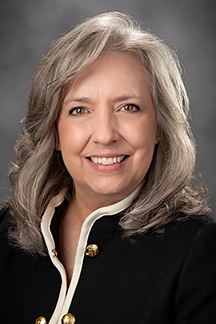
Del. Erica Moore
Sponsored bills
Maddy summaryHB 5221 increases civil penalties for political committees, candidates, and their treasurers who fail to file required campaign finance reports or submit grossly incomplete/inaccurate reports. It raises penalties from $10 per day to a maximum of $500 for a first violation and $1,000 for subsequent violations in the same election cycle. The bill requires the Secretary of State to provide written notice before imposing fines, grant up to 14 additional days for compliance, and allow payment plans. Unpaid fines exceeding 30 days must be referred to a debt collection agency. This affects all entities managing campaign finances in West Virginia elections.
Maddy summaryThis House Resolution (HR 11) encourages West Virginia's K-12 students to design a new state highway route number shield for the 2026 anniversaries of the U.S. founding (250th) and the U.S. numbered highway system (100th). It directs the West Virginia Division of Highways and Department of Tourism to hold a statewide student design competition, requiring the shield to maintain federal safety standards for legibility while incorporating West Virginia identity. The winning design would be implemented gradually on state highways starting July 2027, replacing existing signs only as they wear out, and the student designer would receive legislative recognition. The resolution is procedural and non-binding, focusing on celebration and civic engagement rather than new policy.
Maddy summaryHR 9 is a ceremonial resolution honoring the late West Virginia House Delegate Douglas John Skaff Jr. It expresses the House of Delegates' condolences to his family and commemorates his service, including his roles as a delegate representing multiple districts and as Minority Leader. The resolution has no policy impact - it is purely symbolic, acknowledging his career in public service, business, and community leadership. It was unanimously adopted by the House on February 5, 2026, the same day it was introduced.
Maddy summaryHB 5173 creates the West Virginia Rural Littering and Illegal Dumping Prevention Act, targeting individuals who improperly dispose of litter on public or private property, including near waterways. It establishes tiered penalties based on litter quantity: fines from $100 for small amounts (under 100 lbs) up to $50,000 for large dumps (over 500 lbs), with enhanced fines (50% higher) near protected waters. The bill also allows courts to order community service (cleaning litter for 8-200 hours) instead of or alongside fines, and creates a Rural Illegal Dumping Prevention Fund for cleanup programs. It directly affects anyone who illegally discards litter, imposing specific criminal penalties for repeat offenses and violations near water.
Maddy summaryHB 5165 creates the West Virginia Rural Property Safety and Clean Land Act, establishing clear standards for waste accumulation on rural private properties in unincorporated areas. It defines "excessive accumulation" as specific thresholds (e.g., 200+ square feet of waste, 5+ cubic yards of debris, or more than three visible junk vehicles) and prohibits these conditions after written notice and a 30-90 day cure period. Property owners face civil fines up to $5,000 annually per property for noncompliance, while willful violations posing immediate health risks may result in misdemeanor charges. The law explicitly exempts agricultural operations, farm equipment, and permitted industrial activities, and prohibits enforcement based on aesthetics or neighborhood complaints.
Maddy summaryHB 5161 creates the West Virginia Rural Mobility and Transportation Access Act to improve transportation access in rural areas. It establishes a grant program funded by federal funds (like FTA Section 5311), state appropriations, and private donations to support local providers - such as counties, nonprofits, and private companies - in offering on-demand rides, flexible shared transit ("micro transit"), and coordinated mobility services. The program prioritizes counties with limited existing service, encourages innovative models, and requires coordination among transportation, health, and human service providers without the state operating vehicles or drivers. It directly affects rural residents (outside urban areas with 50,000+ population) who lack reliable access to jobs, healthcare, and essential services.
Maddy summaryHB 5113 requires healthcare providers in West Virginia to ask patients in advance if they consent to being treated by a medical resident (a doctor in training) or having a resident observe a procedure during routine appointments. If a patient declines, the appointment must be rescheduled with a licensed physician instead, applying only to non-emergency situations. This bill directly affects patients seeking routine care and healthcare facilities, ensuring they can choose their primary provider. Emergency or urgent care is exempt from this requirement, as stated in the bill's provisions.
Maddy summaryHB 5104 requires parolees or probationers identified through a standardized risk assessment as having a history of substance abuse to participate in approved support services for a minimum of 60 days. This applies specifically to individuals under supervision whose assessment (mandated under §62-12-6) confirms substance abuse history. The bill adds this as a mandatory condition of release under §62-12-17(a)(4), with participation schedules approved by probation or parole officers. It directly affects individuals on parole or probation in West Virginia whose substance abuse history is documented via the court-mandated assessment process.
Maddy summaryHB 5097 requires West Virginia hospitals to provide effective communication assistance for deaf and hard of hearing patients and their families. Specifically, hospitals without an on-staff American Sign Language (ASL) interpreter must offer technology solutions like hearing loops, captioning services, or video relay systems. The bill mandates that any ASL interpreters used must be approved by the West Virginia Commission for the Deaf and Hard of Hearing. Noncompliance can be reported to licensing authorities, and the law takes effect upon passage. This directly affects all hospitals operating under West Virginia's healthcare regulations serving patients with hearing or speech impairments.