

Maddy summaryHCR 11 is a West Virginia state resolution urging Congress to call an Article V constitutional convention. It seeks to propose amendments requiring that U.S. Representatives, Senators, federal judges (Article III), and Cabinet Secretaries be natural-born U.S. citizens with sole U.S. citizenship. The resolution does not change existing law but applies to Congress under Article V of the Constitution to initiate a convention focused solely on this citizenship requirement for those federal positions. This is a procedural step by West Virginia to join other states in seeking a constitutional amendment, not a legislative bill with immediate effect.
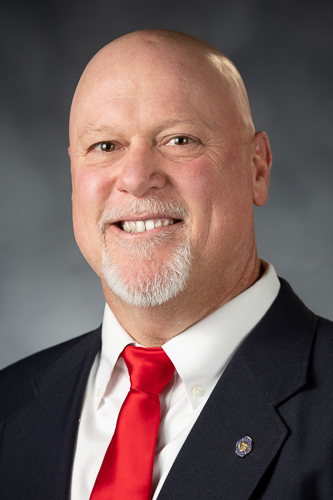
Del. Dave Foggin
Sponsored bills
Maddy summaryHJR 18 proposes amending West Virginia's Constitution to explicitly prohibit non-U.S. citizens from voting in any state election. It would add language to Article IV, Section 1 stating, "no person who is not a citizen of the United States be entitled to vote at any election held within this state." This change directly affects non-citizen residents currently eligible to vote in West Virginia elections. The amendment requires voter approval in the 2026 general election and would be designated as "Amendment 1" or the "Citizens Voting Amendment." The bill is currently referred to the House Judiciary Committee.
Maddy summaryHB 4567 requires retailers to verify the age of customers purchasing vape products by checking government-issued photo ID (like a driver's license or passport) for in-person sales to anyone appearing under 30, and using independent third-party verification services for online orders. The law directly affects all vape retailers (both physical stores and online sellers) and prohibits sales to anyone under 21. Key mechanisms include mandatory ID checks for in-person transactions and electronic age verification for remote purchases, modeled after requirements for prescription drugs. Violations may result in criminal or non-monetary penalties as specified in the bill.
Maddy summaryHCR 7 is a symbolic concurrent resolution designating October 14 as "Charlie Kirk Remembrance Day" in West Virginia. It commemorates Charlie Kirk, founder of Turning Point USA and a conservative youth leader who died in a 2025 campus shooting. The resolution has no policy or financial impact, as it only establishes a day of remembrance and directs a copy to Turning Point USA. This is purely a commemorative measure with no legislative mechanism or direct effect on residents.
Maddy summaryThis bill requires health insurers to accept prior authorization requests via fax or electronic portal (not just mail) and mandates clear submission instructions, a 5-business-day response deadline (2 days for urgent care), and quarterly updates to lists of required authorizations. It ensures insurers include step therapy details on forms and carry approved authorizations across insurers for three months within West Virginia. The law directly affects insurers, healthcare providers, and patients by streamlining the approval process and reducing delays. Key provisions include standardized electronic notifications, clear deficiency identification, and expedited appeals within 10 business days.
Maddy summaryHB 4572 creates a pilot program allowing West Virginia county boards to designate struggling rural public schools as "Rural Innovation Schools" to prevent closures. It provides these schools with specific flexibilities unavailable to traditional public schools, including class-size waivers, staffing flexibility (like certification exemptions and bypassing seniority rules), calendar/scheduling adjustments, budget repurposing authority, and curricular choices - while keeping them under county board governance. Schools must meet criteria like low enrollment, geographic isolation, or recent closure threats to qualify, and must enter a performance agreement with the state charter school board for three-year reviews. The program also allows schools closed within the past two years to apply for reopening under these provisions if facilities are safe and viable.
Maddy summaryHB 4465 would adjust substitute teacher pay in West Virginia by increasing rates after specific work periods. After 10 consecutive days in the same position, substitutes would earn 80% of the advanced salary (based on teaching experience), and after 30 days, they would receive the full advanced salary - matching the daily rate for full-time teachers in their county. This applies to substitutes working in the same position within a school year. The bill replaces the current minimum of 80% of the basic salary rate for all assignments with this tiered system.
Maddy summaryHB 4457 would allow unaffiliated voters (such as independents) to request voting in any major political party's primary election ballot, if the party's state committee permits it. Currently, unaffiliated voters in West Virginia cannot vote for party candidates in primaries and only receive ballots for nonpartisan races and public questions. The bill requires each major party's state executive committee to decide whether to allow unaffiliated voters to cast a ballot for that party's candidates. Unaffiliated voters would still receive separate ballots for nonpartisan races and public questions, as required by existing law.
Maddy summaryHB 4454 increases West Virginia's homestead property tax exemption from $20,000 to $40,000 for qualifying homeowners. It directly affects residents aged 65 or older or those certified as permanently and totally disabled who have lived in West Virginia for two consecutive years. The bill allows the exemption to apply to the first $40,000 of a home's assessed value, reducing property taxes for eligible primary residences. The change requires applicants to confirm they aren't receiving a similar exemption in another state.
Maddy summaryHB 4455 gradually increases West Virginia's homestead property tax exemption for eligible homeowners, starting at $20,000 in 2028 and rising to $40,000 by 2031. It directly affects homeowners aged 65 or older, or those certified as permanently and totally disabled, who have resided in West Virginia for two consecutive years. The bill requires a constitutional amendment to take effect and removes a cap on property tax books while repealing a prior limitation on levy rates. This change aims to reduce property tax burdens for qualifying senior and disabled residents over time.