

Maddy summaryHB 4009, the Portable Benefit Account Act, creates a new legal framework allowing independent contractors to access portable benefits through individually managed accounts. It directly affects independent contractors and hiring parties (businesses that contract with them), enabling voluntary contributions from hiring parties to fund benefits like health insurance, retirement plans, life insurance, and income replacement. Key provisions require written, opt-in agreements for contributions, prohibit using account contributions to determine worker classification, and mandate that accounts remain tied to the contractor - not the employer - when changing jobs. The bill establishes definitions for terms like "portable benefit account" and "provider," and requires administrative oversight by the Bank Commissioner.
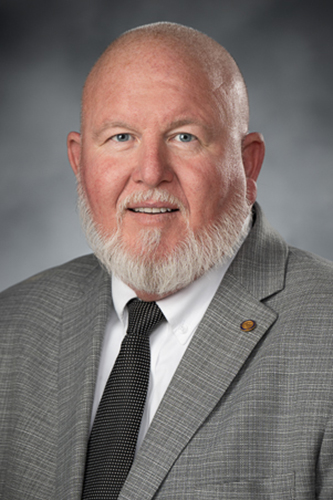
Del. Scot Heckert
Sponsored bills
Maddy summaryHB 4088 updates West Virginia's regulations for certified public accountants (CPAs), affecting current and future licensees, accounting firms, and out-of-state applicants seeking to practice in the state. The bill revises education, examination, and experience requirements for CPA certification, clarifies licensing processes for out-of-state applicants, and updates rules for "substantial equivalency" practice privileges. It also modifies the Board of Accountancy's rule-making authority, establishes new conditions for issuing and renewing authorizations to perform accounting services, and updates prohibited actions and disciplinary measures for licensees and firms.
Maddy summaryThis bill updates West Virginia laws to recognize military protective orders as valid evidence of domestic violence when seeking emergency protective orders from family courts. It defines a military protective order as one issued by a commanding officer in the U.S. Armed Forces, West Virginia National Guard, or another state's National Guard against someone under their command. The legislation requires law enforcement to notify relevant agencies of potential violations of these military orders and allows them to be used in petitions for temporary personal safety orders. These changes aim to improve how courts handle cases involving service members and their families by streamlining the process for obtaining protection orders.
Maddy summaryThis bill requires physicians and osteopathic doctors in West Virginia to complete continuing education credits specifically in nutrition as part of their biennial license renewal process. The law mandates that medical professionals earn a minimum of fifty hours of continuing medical education every two years, with osteopathic physicians required to complete thirty-two hours including nutrition training, and these credits must be approved by relevant medical boards. The bill amends existing state code sections to make nutrition education a mandatory component of the continuing education requirement for license renewal.
Maddy summaryHB 4028 exempts construction contractors from West Virginia's sales and use taxes on building materials and services used for constructing, repairing, or improving public elementary, secondary, or vocational school facilities. This applies to materials permanently installed in school buildings (like framing, wiring, or plumbing), but excludes tools, equipment, gasoline, or motor vehicle purchases. The bill directly affects contractors working on public school projects by reducing their costs for qualifying materials. It clarifies that this exemption applies to both state-level and municipal sales taxes on eligible school construction work. The policy change takes effect July 1, 2026, with no new revenue impact on the state.
Maddy summaryHB 4345 requires law enforcement agencies in West Virginia to permanently retain all records and evidence for missing persons cases that remain unresolved after one year. It mandates that agencies digitize all documentation and physical/biological evidence for these cases and transmit the complete records to the West Virginia Fusion Center. The bill directly affects law enforcement agencies (including county and municipal departments) by establishing new requirements for record retention, digitization, and database sharing. Key provisions include banning destruction of unresolved case files, requiring secure digital storage, and ensuring evidence is preserved permanently. This applies to all missing persons cases, not just children or high-risk situations.
Maddy summaryHB 4053 establishes the "Blue Envelope Program" to improve communication between law enforcement and drivers with autism spectrum disorder, dementia, or intellectual/developmental disabilities during traffic stops. Eligible drivers (with a valid license/permit) can request a specially designed blue envelope containing their license, registration, and emergency contact information, along with a vehicle decal and communication guidance for officers. The program, set to launch January 1, 2027, will be administered through the West Virginia Division of Motor Vehicles, sheriff's offices, and police stations.
Maddy summaryHB 4625 amends West Virginia's definitions for property transfer excise taxes, clarifying which transactions qualify for tax exemptions. It removes an existing exemption for certain property transfers while adding new exemptions for transfers between family members (spouse, parent-child, grandparent-grandchild, siblings) and between charitable organizations. The bill also refines definitions of key terms like "document," "value," and "person" to better determine tax applicability. These changes directly affect individuals and entities involved in property sales or gifts, particularly in family or charitable contexts, by altering which transfers are exempt from the excise tax.
Maddy summaryHB 4393 requires West Virginia's Department of Human Services (DoHS) to create and implement a statewide prevention plan by February 1, 2027. The plan must provide trauma-informed, evidence-based services to children under 18 and their families - including youth in foster care, pregnant and parenting youth, those aging out of foster care (up to age 21), post-adoption youth, and families with economic or safety needs. DoHS must ensure providers offer accessible services (combining telehealth and physical locations), track outcomes, and report annually on service usage, costs, and results by county. The plan also aims to qualify for federal matching funds under the Family First Prevention Services Act by 2028.
Maddy summaryHB 4626 establishes a West Virginia grant program to fund U.S. Food and Drug Administration (FDA) drug development trials using ibogaine, a substance being studied for treating opioid use disorder and other neurological/mental health conditions. The program requires applicants (e.g., pharmaceutical companies or research organizations) to demonstrate capacity to conduct FDA trials, secure approval for ibogaine as a medication, and commit to establishing a state presence, securing insurance coverage, and ensuring treatment access for uninsured patients. Applicants must submit detailed trial designs, safety protocols, and plans for intellectual property rights and post-approval implementation, with grants administered through a state selection committee. The bill does not approve ibogaine but aims to accelerate its development pathway through state-funded trials.