

Maddy summaryHB 4358 establishes a three-year pilot program to provide legal representation for children in juvenile abuse and neglect cases through "Public Guardian ad Litem Services" in up to three West Virginia court circuits. The bill creates nonprofit corporations (not government agencies) to employ full-time staff attorneys who represent eligible minors - children unable to afford legal counsel in cases under §49-4-101 of the West Virginia Code. Key mechanisms include requiring these corporations to use Public Defender Service attorneys when conflicts arise, mandating oversight by a Guardian ad Litem Commission, and setting strict rules for funding, recordkeeping, and annual audits. The pilot aims to test an alternative model for delivering legal services to vulnerable children in specific court systems, with no expansion beyond the three designated circuits.
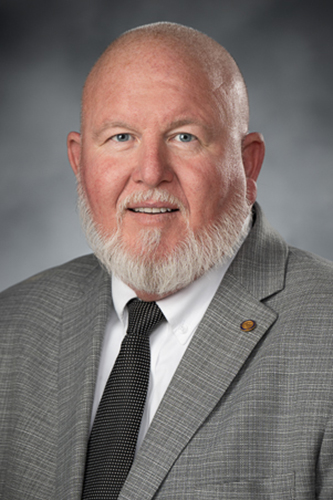
Del. Scot Heckert
Sponsored bills
Maddy summaryHB 4507 would exempt the salaries of certain first responders from West Virginia's state personal income tax. It directly affects law enforcement officers, paid firefighters, correctional officers, and emergency medical services (EMS) personnel as defined in existing state law. The bill adds a new provision to the tax code stating these workers' salaries are not subject to state income tax. This change applies only to their earned income from these specific roles, not other income they may receive.
Maddy summaryThis bill would require all West Virginia public high school students to pass a state-developed college readiness exam in 10th grade to qualify for public financial aid at West Virginia's public colleges and universities. The State Board of Education must create the exam and set passing standards, allowing students who fail to retake it after a reasonable time. It applies only to publicly available financial aid for public institutions and would take effect for the 2026-2027 school year. The bill does not affect other forms of aid or private institutions.
Maddy summaryHB 4406 would restore voting rights for West Virginia residents convicted of felonies upon their release from incarceration, including release through pardon, parole, probation, or completion of sentence. Currently, these individuals are barred from voting while serving their sentence, but the bill removes this restriction immediately upon release. The change allows formerly incarcerated people to register and vote without additional legal steps once they are released from prison or supervision. This policy directly affects all individuals in West Virginia who have been convicted of a felony and are released under these conditions.
Maddy summaryHB 4409 establishes a legal expectation of privacy for West Virginia legislators in their private offices within the State Capitol or official legislative spaces. The bill prohibits anyone - including staff, visitors, or journalists - from recording audio, video, or electronic communications in these offices without the legislator’s prior written consent, and bans secret installation of surveillance devices. Exceptions include Capitol security measures, recordings with explicit consent, and court-authorized wiretaps. Violating these rules would be a felony punishable by up to five years in prison or a $10,000 fine. The law directly affects legislators and anyone entering their offices, reinforcing privacy protections during official work.
Maddy summaryHB 4408 gradually increases the percentage of real estate transfer excise tax that West Virginia counties retain - from 10% in 2021 to 100% starting July 2025 - to fund county election administration, infrastructure, security, and other clerk-related expenses. The bill amends WV Code §11-22-2, specifying that counties must use these funds exclusively for those purposes after the retention rate reaches 100%. It phases in the change incrementally: 20% in 2022, 30% in 2023, 65% in 2024, and full retention (100%) beginning 2025. This directly affects county clerks and commissions, who will manage these funds without needing additional voter approval for the tax rate adjustments.
Maddy summaryHB 4465 would adjust substitute teacher pay in West Virginia by increasing rates after specific work periods. After 10 consecutive days in the same position, substitutes would earn 80% of the advanced salary (based on teaching experience), and after 30 days, they would receive the full advanced salary - matching the daily rate for full-time teachers in their county. This applies to substitutes working in the same position within a school year. The bill replaces the current minimum of 80% of the basic salary rate for all assignments with this tiered system.
Maddy summaryHB 4457 would allow unaffiliated voters (such as independents) to request voting in any major political party's primary election ballot, if the party's state committee permits it. Currently, unaffiliated voters in West Virginia cannot vote for party candidates in primaries and only receive ballots for nonpartisan races and public questions. The bill requires each major party's state executive committee to decide whether to allow unaffiliated voters to cast a ballot for that party's candidates. Unaffiliated voters would still receive separate ballots for nonpartisan races and public questions, as required by existing law.
Maddy summaryHB 4401 would lower the taxable wage base for unemployment insurance from $9,500 to $8,500 per employee per year. This means employers in West Virginia would pay unemployment taxes only on the first $8,500 of wages paid to each employee annually, rather than the current $9,500 threshold. The bill directly affects all West Virginia employers contributing to the state's unemployment insurance fund. It modifies the calculation method under West Virginia law for determining taxable wages, without changing unemployment benefit amounts or eligibility.
Maddy summaryHB 4407 would amend West Virginia law to limit parents in child abuse or neglect cases to three court-ordered improvement periods. If a parent fails to successfully complete the final improvement period after three petitions for child removal, termination of parental rights becomes mandatory. The bill directly affects parents whose children have been removed due to abuse or neglect and who have exhausted three opportunities to improve parenting skills under court supervision. This change modifies existing law to require automatic termination after three failed improvement attempts, providing greater certainty for children in foster care.