

Maddy summaryHB 2943 extends the expiration date of the annual certification fee for hazardous waste management facilities from June 30, 2030, to June 30, 2035. This fee, paid by facilities managing hazardous waste under federal definitions, must generate no more than $700,000 annually to cover West Virginia’s required state match for federal grant funds supporting hazardous waste management programs. Revenue from the fee is deposited into a dedicated fund and can only be used to meet the state’s matching obligations for these federal programs. The bill requires annual reports to the Joint Committee on Government and Finance on fund balances, collections, and expenditures.
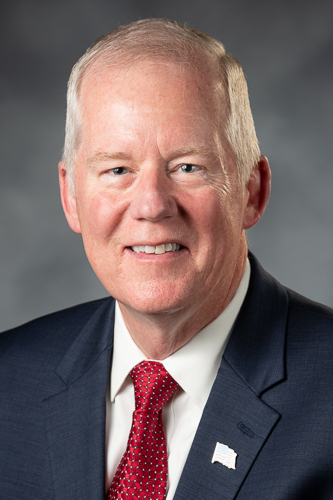
Del. Bob Fehrenbacher
Sponsored bills
Maddy summaryHB 2120 requires West Virginia's Ethics Commission to develop an online registration and reporting system by July 10, 2025, with specific functionality standards. It increases the number of annual lobbying activity reports required from lobbyists and mandates the Commission to post public resources and disclosure information on its website. The bill also adds new recusal rules for Commission members who contribute to political campaigns, requiring them to step aside from decisions involving those campaigns. These changes directly affect lobbyists, Commission members, and the public by increasing transparency and updating disclosure processes.
Maddy summaryHB 3294 creates legal protections for banks, broker-dealers, and investment advisors who intervene to prevent financial exploitation of vulnerable adults. It directly affects eligible adults (West Virginia residents 65+ or adults with significant mental impairments affecting financial decisions) and financial institutions. The bill allows these institutions to delay, refuse, or block transactions they believe risk financial exploitation, and requires them to report suspected exploitation to state agencies like the Department of Human Services. It provides legal immunity for institutions acting in good faith to protect eligible adults, without creating a duty to override customer instructions.
Maddy summaryHB 3521 reallocates $1,192,452 from the Attorney General’s Consumer Protection Recovery Fund (fund 1509) to the State Fund’s surplus balance, then directs that same amount to the Department of Health’s Central Office for the Tobacco Education Program (fund 0407). It specifically uses excess funds identified in the Attorney General’s account, which the bill states "exceeds that which is necessary" for its purpose. The bill does not create new policy or affect public services directly - it only moves existing surplus funds between state accounts. This is a routine budget adjustment, not a substantive legislative change.
Maddy summaryHB 3520 redirects $56.2 million in unused funds from 10 specific state accounts - such as the Treasurer’s Office ($20 million) and Insurance Commission Fund ($30 million) - into the State Fund’s General Revenue surplus for the 2025 fiscal year. The bill transfers money from accounts where balances exceeded necessary funding needs, as noted in the legislature’s findings. This action increases the available surplus balance in General Revenue for potential future appropriations. The bill does not create new spending but reallocates existing unspent funds to the state’s general treasury.
Maddy summaryHB 2710, the "Truth in Giving Act," requires thrift stores to clearly disclose whether donations support charities or for-profit businesses. If a thrift store is a charity (501(c)(3)), it must show the charity’s name and contact info to donors and shoppers. If it’s a for-profit store, it must display the warning "THIS IS NOT A CHARITY. DONATIONS MADE HERE SUPPORT A FOR-PROFIT BUSINESS" on drop boxes, at pickup locations, and in stores. Violations can result in fines up to $500 per offense, enforced by the Secretary of State. The bill directly affects thrift operators and donors/shoppers who give or buy donated items.
Maddy summaryHCR 99 is a legislative resolution requesting the Joint Standing Committee on the Judiciary to study policies preventing financial fraud and scams in West Virginia. It directs the committee to examine current state laws, review national approaches, and focus on four key areas: reducing robocalls and spoofing, addressing cryptocurrency-related scams (noting $1.4 million in losses in 2023), improving victim restitution, and protecting against property title fraud. The resolution cites data showing 8,000 West Virginians lost $27 million to fraud in 2024, with national losses exceeding $12.5 billion. The committee must report findings and recommendations to the legislature, governor, and attorney general by December 31, 2025. This is a study resolution, not a law, and does not create immediate policy changes.
Maddy summaryHB 3505 requires health insurance policies covering cancer chemotherapy to include coverage for scalp cooling systems starting January 1, 2026. These systems are defined as devices used to cool the scalp and prevent hair loss during chemotherapy treatment. The mandate applies to all individual and group health insurance plans, though coverage may still involve standard deductibles, coinsurance, or copayments consistent with other covered benefits. The bill directly affects cancer patients seeking hair preservation during treatment and insurers offering chemotherapy coverage.
Maddy summaryHB 3145 requires real estate brokers, associate brokers, and salespeople in West Virginia to use a written agency agreement before starting any brokerage services. This agreement must clearly state representation roles (e.g., seller or buyer), compensation terms, and confidentiality obligations. The bill also mandates that all real estate contracts include a definite expiration date, prohibits charging fees after expiration, and requires licensees to provide written offers and true copies of contracts to all parties. These changes directly affect real estate professionals and consumers by increasing transparency and preventing unfair post-contract fees.
Maddy summaryHB 2389 would allow West Virginia to join the Dietitian Licensure Compact, enabling licensed dietitians to practice across participating states without obtaining separate licenses in each. The bill establishes uniform requirements for licensure, including background checks and education standards, while eliminating the need for multiple state licenses. It directly affects licensed dietitians, particularly those relocating or serving military personnel and spouses, by simplifying cross-state practice. Key provisions include standardized disciplinary procedures, a fee structure for compact privileges, and protections for active-duty military members and their families. The compact aims to improve public access to dietetics services while maintaining state regulatory authority.