

Maddy summaryHB 5661 increases Medicaid dental provider reimbursement rates in West Virginia. It expands Medicaid coverage for diagnostic/preventative and restorative dental services (excluding cosmetic procedures) to adults aged 21+ with a $2,000 per two-year spending limit. The bill requires the Department of Human Services to raise dental provider payments by at least 20% by December 1, 2028, and mandates annual reports on dental program costs. This directly affects dental providers who treat Medicaid patients and adult Medicaid beneficiaries seeking dental care.
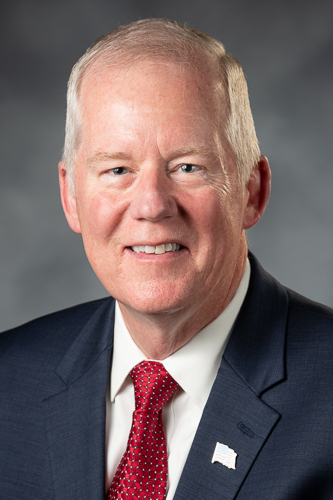
Del. Bob Fehrenbacher
Sponsored bills
Maddy summaryHCR 22 is a concurrent resolution requesting the Joint Committee on Government and Finance to study policy options that could accelerate the ordering and deployment of electric generation equipment in West Virginia. It specifically asks the committee to examine mechanisms like state-backed deposit guarantees, regulatory frameworks for cost recovery, and accelerated depreciation schedules to reduce delays in equipment procurement. The study aims to support grid reliability, economic growth, and West Virginia’s goal of reaching 50 gigawatts of generation capacity by 2050, while protecting ratepayers and taxpayers. It does not create new laws but seeks recommendations for potential legislative action based on the committee’s findings.
Maddy summaryHB 4459 would repeal all existing West Virginia laws regulating kratom (Chapter 19, Article 12F) and remove kratom ("Mitragyna speciosa") from Schedule I of the state's controlled substances list (Section 60A-2-204). This would eliminate legal restrictions on kratom sales, possession, and use for consumers and businesses currently operating under the repealed regulations. The bill directly affects kratom vendors, users, and enforcement agencies by ending the state's classification of kratom as an illegal Schedule I substance. It does not create new regulations but removes the existing legal framework governing kratom.
Maddy summaryHB 5659 requires West Virginia's Department of Human Services to develop a new cost estimation model for child care subsidy rates. The model must reflect actual costs of quality care - including staff wages, licensing compliance, program types (centers/family homes), age groups, and regional differences - replacing current market-rate surveys. An independent expert consultant will create the model by July 2027, with a report detailing cost variations and implementation plans due before the 2028 legislative session. This directly affects child care providers who receive subsidies and families relying on state-funded child care assistance.
Maddy summaryHB 5664 proposes creating the West Virginia Cares Fund, a state-run long-term care insurance program funded through payroll deductions for eligible state employees. It would provide a daily benefit of $100 for 365 days annually to cover approved services like in-home care, community-based support, and skilled nursing facility care. The bill aims to address the lack of affordable long-term care insurance, which leaves over 90% of seniors uninsured, by offering coverage through employee payroll premiums instead of out-of-pocket costs. This would allow beneficiaries to choose care settings (home, community, or facility) while maintaining current service options and seamless transitions from existing funding sources. The bill is currently in committee referral after its February 2026 introduction.
Maddy summaryHB 5617 would allow certified nonprofit retailers (called "workforce training community centers") meeting specific criteria to retain 75% of consumer sales tax revenue collected after the first $1 million in annual sales. These retailers must use the retained funds exclusively for job training and placement services targeting people with employment barriers, such as disabilities. They would continue paying local sales taxes and report retained amounts to the state Department of Revenue. The bill creates a new program to expand access to workforce development by redirecting a portion of sales tax revenue toward job training services.
Maddy summaryHB 5628 requires West Virginia's Department of Human Services to develop policies that prevent the sudden loss of child care assistance when families experience modest income increases. It directly affects low-income families who would otherwise lose subsidies abruptly as their earnings rise slightly, creating instability in child care arrangements. Key provisions include implementing graduated phase-outs (so assistance decreases gradually), expanding sliding fee scales based on income, raising income thresholds for continued eligibility, and establishing transitional support periods. The department must adopt these policies by January 1, 2027, and submit annual reports on implementation to the legislature.
Maddy summaryHB 5614, the Truth in Giving Act, requires thrift retailers selling donated goods to clearly disclose whether donations support charitable organizations or for-profit businesses. Thrift operators must display specific information at donation points (like drop boxes or mobile units) and at checkout, including a mandatory statement for non-charitable operations: "THIS IS NOT A CHARITY. DONATIONS MADE HERE SUPPORT A FOR-PROFIT BUSINESS." The bill mandates disclosure of the entity's name, address, and contact details to donors and customers, with violations subject to fines up to $1,000 per offense. Introduced in West Virginia's House on February 16, 2026, it is currently under review by the Judiciary Committee.
Maddy summaryThis is a commemorative House resolution honoring former West Virginia House Speaker and Chief Justice Timothy P. Armstead following his passing. It memorializes his service, names a conference room in the House as the "Speaker Tim Armstead Memorial Conference Room," and extends condolences to his family. The resolution does not create new laws or affect policy - it formally recognizes his legacy and contributions to West Virginia.
Maddy summaryHB 5571 provides a $6,000 pay equity adjustment over three years ($2,000 annually) for non-uniformed administrative staff in West Virginia's Division of Corrections and Rehabilitation. The increases begin July 1, 2026, and apply to full-time equivalent employees not in uniformed roles, such as office or support positions. Funding comes from general revenue appropriations for state divisions, while regional jail staff receive funding from a special revenue fund. This bill directly affects non-uniformed correctional facility employees who face recruitment and retention challenges, without altering existing pay grade maximums.