

Maddy summaryThis bill requests that the Joint Committee on Government and Finance conduct a study to estimate the actual costs of providing early childhood care and education in West Virginia. The study aims to determine whether current subsidy reimbursement rates accurately reflect the true cost of quality care across different program types, age groups, and geographic regions. If completed, the findings will be reported to government, health, and education committees by December 31, 2026, to help inform future budget decisions and subsidy policies. The bill directly affects state officials responsible for child care funding and policy, as well as early childhood care providers who receive state subsidies.
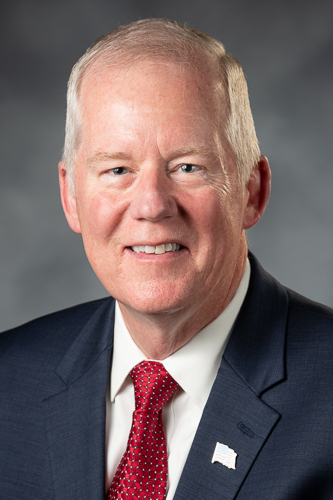
Del. Bob Fehrenbacher
Sponsored bills
Maddy summaryHB 4001 creates TEAM-WV, a new nonprofit corporation to advance West Virginia's economic development. The bill requires the Governor to form this entity to promote job creation, retention, training, and business recruitment, with specific operational rules. Key provisions include requiring the Governor to file articles of incorporation, establishing a board of directors with appointment procedures, mandating board approval for CEO compensation and major contracts, and requiring annual strategic planning and conflict-of-interest policies. The corporation will operate under state code but must follow these defined governance structures. This is a procedural bill establishing the framework for a state economic development agency, not a direct policy affecting residents or businesses.
Maddy summaryThis bill directs the West Virginia Office of the Attorney General and Office of the Treasurer to conduct a study of state budget spending from the current year and the previous five years. The study will categorize expenditures into four groups: spending required by the state constitution, spending for core government functions, spending for policy goals not constitutionally required, and spending with unclear or speculative purposes. The findings and recommendations will be reported to the Joint Committee on Government and Finance by December 21, 2026. This resolution does not change how money is spent but instead asks officials to analyze and categorize existing budget items to better understand how taxpayer dollars are allocated.
Maddy summaryHB 5629 updates West Virginia's Unclaimed Property Act to extend the time nursing homes must wait before reporting abandoned resident funds to 180 days (from 30 days) after a resident's death. It requires safety deposit boxes and other depositories to deliver contents to the State Treasurer within specific timeframes, clarifies claim filing processes, and prohibits finders from claiming property immediately. The bill also allows the Treasurer to waive reciprocal claim forms with other states and clarifies that estate executors must liquidate personal property before transferring proceeds. These changes primarily affect nursing homes, financial institutions holding unclaimed property, and the State Treasurer's office.
Maddy summaryThis House resolution formally recognizes President Donald J. Trump for various policies and actions that the West Virginia House of Delegates claims have benefited the state. The document highlights specific initiatives including regulatory reforms in the energy sector, tax relief measures, funding for rural healthcare, and programs aimed at reducing prescription drug costs and establishing investment accounts for newborns. It also cites border security improvements and drug control efforts as contributing factors to public safety and economic well-being. The resolution expresses appreciation for these actions and requests that the formal recognition be sent to the President.
Maddy summaryThis House Resolution honors the life and legacy of the late West Virginia legislator Larry D. Kump, who passed away on February 28, 2026. The resolution formally expresses the House of Delegates' condolences to Kump's family and acknowledges his service as a representative for Berkeley County across three different terms. It recognizes his career in criminal justice and mediation, his commitment to limited government, and his role as a devoted family member and church leader. The document is a ceremonial tribute rather than a law that changes policy or affects public programs.
Maddy summaryHouse Resolution 13 is a West Virginia legislative resolution endorsing federal legislation (H.R. 5966), which would create the Ohio River Basin Restoration Program. If enacted, the program would fund projects to improve water quality, restore fish habitats, enhance flood resiliency, and expand recreational access across the Ohio River basin. It directly affects West Virginia residents who rely on the river for drinking water (700,000 people), economic activity, and recreation along its 277-mile border. The resolution clarifies the program would be non-regulatory, not creating new permits or legal claims, and aims to deliver clean water and economic benefits to communities in the Ohio River watershed.
Maddy summaryThis House Resolution urges the Capitol Building Commission and Department of Administration to assess and address hazardous trees along California Avenue and Kanawha Boulevard on the State Capitol Complex grounds. The resolution requests an immediate evaluation of trees that have caused property damage through falling limbs and broken trunks over the past two years. It specifically asks officials to trim trees back to the grass side of sidewalks or remove and replace hazardous trees to protect public safety and state property. This non-binding resolution directs state agencies to take preventative maintenance actions without mandating specific enforcement measures.
Maddy summaryHB 4971 requires new high-voltage electric transmission lines (400kV or greater) needing West Virginia Public Service Commission approval to include a substation near industrial parks if the line runs within five miles of one. It limits this requirement to one substation per 40-mile segment of the line within the state, with the substation needing completion within two years after the line becomes operational. The law applies to transmission developers and the Public Service Commission, aiming to boost economic development by linking grid infrastructure directly to industrial areas. Key provisions include evaluating substation locations based on expected job creation and tax benefits, and prohibiting route choices designed to avoid industrial park proximity.
Maddy summaryHB 5492 allows West Virginia's Department of Economic Development to pre-purchase standardized electric substation transformers from regulated utilities to accelerate industrial and commercial development projects. The bill specifies technical requirements for transformers (e.g., 150-200 MVA capacity, specific voltage levels) and authorizes the state to pay for initial ordering costs while utilities retain ownership until assigned to qualifying projects like industrial parks. If transformers aren't assigned by delivery, the state covers remaining costs and utilities hold them for future projects or system use. The state can recover funds through utility rate adjustments, project agreements, or other approved methods, without requiring Public Service Commission approval for these purchases.