

Maddy summaryHB 2754 prohibits foreign entities from funding West Virginia election administration activities (such as voter registration or ballot preparation). It requires organizations seeking to work with state or local governments on these activities to certify annually whether they receive foreign donations, with updates within five business days if new information arises. The Secretary of State must maintain and publish these certifications online while auditing compliance quarterly. Violations - including false certifications - carry fines of three times the donation amount plus court costs, and agreements with violators become invalid.
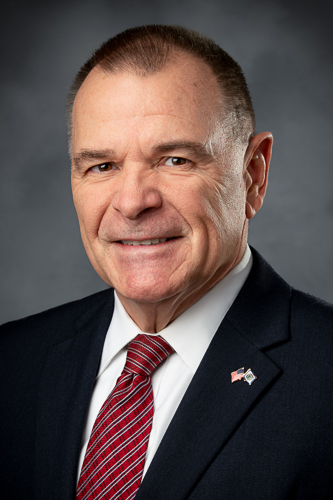
Del. Bill Ridenour
Sponsored bills
Maddy summaryHB 2753 would extend the cooling-off period for former state legislators and other public officials seeking to become lobbyists, changing the current one-year restriction to five years. This bill directly affects individuals who leave public office and wish to work as lobbyists for private entities or government clients. The key provision is simply lengthening the mandatory waiting period before they can engage in lobbying activities. The change aims to reduce potential conflicts of interest by limiting immediate transitions from public service to lobbying roles.
Maddy summaryHB 2649 expands existing school disciplinary rules to include elementary school students, removing the current grade limitation that only applied to students in grades 6-12. The bill modifies §18A-5-1 to allow elementary teachers to exclude students for disruptive behavior and follow the same procedures for reporting and disciplinary actions as middle/high school teachers. This directly affects elementary school teachers, students in elementary grades, and school principals who must now implement these procedures for younger students. The key change is extending the existing disciplinary framework - such as classroom exclusion, electronic reporting to WVEIS, and suspension protocols - to cover all elementary school students.
Maddy summaryHB 2677 requires West Virginia's state education board to create a model policy banning K-12 students from using personal cell phones or handheld devices during instructional time, with exceptions for emergencies or contacting parents. County school boards must adopt policies consistent with this model, though enforcement details remain local. The bill directly affects all public K-12 schools and students in West Virginia by mandating a statewide framework for phone restrictions during class. It focuses on balancing academic focus with safety needs, without specifying penalties or device types beyond "personal handheld communication devices."
Maddy summaryHB 2671 creates a $60 monthly (capped at $720 annually) income tax exemption for West Virginia residents who pay for gym memberships at facilities located within the state. This provision directly affects individual taxpayers who maintain gym memberships at in-state fitness centers. The bill sets a specific, fixed amount for the exemption with a clear annual cap, rather than offering a percentage-based deduction. It applies to personal income tax returns filed by West Virginia residents who meet the membership requirement. The bill is currently pending in the House Finance Committee.
Maddy summaryHB 2703 requires West Virginia's Commissioner of Highways to allocate 20% of the state road fund annually to reimburse counties for local funds they spent on feeder and state local roads, with applications due by March 1 and distributions based on matching or pro rata methods if demand exceeds funds. The remaining 80% of funds must be distributed for road maintenance (based on road surface types) and construction (based on unimproved mileage) using specific formulas. The bill also mandates the Commissioner to develop a district allocation formula, hold annual public meetings, solicit input, include certain factors in the formula, and submit it to the Legislature for approval as a legislative rule.
Maddy summaryThis concurrent resolution (HCR 57) declares that the People's Republic of China (PRC) is conducting an "illegal asymmetric war" against the U.S. and West Virginia, citing alleged tactics like cyberattacks, influence operations, and the use of fentanyl or engineered diseases. It directs state officials to forgive public debt held by PRC-affiliated entities since October 2019 and identify such entities for potential debt recovery. The resolution also urges the Governor and state agencies to take actions countering this alleged "war" and invites other states to adopt similar statements. As a non-binding resolution, it does not create new laws but formally positions West Virginia’s stance on China-related issues.
Maddy summaryHB 2660 requires buyers of properties sold at tax auctions (by the West Virginia Auditor for unpaid taxes) to pay off any city or town tax liens before receiving a deed. Purchasers must provide the Auditor with certified proof that the lien has been satisfied by the local government. This ensures local government claims are resolved before property ownership transfers. The bill directly affects tax sale buyers and municipalities that issue lien satisfaction records.
Maddy summaryHB 2666 (West Virginia House Bill 2666) allows landowners or lessees whose property is damaged by deer or wildlife to hire a third-party hunter to kill the animals using a bow and arrow. The bill amends existing law to explicitly permit this hiring process, requiring the director of natural resources to issue permits for such activity. It maintains existing restrictions, requiring hunters to follow the same bow and arrow specifications as during regular hunting seasons. This directly affects landowners facing property damage from wildlife, providing a new option to address the issue through authorized third-party hunting. The bill does not change general hunting regulations but streamlines a specific damage-control mechanism.
Maddy summaryHB 2643 requires the West Virginia Parkways Authority to stop collecting tolls on the West Virginia Turnpike once all bonds for the project are fully paid or a trust fund for repayment is established. This applies only after the Turnpike is certified as being in good condition by the state Highway Division. Within 90 days of the final bond payment, the Authority must discontinue all tolls and remove toll facilities. The bill directly affects drivers using the Turnpike and shifts maintenance responsibility to the state Highway Division.