

Maddy summaryHB 2815 increases minimum prison terms and parole eligibility requirements for certain murder-related offenses in West Virginia. It raises the minimum parole eligibility for second-degree murder from 10 to 20 years and for attempted first-degree murder from 3 to 10 years. The bill also increases the minimum sentence for attempted second-degree murder from 1 year to 5 years. These changes directly affect inmates convicted of second-degree murder, attempted murder, or related firearm offenses, delaying their potential parole consideration.
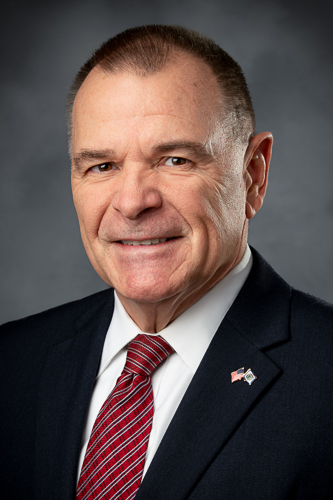
Del. Bill Ridenour
Sponsored bills
Maddy summaryHB 2817 requires political action committees (PACs) to follow the same detailed reporting rules as candidates for public office regarding independent political spending. Specifically, it mandates that PACs disclose contributors' names, addresses, occupations, and employers for all contributions over $1,000 annually, and file immediate reports within 24 hours for large expenditures (over $5,000 for statewide/legislative races or $500 for local races) made within 12 hours of an election. The Secretary of State must compile and publish these reports by candidate before elections to increase transparency. This bill directly affects PACs, independent spending groups, and their contributors by standardizing disclosure requirements across campaign finance activities.
Maddy summaryHB 2925 would make certain panhandling practices unlawful in West Virginia, directly affecting individuals soliciting money in specific public or private locations. The bill prohibits panhandling at bus/train stops, in public transit, on streets/sidewalks (if blocking paths, following people, or threatening harm), and on private property without permission. Violations carry misdemeanor penalties: $100 for a first offense and $250-$1,000 for repeat offenses. Fire departments are exempt from these restrictions when soliciting donations for their operations.
Maddy summaryHB 2834 requires all West Virginia public schools to observe a one-minute period of silence at the start of each school day in every classroom. This applies directly to county school boards (which must implement the policy) and classroom teachers (who must ensure students remain seated and silent without suggesting any specific activity, such as prayer or meditation). The bill prohibits teachers from making recommendations about what students should do during the silence to avoid influencing their choices. It also mandates that the Office of the Attorney General defend the law if challenged legally. The policy aims to guarantee students' individual freedom to engage in silent reflection without state pressure.
Maddy summaryHB 2758 prohibits any entity from intentionally injecting, releasing, or dispersing chemicals, substances, or apparatus into West Virginia's atmosphere with the purpose of altering temperature, weather, or sunlight intensity. This directly affects federal agencies, private entities, or other groups conducting such atmospheric experiments within the state. The bill explicitly bans these activities by amending state law to make such dispersal unlawful. It takes effect 30 days after passage and aligns with the West Virginia Department of Environment Protection's air quality monitoring responsibilities.
Maddy summaryHB 2756, the "Uniform Public Expression Protection Act," creates a legal framework to protect individuals and entities filing or defending lawsuits involving constitutional rights like free speech, press, assembly, and petition on matters of public concern. It establishes expedited court procedures, allows immediate appeals for such cases, and permits recovery of attorney fees. The bill applies to lawsuits concerning communications about public issues (e.g., government actions or community matters), but explicitly excludes cases involving government employees acting officially, real property disputes, personal injury claims, or insurance matters. This law directly affects individuals, media, and organizations facing legal challenges over public expression, while streamlining judicial handling of these constitutional rights cases.
Maddy summaryHB 2801 prohibits West Virginia state and local government agencies (including counties, schools, and state departments) from purchasing electric vehicles or their components if they may contain forced labor or oppressive child labor. The bill defines "forced labor" as work obtained through coercion, fraud, or abuse of law, and "oppressive child labor" as employment of children under 14 in hazardous work like mining. It aligns with federal actions like the Uyghur Forced Labor Prevention Act and restrictions on EV tax credits for components linked to forced labor in Xinjiang or child labor in cobalt mining. The bill is currently pending in the House Government Organization Committee after introduction on February 21, 2025.
Maddy summaryHB 2808, the "West Virginia Anti-Federal Commandeering Act," prohibits federal authorities from forcing West Virginia law enforcement agencies or personnel to conduct activities that violate citizens' constitutional rights. The bill defines "federal commandeering" as the federal government seizing state resources without state consent and bans state law enforcement from complying with such demands. It empowers the West Virginia Attorney General to challenge unconstitutional federal actions in court and create model policies for law enforcement. The law aims to protect constitutional rights - particularly First Amendment freedoms - while allowing cooperation on lawful federal-state operations. The bill is currently in the House Judiciary Committee after being introduced on February 21, 2025.
Maddy summaryHB 2757 amends West Virginia law to clarify definitions of terrorism and establish new criminal offenses, directly affecting individuals who commit or support terrorist acts. It creates mandatory sentencing for terrorism-related crimes (including membership in terrorist groups, "terrorist swatting," and using hoax devices), prohibits probation or suspended sentences, and requires restitution payments to victims for economic harm like lost wages or business shutdowns. The bill defines "terrorist act" broadly to include intimidation, policy influence, or retaliation against government, and designates fentanyl as a weapon of mass destruction. The Attorney General must identify terrorist groups, with members automatically deemed terrorists under this law.
Maddy summaryHB 2759 increases penalties for bribery and corrupt government practices in West Virginia. It raises prison terms to up to 10 years for bribery (felony) and up to 3 years for lesser corruption (misdemeanor), with fines up to $250,000. Anyone convicted is permanently barred from holding any state office or position of trust. The bill also clarifies that all corruption convictions automatically disqualify offenders from public service.