

Maddy summaryHB 3322 prohibits public servants in West Virginia - including legislators - from accepting any gift or gratuity from individuals or entities with business before them, even if the gift is unexpected or given after an action is completed. It directly affects all state officials, including lawmakers, who handle matters like regulations, contracts, or legislation. Key provisions ban accepting such gifts in exchange for official actions, with limited exceptions for trivial items, family-related gifts, or social events posing no risk of bias. The bill also explicitly excludes campaign contributions that comply with election laws from these restrictions.
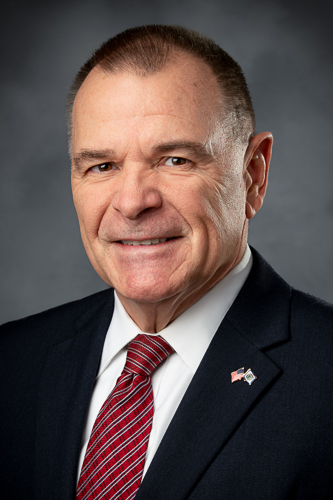
Del. Bill Ridenour
Sponsored bills
Maddy summaryHB 2181 prohibits counties and municipalities from charging fees, requiring connection to, or imposing improvement costs on private landowners who already have privately installed sanitary sewer systems. It directly affects landowners who installed their own sewers before the county built a public system, excluding them from being classified as "users" under sewer fee rules. The bill amends West Virginia law by redefining "user" to clarify these landowners cannot be charged for county sewer systems or required to connect. This policy change prevents municipalities from imposing public sewer costs on private system owners who predated municipal infrastructure.
Maddy summaryHB 3316 allows individuals convicted of misdemeanor sexual abuse in the third degree (under §61-8B-9) to petition courts for removal from the public sex offender registry after meeting specific criteria. To qualify, petitioners must wait at least 10 years after release, complete all supervision and sex offender treatment, have no new offenses requiring registration, and provide a risk assessment from a qualified professional. The court must notify victims, victim advocates, and prosecutors before deciding, and consider victim input during hearings. If approved, the individual’s name is removed from public records; if denied, they cannot reapply for 10 years. This applies only to misdemeanor cases, not felony sex offenses.
Maddy summaryHB 3299 prohibits West Virginia state and local government agencies from purchasing or operating drones (small unmanned aircraft systems) manufactured or assembled by foreign entities linked to China or Russia, as defined by U.S. sanctions lists. It requires agencies to replace non-compliant drones by May 1, 2028, and creates a grant program within the Department of Homeland Security to fund the transition to U.S.-made drones. The grant provides reimbursement based on a drone’s current value for agencies turning in non-compliant equipment, with priority for agencies submitting complete applications. Agencies must use funds only for drones meeting U.S. certification standards, such as Defense Innovation Unit’s Blue sUAS or AUVSI Green UAS. The bill directly affects all public safety and government drone users across the state.
Maddy summaryHB 3308 terminates West Virginia's Health Care Authority's certificate of need program, which previously required health care facilities to seek state approval before expanding services. This directly affects hospitals, clinics, and behavioral health providers that previously needed certificate approvals for new services or expansions. The bill repeals all related statutes, transfers the Authority's remaining powers, assets, records, and employees to the Secretary of the Department of Health, and moves funds to the general revenue fund. It also establishes a new summary review process for certain behavioral health services to meet federal Medicaid waiver requirements, but eliminates the broader certificate of need requirement.
Maddy summaryHB 3291 (West Virginia House Bill 3291) increases penalties for employers who knowingly hire undocumented workers. It directly affects businesses and organizations in West Virginia that employ unauthorized workers, imposing escalating fines: $1,000-$10,000 for a first offense, $5,000-$20,000 for a second, and $10,000-$30,000 plus up to one year in jail for third or subsequent offenses. The bill also penalizes employers who provide false work status records or transfer assets to evade these requirements, with fines of $1,000-$5,000 or up to one year in jail. These provisions amend existing West Virginia law (§21-1B-5) to strengthen enforcement against unauthorized employment.
Maddy summaryWest Virginia's House Concurrent Resolution 84 is a symbolic statement opposing China's misuse of UN Resolution 2758 to exclude Taiwan from international organizations. It clarifies that UNGA Resolution 2758 only addresses which government represents "China" in the UN and never intended to settle Taiwan's political status. The resolution urges the UN to stop using the resolution to deny Taiwan participation in UN bodies and reaffirms that the U.S. "one China policy" does not recognize China's claim over Taiwan. It emphasizes that UNGA Resolution 2758 does not prevent Taiwan's meaningful participation in international organizations like the WHO or ICAO. As a concurrent resolution, it has no legal force but expresses legislative position on diplomatic matters.
Maddy summaryHJR 35 proposes amending West Virginia's Constitution to change how the state superintendent of schools is selected. Currently appointed by the State Board of Education, the superintendent would instead be elected directly by voters in general elections every four years under this amendment. The bill does not alter the superintendent's duties, qualifications, or existing responsibilities as the chief school officer. It specifically targets the selection method for this education leadership role, shifting from an appointed position to an elected one. The amendment would require voter approval in the 2026 general election to take effect.
Maddy summaryHJR 36 proposes a constitutional amendment to clarify the duties and authority of the West Virginia Board of Education. The amendment would update Article XII, Section 2 of the state constitution to specify that the Board "shall perform only such duties as may be prescribed by law." This resolution requires voter approval at the 2026 general election to become part of the constitution. The change aims to provide clearer constitutional language but does not alter the Board's existing structure, appointment process, or current responsibilities.
Maddy summaryHB 3171, the "Citizen and State Accountability Act," requires state and local government agencies to seek the Governor's approval before accepting certain grants. For grants over $1 million (defined as "major grants"), agencies must submit a detailed 60-day analysis covering costs, policy impacts, and compliance requirements to the Governor and a fiscal office. For smaller grants ($1 million or less, "minor grants"), agencies must notify the Governor one week before applying. The bill mandates public reporting of all grant applications and requires the Governor to provide written consent for major grants or block minor grants entirely, with all grant details recorded in a public database.