

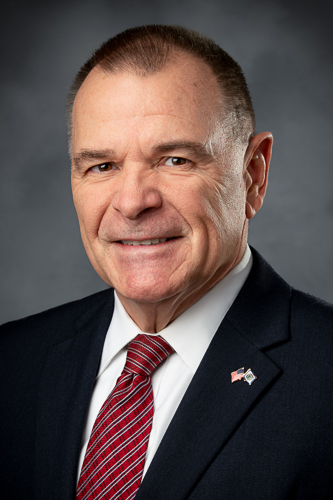
Maddy summaryHB 3461 changes when West Virginia judges of the Intermediate Court of Appeals are elected. It moves their elections from separate contests to occur during the state's regular general elections. The bill requires these judicial races to be voted on a nonpartisan ballot and follows existing tie-breaking rules for judicial elections. This directly affects judicial candidates and voters in those specific races.
Del. Bill Ridenour
Sponsored bills
Maddy summaryHB 3467 prohibits West Virginia state agencies and public entities from entering into contracts for $100,000 or more with companies that boycott Israel. It requires companies to provide written certification they are not currently boycotting Israel and will not during the contract term. The bill clarifies that this restriction applies to all state spending units, including agencies previously exempt from contracting rules. It defines "boycott of Israel" as actions penalizing Israel or Israeli businesses, and voids any violating contracts as against public policy. The law takes effect on July 1, 2022, as amended by this bill.
Maddy summaryHB 3464 establishes civil liability for West Virginia judges who knowingly violate laws, conduct unlawful hearings, or abuse litigants in their judicial duties. It removes judicial immunity for "willful misconduct," requiring clear evidence of such actions before a civil suit can be filed. Plaintiffs may seek compensatory damages, punitive damages for egregious cases, and attorney fees, but must first report misconduct to a judicial oversight body. The bill creates a 5-year statute of limitations, mandates public reporting of investigations, and allows disciplinary actions like suspension for proven misconduct, while protecting good-faith judicial decisions.
Maddy summaryHB 3418 amends West Virginia law to establish specific regulations for fixed odds wagering on dog racing, defining it as accepting bets on live dog races with predetermined odds. The bill creates new legal definitions (including §29-22D-15a) and specifies that this wagering can only occur at licensed gaming facilities, such as historic resort hotels or racetrack facilities operating under existing laws. It clarifies that fixed odds dog racing wagers may be combined with other authorized sports wagers but must comply strictly with the new provisions. The bill directly affects licensed operators at these facilities and sets the framework for how such wagering will be permitted under state law.
Maddy summaryHB 3454 would amend West Virginia law to allow current county school board members to run for state legislature or other public office without resigning from their school board position during the campaign. The bill removes the existing rule requiring school board members to resign before seeking other public office, while clarifying that holding non-school-related, unpaid board positions (with no compensation) does not conflict with school board membership. It also establishes a process for the West Virginia Ethics Commission to issue advisory opinions on eligibility conflicts and provides legal protections for school board members who rely on these opinions. This change directly affects school board members seeking state legislative or other public office without leaving their current role until after election results are finalized.
Maddy summaryHB 3462 requires West Virginia state agencies to remove trees on state-owned or leased property (including rights-of-way) that threaten damage to private structures. If a private property owner submits a written request with details, the state must remove the trees within six months. If the state fails to act, the property owner may cut down the trees themselves after giving the state seven days' notice and can then file a simplified claim for reimbursement under $10,000. This bill directly affects private property owners whose structures are at risk from state-owned trees, streamlining both removal requirements and cost recovery.
Maddy summaryHB 3449 allows professionals licensed in other states to obtain a West Virginia occupational license through recognition of their existing credentials, rather than requiring full re-licensing. To qualify, applicants must have worked in their licensed profession for at least one year in another state, have no license suspensions or disciplinary issues, and be in good standing with all states where they hold a license. The bill requires licensing boards to review applications within 60 days and establishes an appeals process for denied applications. It also prevents local governments from creating their own licensing rules for these occupations, ensuring a uniform state-level process.
Maddy summaryHB 3385 requires medication-assisted treatment (MAT) programs in West Virginia to establish written policies for community engagement and location planning. The bill prohibits new MAT programs from locating within 0.5 miles of schools or daycares (with limited variances for existing programs), bans recruitment incentives like rewards for patient referrals, and mandates 60-day public notice before new locations. Programs must notify county commissions and mayors via certified mail, detailing their community impact plans, and obtain local approval before operating. These requirements apply to all MAT facilities, including opioid treatment programs and office-based providers, with a waiver process requiring written justification and safety documentation.
Maddy summaryHB 3345 establishes a 50% tax credit for West Virginia family caregivers providing uncompensated care to eligible relatives. The credit covers eligible out-of-pocket expenses directly related to daily living needs (like home modifications, medical equipment, hiring aides, or respite care), with a maximum annual credit of $2,000. It applies to caregivers supporting family members who are 18+ and require assistance with activities of daily living (e.g., bathing, feeding, mobility), as certified by a healthcare provider. The credit is nonrefundable and will take effect January 1, 2027.
Maddy summaryHB 3319, the "Restoring Sanity Act," prohibits West Virginia public schools and state universities from requiring instruction, course content, or statements about specific concepts deemed "factual" or "beliefs" related to race, gender, or sexuality. It bans diversity, equity, and inclusion (DEI) offices at public colleges and redirects funds from such offices to merit scholarships for lower-income, first-generation, or in-state students. The bill also requires schools to report complaints about violations and prohibits employees from being required to use a student's preferred pronoun if it conflicts with their biological sex, while clarifying that using biological sex-based pronouns does not create legal liability. These provisions apply directly to school districts, public charter schools, the West Virginia Board of Education, and state universities.