Issue · Criminal Justice

Criminal Justice

Every criminal justice bill, vote, and legislator stance in West Virginia, automatically classified by Maddy, our AI policy reader.

Total bills
259
2026 Regular Session
Top supporter
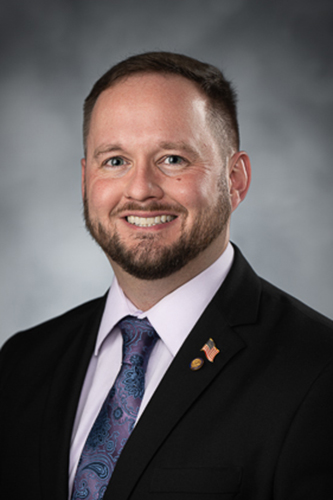
Elliott Pritt
80% support rate
Top opponent
Guy Ward
12% support rate
Ranked legislators
10
5 support · 5 oppose
Key legislators

Who's moving criminal justice in West Virginia

Legislators moving criminal justice in West Virginia
Legislator Party Stance Support rate Votes
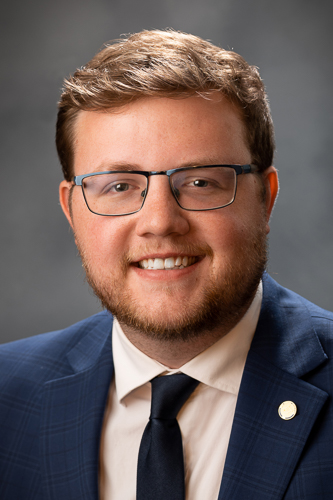
Elliott Pritt
Elliott Pritt House · District 50
R
Strong +
80% 24
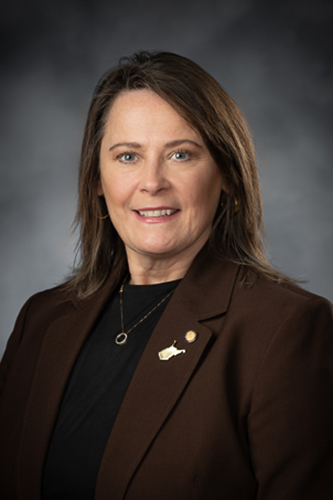
Margitta Mazzocchi
Margitta Mazzocchi House · District 31
R
Support
71% 27
Tresa Howell
Tresa Howell House · District 52
R
Support
67% 29
Chuck Horst
Chuck Horst House · District 95
R
Support
67% 29
Corby Dillon
Corby Dillon House · District 29
R
Support
67% 29
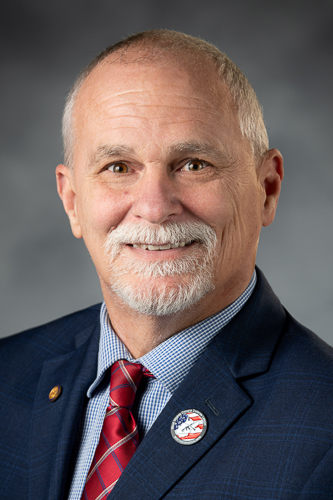
Guy Ward
Guy Ward House · District 74
R
Strong −
12% 28
Jarred Cannon
Jarred Cannon House · District 21
R
Strong −
14% 24
Betsy Kelly
Betsy Kelly House · District 9
R
Strong −
14% 21
Mickey Petitto
Mickey Petitto House · District 70
R
Strong −
17% 20
Phil Mallow
Phil Mallow House · District 75
R
Oppose
22% 29
Showing 41–50 of 259 bills

All criminal justice bills

in committee · West Virginia · House of Delegates Feb 3, 2026

HB 5117: Remove felonies from reason to disqualify from voting

HB 5117 would restore voting rights for West Virginia residents who have completed their prison sentence for a felony. Currently, individuals convicted of felonies are barred from voting until they finish all aspects of their sentence, including probation or parole. This bill removes that barrier by making them eligible to register as soon as they are released from prison, without waiting for probation or parole to end. It also requires the state's Division of Corrections to notify people of their voting rights upon release and the Division of Probation to do the same upon discharge.
in committee · West Virginia · Senate Feb 11, 2026

SB 920: Mandating life sentence for first degree murder of minor victim with firearm

SB 920, titled "Koda’s Law," mandates a life prison sentence without parole for anyone convicted of first-degree murder involving a minor victim (under 18) when a firearm is used. This bill directly affects defendants found guilty of this specific offense in West Virginia, replacing standard sentencing options with a mandatory life term. The key provision adds §61-2-2a to the state code, making life without parole the sole penalty for these crimes. The bill does not change murder definitions but requires automatic life sentences in these cases, removing judicial discretion for this subset of offenses.
in committee · West Virginia · House of Delegates Feb 3, 2026

HB 5082: Related to menstrual products in correctional facilities

HB 5082 requires West Virginia correctional facilities, regional jails, and juvenile detention centers to provide free feminine hygiene products (tampons and sanitary napkins) to female inmates and female juveniles upon request, with delivery within eight hours. The bill amends existing laws to explicitly mandate this provision, ensuring no cost to individuals who menstruate while incarcerated. This policy change applies directly to all female individuals in state custody who require these products, addressing a basic health need without financial burden.
in committee · West Virginia · Senate Feb 9, 2026

SB 883: Relating to standard of proof required for final parole or probation revocation hearing

SB 883 clarifies that West Virginia courts must use a "preponderance of the evidence" standard (meaning it is more likely than not true) for final hearings that could revoke probation or parole. It directly affects individuals on probation or parole who face revocation hearings for violating conditions. The bill specifies that for serious violations like absconding, new crimes, or violating protective conditions, courts may revoke probation and impose sentence, while minor violations may result in short confinement (up to 60 or 120 days) for first or second offenses. This change formally codifies the existing standard for these hearings without altering penalties or procedures.
Sub-Topics Probation & Parole
in committee · West Virginia · Senate Feb 17, 2026

SB 975: Excluding county reimbursement for any inmate declared incompetent to stand trial

SB 975 amends West Virginia law to exclude counties from receiving reimbursement for inmates declared mentally unfit to stand trial. Specifically, it removes such inmates from the list of individuals for whom counties must pay daily costs to the state correctional fund. This change directly affects counties that currently cover housing costs for inmates in state facilities under §15A-3-16(g). The bill modifies the reimbursement mechanism by excluding these inmates from the per-day cost calculation, shifting the financial responsibility entirely to the state.
Sub-Topics Corrections
signed · West Virginia · House of Delegates Jun 25, 2026

HB 5067: Relating to the powers and duties of the director of the Division of Administrative Services

HB 5067 clarifies the Division of Administrative Services' role in managing federal grants for law enforcement. It allows the Director to directly partner with law enforcement agencies (like the State Police) to apply for and administer federal grants restricted to such agencies. The bill also removes a previous requirement for the Deputy Secretary to hear certain appeals, instead directing the Office of Administrative Hearings to handle appeals from the Governor’s Committee on Crime subcommittees. This affects how state agencies coordinate federal grant funding and process appeals related to law enforcement certification decisions. The changes streamline grant administration but do not create new law enforcement powers.
in committee · West Virginia · House of Delegates Feb 16, 2026

HB 5589: Relating to cooperation with federal immigration authorities.

HB 5589 (West Virginia) prohibits state law enforcement agencies from entering new or continuing existing 287(g) agreements with federal immigration authorities (like ICE). It requires judicial warrants for ICE to enter nonpublic areas of government facilities or conduct enforcement in sensitive locations (schools, hospitals, places of worship). The bill bans detaining individuals solely based on ICE detainers and prohibits transferring people to ICE without a warrant. It directly affects all West Virginia law enforcement agencies and state facilities by restricting cooperation with federal immigration enforcement absent court authorization. The bill repeals previous state laws governing immigration cooperation and establishes new requirements for warrant-based enforcement.
in committee · West Virginia · House of Delegates Feb 12, 2026

HB 5479: Relating to prohibiting concealment of a law-enforcement officer’s identity or authority.

HB 5479 prohibits law enforcement officers from concealing their identity (e.g., by wearing masks or face coverings) during routine, warrantless stops where a person is not under arrest and there is no probable cause for a crime. This applies to non-custodial investigative stops, such as when officers briefly question individuals in public without evidence of wrongdoing. Exceptions include undercover operations, safety risks to officers, emergencies, or when authorized by law. The bill aims to increase transparency and prevent intimidation during such encounters, but does not apply to arrests or stops supported by probable cause.
in committee · West Virginia · House of Delegates Feb 16, 2026

HB 5599: To make the possession of fentanyl a felony offense

HB 5599 would make possessing fentanyl a felony offense, replacing its current misdemeanor classification. Under the bill, anyone found with fentanyl without a valid prescription could face up to 15 years in prison, a $25,000 fine, or both. The bill specifically targets fentanyl - a synthetic opioid - and applies to all possession, regardless of quantity, directly affecting individuals caught with the drug. This change amends West Virginia law to impose stricter penalties for fentanyl possession, aligning it with penalties for other serious controlled substances.
in committee · West Virginia · House of Delegates Feb 3, 2026

HB 5099: Relating to restitution payments for the support of a child whose parent or guardian is a victim of intoxication manslaughter

HB 5099 requires courts to order defendants convicted of DUI causing death to pay monthly child support for the victim's child until age 18 or high school graduation. This directly affects children who lost a parent or guardian to a DUI-related death and defendants sentenced for such offenses. The bill mandates courts to set reasonable payment amounts considering the child's needs, guardian's resources, and other factors, while offsetting payments by any existing civil judgment for the same accident. The law takes effect July 1, 2026, and applies only to offenses committed on or after that date.
Sub-Topics Victims' Rights
Showing 41 to 50 of 259 bills
Previous 1 4 5 6 26 Next