Issue · Criminal Justice

Criminal Justice

Every criminal justice bill, vote, and legislator stance in West Virginia, automatically classified by Maddy, our AI policy reader.

Total bills
259
2026 Regular Session
Top supporter
Elliott Pritt
80% support rate
Top opponent
Guy Ward
12% support rate
Ranked legislators
10
5 support · 5 oppose
Key legislators

Who's moving criminal justice in West Virginia

Legislators moving criminal justice in West Virginia
Legislator Party Stance Support rate Votes
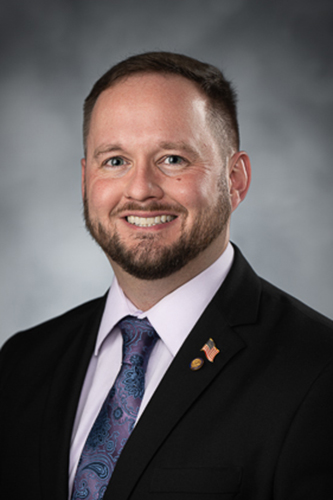
Elliott Pritt
Elliott Pritt House · District 50
R
Strong +
80% 24
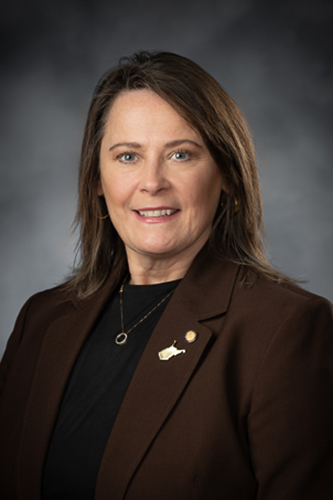
Margitta Mazzocchi
Margitta Mazzocchi House · District 31
R
Support
71% 27
Tresa Howell
Tresa Howell House · District 52
R
Support
67% 29
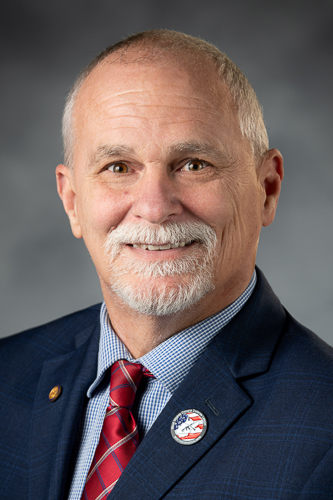
Chuck Horst
Chuck Horst House · District 95
R
Support
67% 29
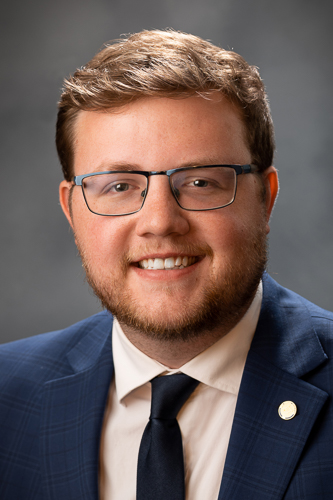
Corby Dillon
Corby Dillon House · District 29
R
Support
67% 29
Guy Ward
Guy Ward House · District 74
R
Strong −
12% 28
Jarred Cannon
Jarred Cannon House · District 21
R
Strong −
14% 24
Betsy Kelly
Betsy Kelly House · District 9
R
Strong −
14% 21
Mickey Petitto
Mickey Petitto House · District 70
R
Strong −
17% 20
Phil Mallow
Phil Mallow House · District 75
R
Oppose
22% 29
Showing 131–140 of 259 bills

All criminal justice bills

passed · West Virginia · House of Delegates Feb 16, 2026

HB 4098: To restore the right of a person to sit on a jury has been restored upon expungement of one’s record

HB 4098 amends West Virginia law to restore jury service eligibility for individuals with expunged felony convictions. It specifically updates the disqualification rule (§52-1-8(b)(6)) to clarify that people whose felony convictions have been legally expunged are no longer disqualified from serving on juries, provided they meet other standard requirements like citizenship and residency. This directly affects West Virginians who have completed the expungement process for felony offenses, allowing them to serve on juries without restriction. The change removes a barrier to civic participation for this group while maintaining existing disqualification criteria for unexpunged convictions.
in committee · West Virginia · House of Delegates Jan 26, 2026

HB 4829: Make speeds that exceed 30MPH over the speed limit reckless driving

HB 4829 amends West Virginia law to define driving more than 30 miles per hour over posted speed limits as reckless driving. This directly affects drivers who exceed speed limits by 30+ mph on public roads, school zones, state parks, or educational institution properties. The bill establishes penalties: a first offense carries up to 90 days in jail or a $500 fine, with harsher penalties for repeat offenses or if the speeding causes serious injury. Exceptions include temporarily closed racing events and designated recreational vehicle areas within state parks.
in committee · West Virginia · House of Delegates Jan 14, 2026

HB 4049: Relating to the creation of the Criminal Forfeiture Process Act replacing the West Virginia Contraband Forfeiture Act

HB 4049 replaces West Virginia's existing Contraband Forfeiture Act with a new Criminal Forfeiture Process Act specifically for property used in or derived from felony drug crimes (violations of the Controlled Substance Act). It establishes a criminal court process for forfeiture (replacing civil forfeiture), defines key terms like "contraband" (unlawful items such as drugs without prescription) and "innocent owner" (a person unaware of property use in crime), and prohibits offering seized property to federal agencies for federal forfeiture. The bill clarifies that courts handling the underlying criminal case have jurisdiction over forfeiture proceedings, and it explicitly states no property rights exist in contraband. This procedural bill directly affects law enforcement agencies, criminal defendants, and property owners involved in drug-related felony cases.
in committee · West Virginia · Senate Feb 12, 2026

SB 538: Increasing compensation for panel attorneys

This bill increases compensation rates for panel attorneys who provide court-appointed legal services to eligible clients in West Virginia. It directly affects public defense attorneys by requiring updated payment rates and mandating detailed time-tracking records (in tenths of hours) for case work. Key provisions include setting 45-day payment timelines after voucher submission, establishing clear appeal processes for rejected or reduced payments, and requiring Public Defender Services to annually report legal services data to oversight bodies like the Legislative Oversight Commission and Supreme Court. The bill also adds new requirements for electronic voucher processing and court review of payment disputes.
Sub-Topics Courts
in committee · West Virginia · House of Delegates Jan 22, 2026

HB 4761: Raise the Penalties for Murder and attempted Murder

HB 4761 modifies parole eligibility for individuals convicted of murder or attempted murder in West Virginia. It increases the minimum time inmates must serve before becoming parole-eligible: 20 years for second-degree murder (up from 10), and 10-40 years for attempted first-degree murder (up from 3-15) or 5-20 years for attempted second-degree murder (up from 1-3). The bill also adds provisions allowing prosecutors and victims' families to attend parole hearings remotely or in person. These changes directly affect inmates serving sentences for these specific violent offenses. The bill does not alter sentence lengths but restricts early release opportunities for these crimes.
Sub-Topics Probation & Parole
in committee · West Virginia · House of Delegates Jan 20, 2026

HB 4557: To create the felony offense for protestors blocking passage on streets and highways.

HB 4557 creates a new criminal offense for intentionally blocking public streets, highways, or sidewalks used by the public, defining "obstruct" as making passage impassable, unreasonably inconvenient, or hazardous. It directly affects individuals who protest by blocking roadways, including those who ignore law enforcement requests to move. The bill establishes misdemeanor penalties ($500+ fine, 1+ month jail) for basic violations, and felony penalties ($1,000+ fine, 3 months-3 years jail) for repeat offenses, blocking emergency vehicles, or obstructing hospital access. The law applies to any person acting without legal authority to block public passageways.
signed · West Virginia · House of Delegates Jun 29, 2026

HB 4345: Relating to the preservation of missing persons records and evidence

HB 4345 requires law enforcement agencies in West Virginia to permanently retain all records and evidence for missing persons cases that remain unresolved after one year. It mandates that agencies digitize all documentation and physical/biological evidence for these cases and transmit the complete records to the West Virginia Fusion Center. The bill directly affects law enforcement agencies (including county and municipal departments) by establishing new requirements for record retention, digitization, and database sharing. Key provisions include banning destruction of unresolved case files, requiring secure digital storage, and ensuring evidence is preserved permanently. This applies to all missing persons cases, not just children or high-risk situations.
Sub-Topics Law Enforcement
in committee · West Virginia · House of Delegates Jan 21, 2026

HB 4648: To ensure felonies or violent misdemeanors are not eligible for personal recognizance discharge from jail

HB 4648 amends West Virginia's bail laws to require individuals accused of felonies or violent misdemeanors to post bond before being released from jail, eliminating their eligibility for release on personal recognizance (i.e., without posting money or collateral). The bill specifically prohibits judges from releasing such defendants without bail and increases the cash bail threshold for nonviolent felonies, with annual inflation adjustments starting July 1, 2026. These changes apply directly to people charged with offenses covered under the bill’s definitions, including violent misdemeanors involving threats, weapons, or minors. The law modifies sections §62-1C-1 and §62-1C-1a of the West Virginia Code to enforce these bail requirements.
Sub-Topics Corrections
in committee · West Virginia · House of Delegates Jan 28, 2026

HB 4886: Relating to guidelines for home confinement

HB 4886 clarifies travel permissions for individuals under home confinement in West Virginia. It specifies that people confined to their homes may travel only for essential purposes: work, medical appointments, religious services at their chosen place of worship, court-ordered activities, and grocery shopping for food and household items. The bill amends existing law to explicitly define these permitted destinations, removing ambiguity about allowable travel. This directly affects individuals sentenced to home confinement by circuit or magistrate courts. The change focuses solely on defining permitted travel, not altering sentencing terms or monitoring requirements.
Sub-Topics Courts Judges Sentencing
in committee · West Virginia · House of Delegates Jan 26, 2026

HB 4826: Relating to petition for involuntary treatment for drug and alcohol abuse

HB 4826 establishes a legal process for involuntary treatment of individuals with substance use disorders in West Virginia. It directly affects people who meet strict criteria (having a substance use disorder, posing an imminent danger to self/others, and likely benefiting from treatment) and their family members or friends who file petitions. Key provisions require verified petitions from petitioners (like spouses or relatives) guaranteeing treatment costs, court hearings within 72 hours, and medical evaluations by qualified professionals before ordering 60-day or 360-day treatment. The bill also creates a 72-hour emergency hospitalization option for immediate danger, requiring court approval based on strong evidence. All procedures must follow specific court oversight to protect patient rights.
Showing 131 to 140 of 259 bills
Previous 1 13 14 15 26 Next