Issue · Criminal Justice

Criminal Justice

Every criminal justice bill, vote, and legislator stance in West Virginia, automatically classified by Maddy, our AI policy reader.

Total bills
259
2026 Regular Session
Top supporter
Elliott Pritt
80% support rate
Top opponent
Guy Ward
12% support rate
Ranked legislators
10
5 support · 5 oppose
Key legislators

Who's moving criminal justice in West Virginia

Legislators moving criminal justice in West Virginia
Legislator Party Stance Support rate Votes
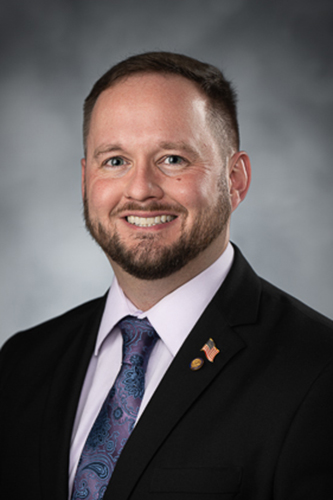
Elliott Pritt
Elliott Pritt House · District 50
R
Strong +
80% 24
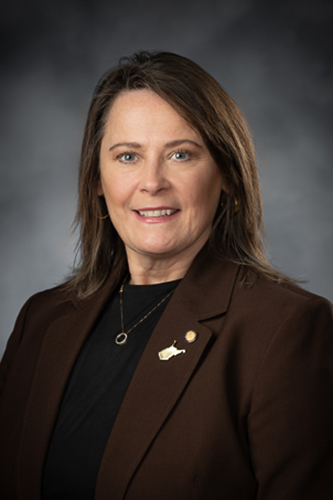
Margitta Mazzocchi
Margitta Mazzocchi House · District 31
R
Support
71% 27
Tresa Howell
Tresa Howell House · District 52
R
Support
67% 29
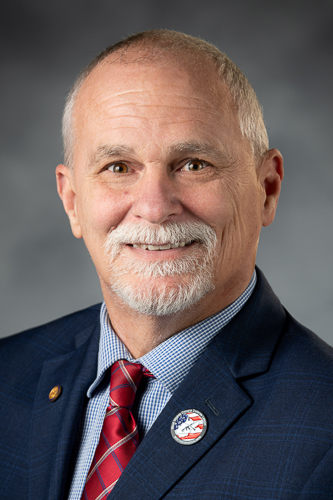
Chuck Horst
Chuck Horst House · District 95
R
Support
67% 29
Corby Dillon
Corby Dillon House · District 29
R
Support
67% 29
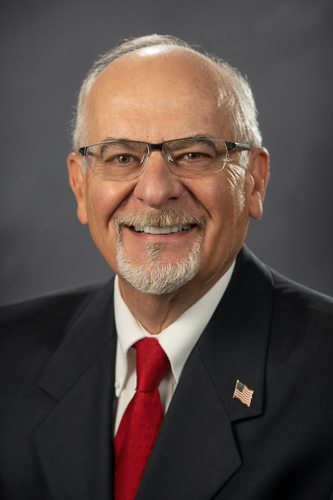
Guy Ward
Guy Ward House · District 74
R
Strong −
12% 28
Jarred Cannon
Jarred Cannon House · District 21
R
Strong −
14% 24
Betsy Kelly
Betsy Kelly House · District 9
R
Strong −
14% 21
Mickey Petitto
Mickey Petitto House · District 70
R
Strong −
17% 20
Phil Mallow
Phil Mallow House · District 75
R
Oppose
22% 29
Showing 91–100 of 259 bills

All criminal justice bills

in committee · West Virginia · House of Delegates Feb 18, 2026

HB 5206: To make certain acts of panhandling and solicitation unlawful

HB 5206 makes certain panhandling and solicitation practices unlawful in West Virginia, directly affecting individuals requesting money, goods, or services in public spaces. The bill prohibits panhandling in specific locations (like bus stops, near ATMs, schools, and within 100-200 feet of highways) and during restricted hours (9 a.m. to 6 p.m.), while requiring licensed panhandlers to carry ID and permits. Exemptions apply to fire departments, school groups, and 501(c)(3) nonprofits soliciting for their operations. Violations carry misdemeanor fines starting at $100 for a first offense, increasing to $1,000 for repeat offenses, with permit revocation after three violations.
in committee · West Virginia · House of Delegates Feb 3, 2026

HB 5094: Prohibiting the private ownership or operation of a prison

HB 5094 bans private ownership and operation of prisons in West Virginia, effective July 1, 2026. The bill prohibits private companies from running correctional facilities, removing existing approval requirements for private prison operations that would otherwise apply. It explicitly allows state-run facilities and specifies that foreign court inmates sentenced abroad cannot be held in private prisons. This directly affects private prison companies operating in West Virginia and changes the state's correctional system by eliminating private contracting for prison management.
Sub-Topics Corrections Courts
in committee · West Virginia · House of Delegates Feb 3, 2026

HB 5146: Relating to drug scheduling

HB 5146 would amend West Virginia's drug scheduling law to remove marijuana, psilocybin, and tetrahydrocannabinols (THC) from Schedule I, the most restrictive category for controlled substances. This change would move these substances to a less restrictive classification under the state's Uniform Controlled Substances Act. The bill directly affects how these specific substances are legally treated in West Virginia, removing their current Schedule I status. It does not address medical or recreational use but changes their regulatory classification. The bill was introduced by Delegate Young and referred to the Health and Human Resources and Judiciary committees.
Sub-Topics Drug Policy
in committee · West Virginia · Senate Feb 5, 2026

SB 783: Relating to sentence of death or life imprisonment for capital sexual battery

SB 783 proposes that defendants convicted of sexual battery (or attempted sexual battery) causing injury to the sexual organs of a child under 12 years old face a mandatory death penalty or life imprisonment without parole. The bill requires a separate sentencing hearing after conviction, where a jury must unanimously find at least two aggravating factors to consider the death penalty. If eight or more jurors recommend death, the court must impose it; otherwise, life without parole is required. This bill directly affects individuals convicted of this specific child sexual abuse offense in West Virginia.
in committee · West Virginia · Senate Feb 20, 2026

SB 1016: Creating Second Look Sentencing Act

SB 1016, the "Second Look Sentencing Act," allows West Virginia judges to reconsider prison sentences of 10+ years for individuals who committed offenses before age 25 and have served at least 10 years. The bill requires courts to evaluate factors like rehabilitation efforts, maturity, victim input, and the defendant's age at the time of the crime before reducing a sentence. If approved, sentences may be reduced to time served or modified with up to five years of supervised release, while ensuring defendants have a right to a hearing with appointed counsel. The law specifically targets young offenders whose circumstances may have changed significantly after a decade in prison, aiming to balance public safety with opportunities for reintegration.
in committee · West Virginia · Senate Feb 21, 2026

SB 1046: Increasing fines for first degree sexual assault

Senate Bill 1046 increases the fine for first-degree sexual assault from $1,000-$10,000 to $10,000-$100,000. It specifically mandates life imprisonment and a $50,000-$250,000 fine for offenders aged 18 or older who commit sexual assault against victims under 12 years old. The bill also updates jury procedures to require explicit findings on life imprisonment eligibility in these cases. This legislation directly affects individuals convicted of first-degree sexual assault, particularly those involving child victims under 12.
Sub-Topics Violent Crime
in committee · West Virginia · House of Delegates Feb 3, 2026

HB 5156: Second Look Sentencing Act

HB 5156, the Second Look Sentencing Act, allows West Virginia judges to reconsider prison sentences exceeding 10 years for individuals who have served at least a decade. To qualify, a person must demonstrate they are not a danger, pose no credible risk of reoffending, show readiness for reentry, and meet the interests of justice. The court must consider factors like rehabilitation progress, age at offense and petition, victim input, and completion of correctional programs before modifying the sentence, with a presumption of release for applicants aged 50 or older. Any sentence modification requires up to five years of supervised release post-release, and denied applicants may reapply under specific time limits.
in committee · West Virginia · House of Delegates Feb 9, 2026

HB 5375: Truancy Reform Act

HB 5375, the Truancy Reform Act, changes West Virginia's truancy laws to prioritize support over punishment. It removes criminal penalties for students aged 18 or older who miss school, replaces fines with school attendance requirements for first offenses, and creates a pretrial diversion program for parents/guardians of children under 18. This allows families to avoid conviction by addressing truancy causes within 60 days, with courts able to delay sentences and refer families to Department of Human Services for home-based support. The bill also modifies penalties for repeat offenses, including conditional school enrollment after a third violation for 18+ students. It directly affects parents, guardians, custodians, and students aged 18+ in truancy cases.
in committee · West Virginia · House of Delegates Feb 11, 2026

HB 5450: Relating to appeals of certification decisions by the Department of Homeland Security

HB 5450 would transfer responsibility for hearing appeals of certain law enforcement certification decisions from the Deputy Secretary of the Department of Military Affairs and Public Safety to the Office of Administrative Hearings. This applies to appeals concerning denials of entry into law enforcement certification programs, denials of continued training, denials of certification reactivation, and suspensions or decertifications of officers. The bill amends state law to clarify that the Office of Administrative Hearings will handle these appeals instead of the current office, centralizing the process. This is a procedural change affecting law enforcement applicants and officers challenging certification decisions.
Sub-Topics Law Enforcement
in committee · West Virginia · House of Delegates Feb 2, 2026

HB 5016: To clarify those required to register sex offenders, who must register temporary addresses

HB 5016 clarifies West Virginia's sex offender registration rules for individuals without a permanent residence, requiring them to register "transient residences" - defined as any location where they stay for three or more days in a year (including places without a street address, like shelters or temporary housing). The bill ensures these individuals meet legal obligations by reporting their temporary stays, alongside standard registration details like name, address, and employment. It does not change which offenses require registration but makes the process clearer for people without a fixed home, such as the homeless or frequent travelers. This update aims to improve compliance while maintaining existing registration standards.
Showing 91 to 100 of 259 bills
Previous 1 9 10 11 26 Next