Issue · Budget & Taxes

Budget & Taxes

Every budget & taxes bill, vote, and legislator stance in West Virginia, automatically classified by Maddy, our AI policy reader.

Total bills
503
2026 Regular Session
Top supporter
Chris Phillips
93% support rate
Top opponent
Corby Dillon
14% support rate
Ranked legislators
10
5 support · 5 oppose
Key legislators

Who's moving budget & taxes in West Virginia

Legislators moving budget & taxes in West Virginia
Legislator Party Stance Support rate Decisive votes
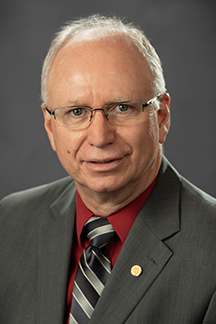
Chris Phillips
Chris Phillips House · District 68
R
Strong +
93% 15
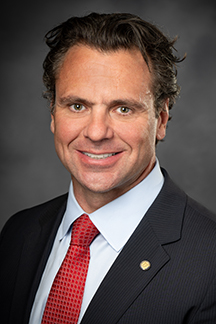
Guy Ward
Guy Ward House · District 74
R
Strong +
93% 15
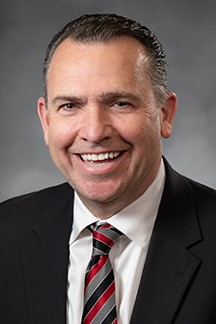
J.B. Akers
J.B. Akers House · District 55
R
Strong +
93% 15
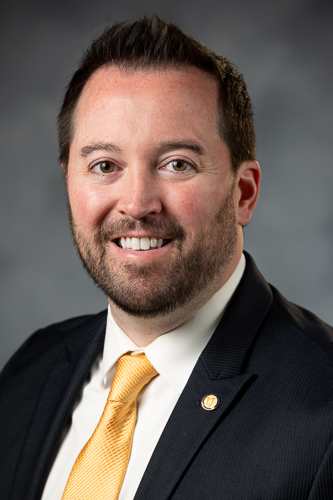
John Jordan
John Jordan House · District 42
R
Strong +
93% 15
Jonathan Pinson
Jonathan Pinson House · District 17
R
Strong +
93% 15
Corby Dillon
Corby Dillon House · District 29
R
Strong −
14% 14
Shawn Fluharty
Shawn Fluharty House · District 5
D
Oppose
31% 13
Marty Gearheart
Marty Gearheart House · District 37
R
Oppose
33% 9
Anitra Hamilton
Anitra Hamilton House · District 81
D
Oppose
40% 15
Evan Hansen
Evan Hansen House · District 79
D
Oppose
40% 15
Showing 281–290 of 503 bills

All budget & taxes bills

in committee · West Virginia · Senate Jan 15, 2026

SB 405: Relating to nonresident income tax for natural resources royalty payments received from lessees

This bill requires companies (lessees) that pay mineral royalty payments (e.g., for coal, oil, or gas) to nonresident owners (lessors) to withhold West Virginia income tax from those payments. Lessees must withhold tax on annual payments exceeding $1,000, remit the withheld amount to the state, and provide annual statements to the nonresident lessors. Nonresident owners will be credited for the withheld tax against their state tax liability and can receive refunds for overpayments. The law aims to ensure nonresident mineral rights owners pay taxes on income earned from West Virginia resources, closing a revenue gap identified by the legislature.
Sub-Topics Income Tax
in committee · West Virginia · House of Delegates Jan 28, 2026

HB 4902: Place Correction and Rehab state workers into a separate category from other state workers and increase their salary scales.

House Bill 4902 provides a 3% salary adjustment for non-uniform administrative staff in West Virginia's Division of Corrections and Rehabilitation (DCR) who have at least three years of continuous service, effective July 1, 2026. Employees with less than three years of service will receive the same 3% adjustment after completing three years, calculated based on their salary at that time. The bill directs that funding for these increases come from the DCR's general revenue appropriations and specifies that adjustments will take effect even if they exceed standard pay grade maximums. This change directly affects DCR non-uniform administrative staff by creating a separate pay structure for their roles.
Sub-Topics Revenue
signed · West Virginia · Senate Jun 25, 2026

SB 592: WV Short Line Railroad Modernization Act

SB 592 creates a tax credit program for West Virginia short line railroads and related infrastructure. It provides a 50% tax credit on qualified maintenance costs (capped at $5,000 per mile of track) and new infrastructure investments (capped at $2 million per project, with a $5 million annual limit). Eligible taxpayers include Class II/III railroads operating in West Virginia and owners/lessees of rail sidings or industrial spurs. Credits can be carried forward for up to five years or transferred to other taxpayers via written agreement. The bill directly supports rail infrastructure modernization by reducing costs for qualifying rail operators.
Sub-Topics Tax Credits Rail
in committee · West Virginia · House of Delegates Feb 17, 2026

HB 4950: To establish the West Virginia Freedom and Innovation Pilot Act of 2026

HB 4950 establishes the West Virginia Freedom and Innovation Pilot Act of 2026, creating a voluntary program for any West Virginia county to join. Participating counties would receive $5,775 per enrolled student (as of December 2025) with a 1% annual funding increase if enrollment grows, while being exempt from state-mandated staffing ratios, service quotas, and central salary schedules - though they must still follow the Third Grade Success Act and federal requirements. Counties in the program maintain full control over school calendars, class sizes, salaries, and benefits, but administrative costs are capped at 7% of their total annual budget. The pilot begins July 1, 2026, and will be reviewed by the Legislative Oversight Commission on Education Accountability by July 1, 2031, after which it will sunset unless extended.
in committee · West Virginia · House of Delegates Jan 20, 2026

HB 4571: Taxpayer Protection Act

HB 4571, the "Taxpayer Protection Act," prevents West Virginia residents from being wrongly classified as independent contractors instead of employees. It requires the Tax Commissioner to apply an "ABC" test to determine worker status: (1) absence of employer control, (2) work being unusual for the employer’s business, and (3) the worker operating as an independent business. Employers must prove all three criteria to classify a worker as an independent contractor; otherwise, the worker is presumed an employee for tax purposes. This ensures the state collects proper income taxes from employment relationships, directly affecting both workers (who may gain tax protections) and hiring businesses (which must comply with the classification rules).
in committee · West Virginia · House of Delegates Jan 28, 2026

HB 4883: Abolish the tax on overtime pay

HB 4883 would exempt overtime pay from West Virginia's personal income tax. Currently, workers pay state income tax on overtime earnings, but this bill would remove that tax obligation. The provision applies directly to all West Virginia employees who earn overtime pay under state labor laws. This change would increase take-home pay for affected workers by eliminating the tax on overtime hours.
in committee · West Virginia · Senate Jan 14, 2026

SB 164: Establishing Joint Commission on Government Efficiency

SB 164 establishes a temporary Joint Commission on Government Efficiency to review state agencies and identify ways to reduce waste, improve efficiency, and save costs. The commission, composed of legislative members and private-sector volunteers with business management experience, will conduct audits and make recommendations but cannot implement changes directly. State agencies must cooperate with the commission’s requests; noncompliance risks losing future funding. The commission expires 18 months after enactment and operates without state funding or staff compensation.
in committee · West Virginia · House of Delegates Jan 19, 2026

HB 4507: Relating to allowing a personal income tax exemption for First Responders

HB 4507 would exempt the salaries of certain first responders from West Virginia's state personal income tax. It directly affects law enforcement officers, paid firefighters, correctional officers, and emergency medical services (EMS) personnel as defined in existing state law. The bill adds a new provision to the tax code stating these workers' salaries are not subject to state income tax. This change applies only to their earned income from these specific roles, not other income they may receive.
Sub-Topics Income Tax Tax Incentives Law Enforcement Tags Public Safety
in committee · West Virginia · House of Delegates Jan 29, 2026

HB 4922: To exempt all WV residents 65 and older from personal property taxes and real estate property taxes effective Jan 1, 2027

HB 4922 would exempt all West Virginia residents aged 65 and older from both personal property taxes and real estate property taxes starting January 1, 2027. The bill amends existing tax exemption laws (§11-3-9 and §11-6B-3) to add this new category for seniors, directly affecting older residents who own property in the state. It clarifies that this exemption applies to all real estate and personal property, not just primary residences. The policy change takes effect on a specific date (January 1, 2027), with no mention of income limits or other qualifying conditions in the bill text. This is a direct tax relief measure for senior citizens, not a procedural or commemorative bill.
Sub-Topics Property Tax Sales Tax Tax Incentives Tags Seniors
in committee · West Virginia · Senate Jan 20, 2026

SB 516: Increasing state minimum salary for teachers

SB 516 sets a new state minimum salary of $50,000 for all West Virginia public school teachers beginning in the 2026-2027 school year, replacing the previous minimum schedule. It also provides a $2,000 annual base salary increase for every teacher and an additional $1,200 annual increase specifically for teachers providing math instruction or special education services. The bill amends the state salary schedule to reflect these changes, ensuring all teachers meet the new $50,000 minimum regardless of experience level or degree. This policy directly affects every public school teacher in West Virginia, with the changes taking effect for the 2026-2027 school year.
Showing 281 to 290 of 503 bills
Previous 1 28 29 30 51 Next