Issue · Budget & Taxes

Budget & Taxes

Every budget & taxes bill, vote, and legislator stance in West Virginia, automatically classified by Maddy, our AI policy reader.

Total bills
43
2026 Regular Session
Top supporter
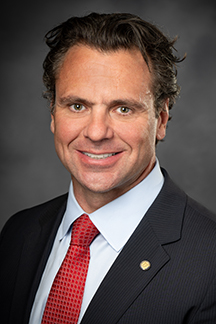
Ryan Browning
93% support rate
Top opponent
Corby Dillon
14% support rate
Ranked legislators
10
5 support · 5 oppose
Key legislators

Who's moving budget & taxes in West Virginia

Legislators moving budget & taxes in West Virginia
Legislator Party Stance Support rate Votes
Ryan Browning
Ryan Browning House · District 28
R
Strong +
93% 46
J.B. Akers
J.B. Akers House · District 55
R
Strong +
93% 48
Jonathan Pinson
Jonathan Pinson House · District 17
R
Strong +
93% 48
Chris Phillips
Chris Phillips House · District 68
R
Strong +
93% 48
Jordan Maynor
Jordan Maynor House · District 41
R
Strong +
93% 48
Corby Dillon
Corby Dillon House · District 29
R
Strong −
14% 47
Shawn Fluharty
Shawn Fluharty House · District 5
D
Oppose
31% 45
Marty Gearheart
Marty Gearheart House · District 37
R
Oppose
33% 37
Evan Hansen
Evan Hansen House · District 79
D
Oppose
40% 48
Mike Pushkin
Mike Pushkin House · District 54
D
Oppose
40% 48
Showing 11–20 of 43 bills

All budget & taxes bills

in committee · West Virginia · House of Delegates Feb 17, 2026

HB 5678: To provide amendments to the Build WV Act

HB 5678 amends the Build WV Act to replace a $150 million total project cost cap with a $2 million annual cap on new tax credit liability for projects approved in each fiscal year. It specifically allows smaller rural projects to qualify for credits while clarifying the cap applies only to new project approvals, not existing projects. The bill also establishes a Build WV Credit Reserve Fund (starting at $2 million) to cover refundable tax credits for completed projects, requiring annual adjustments based on demand and usage. These changes directly affect companies seeking Build WV tax credits by altering how credits are calculated and capped, with the reserve fund ensuring payment for approved credits.
Sub-Topics Tax Credits
in committee · West Virginia · Senate Feb 12, 2026

SB 926: Eliminating capital gains tax on certain precious metals

SB 926, introduced in the West Virginia Senate on February 12, 2026, proposes to eliminate state capital gains tax on the sale or exchange of certain precious metal bullion. The bill would amend West Virginia's tax code to exclude gains from selling gold, silver, platinum, or palladium bullion from taxable adjusted gross income. This change would directly affect West Virginia residents who sell qualifying precious metals, reducing their state tax liability on those transactions. The bill is currently pending in the Senate Finance Committee and has not yet been enacted into law.
signed · West Virginia · Senate Jun 25, 2026

SB 643: Discontinuing WV Supreme Court of Appeals Public Campaign Financing Program

SB 643 repeals all sections of West Virginia law (§3-12-1 through §3-12-16) that established the West Virginia Supreme Court of Appeals Public Campaign Financing Program. The bill directly discontinues a program that provided public funding to candidates running for the state Supreme Court. Key provisions include removing all legal references to this financing mechanism, effectively ending the program's operation. This is a procedural repeal with no new funding or requirements added.
in committee · West Virginia · House of Delegates Jan 29, 2026

HB 4961: Cap the amount of family income eligible for Hope Scholarships

HB 4961 would limit eligibility for West Virginia's Hope Scholarship program by capping family income at $150,000 in the taxable year of application. This change directly affects parents applying for the scholarship to cover K-12 education expenses for their children. The bill amends existing law to require that a parent's combined federal adjusted gross income must be below $150,000, replacing any previous income threshold. It does not alter other program requirements, such as qualifying education expenses or application procedures.
in committee · West Virginia · House of Delegates Jan 21, 2026

HB 4675: Relating to “Rain Tax”

HB 4675, titled "Relating to 'Rain Tax'," would prohibit West Virginia municipalities from charging property owners a fee based on stormwater, runoff, rain, or similar precipitation-related factors. This bill amends state law to remove local governments' authority to impose such fees, directly affecting residential and commercial property owners who might have been charged for these services. The key mechanism is a clear prohibition on assessing any fee tied to precipitation management, replacing existing provisions that allowed stormwater fees under municipal ordinances. This change would require municipalities to find alternative funding methods for stormwater programs but does not specify new funding mechanisms.
introduced · West Virginia · Senate Jan 14, 2026

SB 150: Exempting automobiles 25 years or older from personal property taxes

SB 150 would exempt passenger cars that are 25 years old or older from West Virginia's personal property tax. The bill amends the state tax code to add these vintage vehicles to the list of property already exempt from taxation. This change directly affects owners of older vehicles meeting the age requirement by eliminating their annual property tax obligation for qualifying cars. The exemption applies to all qualifying passenger cars without regard to their value, condition, or whether they are used for personal or collector purposes.
Sub-Topics Property Tax Sales Tax
in committee · West Virginia · Senate Jan 23, 2026

SB 596: Eliminating transfer taxes for siblings and for LLC solely owned by individual transferor

SB 596 eliminates transfer taxes for two specific scenarios in West Virginia: transfers of property between siblings, and transfers involving a limited liability company (LLC) solely owned by an individual. This means individuals transferring property to siblings or transferring their personal LLC (without other owners) would no longer owe the state's excise tax on the transfer. The bill amends existing tax law to explicitly add these exemptions, building on current exemptions for transfers between parents/children, spouses, and other family members. It directly affects West Virginia residents who transfer property through these specific family or LLC arrangements.
Sub-Topics Sales Tax
in committee · West Virginia · House of Delegates Jan 30, 2026

HB 4430: Eliminating the authority of the West Virginia Parkways Authority to issue further parkway revenue, parkway revenue refunding, or special obligation bonds after July 1, 2025

HB 4430 would eliminate the West Virginia Parkways Authority's power to issue new parkway revenue bonds, parkway revenue refunding bonds, or special obligation bonds after July 1, 2026. This means the Authority cannot raise additional funds for future parkway projects through these bonds after that date. The bill does not affect existing bonds or projects already funded prior to July 1, 2026. It amends specific sections of West Virginia law to set this expiration date for new bond issuances.
in committee · West Virginia · Senate Jan 14, 2026

SJR 12: Elimination of Business Inventory Tax Amendment

SJR 12 proposes a constitutional amendment to eliminate West Virginia's tax on business inventory, which would prohibit the state from taxing goods, materials, or products held for sale, manufacturing, or processing. If approved by voters in the 2026 election, this amendment would require the state to replace lost revenue for counties, municipalities, and school districts through alternative funding mechanisms. The amendment specifies that local governments may adjust tax policies within state law to maintain fiscal stability after the tax is removed. This is a voter-approved constitutional change, not an immediate law, and would take effect upon ratification.
in committee · West Virginia · House of Delegates Feb 23, 2026

HB 4587: Prohibiting public funds from supporting low-earning outcome postsecondary degree programs

HB 4587 prohibits West Virginia state and local public funds from supporting postsecondary degree programs classified as "low-earning outcome" under federal standards. It requires the Higher Education Policy Council to adopt rules blocking state funding - including student aid, operational costs, and capital grants - for these programs, and to annually report on prohibited programs and fiscal impacts. The bill directly affects public colleges, universities, and students enrolled in degrees deemed low-earning by federal criteria (per Public Law 119-21, Section 84001). It takes effect immediately upon passage, restricting state and local government funding for specific degree programs without specifying exact income thresholds.
Sub-Topics Higher Education
Showing 11 to 20 of 43 bills
Previous 1 2 3 5 Next