Issue · Environment

Environment (Water Quality)

Every environment bill, vote, and legislator stance in West Virginia, automatically classified by Maddy, our AI policy reader.

Total bills
21
2026 Regular Session
Top supporter
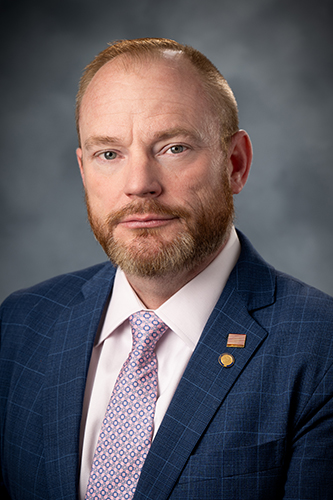
Chris Anders
100% support rate
Top opponent
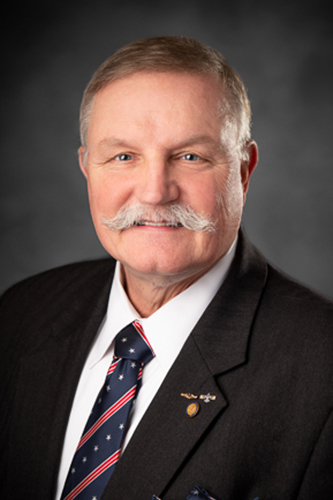
Betsy Kelly
0% support rate
Ranked legislators
10
5 support · 5 oppose
Key legislators

Who's moving water quality in West Virginia

Legislators moving water quality in West Virginia
Legislator Party Stance Support rate Votes
Chris Anders
Chris Anders House · District 97
R
Strong +
100% 3
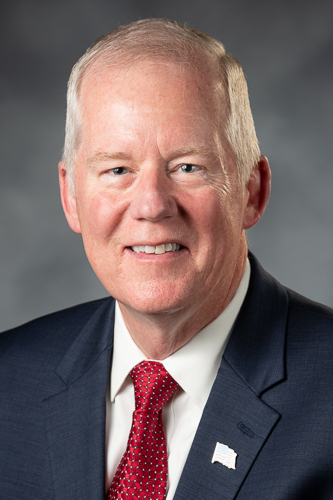
Rick Hillenbrand
Rick Hillenbrand House · District 88
R
Strong +
100% 3
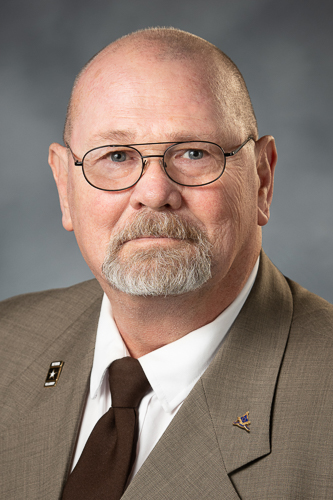
Adam Vance
Adam Vance House · District 35
R
Support
67% 3
Andy Shamblin
Andy Shamblin House · District 59
R
Support
67% 3
Anitra Hamilton
Anitra Hamilton House · District 81
D
Support
67% 3
Betsy Kelly
Betsy Kelly House · District 9
R
Strong −
0% 3
Bob Fehrenbacher
Bob Fehrenbacher House · District 11
R
Strong −
0% 3
Buck Jennings
Buck Jennings House · District 84
R
Strong −
0% 3
Chuck Sheedy
Chuck Sheedy House · District 7
R
Strong −
0% 3
J.B. Akers
J.B. Akers House · District 55
R
Strong −
0% 3
Showing 1–10 of 21 bills

All environment bills

passed · West Virginia · Senate Mar 14, 2026

SCR 7: Requesting Joint Committee on Government and Finance study ongoing water crisis in southern WV

This legislative resolution asks the Joint Committee on Government and Finance to investigate the ongoing water quality and infrastructure problems in southern West Virginia, especially in McDowell and Wyoming counties. The study will examine causes of poor water quality, potential contamination sources, the condition of existing water systems, and whether state agencies are properly regulating the situation. The committee is required to report its findings and recommendations to the legislature by the 2027 session, with costs covered by legislative funding.
in committee · West Virginia · House of Delegates Feb 16, 2026

HB 5590: Create a limited and predictable water-quantity review framework for High Impact Data Centers (HIDCs) in West Virginia.

HB 5590 requires certified high impact data centers (HIDCs) in West Virginia to disclose anticipated water usage before construction and submit projected withdrawal volumes to the Department of Environmental Protection (DEP). The bill limits DEP review to water quantity only, denying approval only if withdrawals would reduce water supply below levels needed to meet existing lawful demands (e.g., public water systems, agriculture, or other users) during droughts. HIDCs must also report actual annual water usage, comparing it to projections, and may use existing reports to satisfy this requirement. The bill explicitly states it does not create new permitting, expand water quality regulations, or apply to power plants or microgrids.
Sub-Topics Water Quality
in committee · West Virginia · House of Delegates Feb 4, 2026

HB 5190: Increase conservation funding by $300,000, with the increase only to be allocated based on the head count of cattle and/or large livestock

HB 5190 increases West Virginia's annual conservation funding by $300,000, with the additional funds allocated exclusively based on the head count of cattle and/or large livestock. This change directly affects land conservation grant programs, requiring that new funding distribution be tied to livestock numbers rather than other conservation criteria. The bill amends existing law to mandate this livestock-based allocation starting July 1, 2026. It does not alter the existing conservation criteria (like wildlife habitat or watershed protection) but specifies how the new $300,000 will be distributed. The change applies only to the incremental funding, not the existing conservation budget.
Sub-Topics Conservation Water Quality Wildlife Tags Agriculture
in committee · West Virginia · House of Delegates Feb 17, 2026

HCR 20: Designating the City of Gary water and wastewater systems for emergency intervention under the State Utility Accountability and Improvement Program.

HCR 20 designates Gary's water and wastewater systems for emergency state intervention under West Virginia's utility program, directly affecting Gary residents who face aging infrastructure, water quality issues, and financial instability. The resolution requires a state team to conduct an emergency assessment within seven days, classifies the systems as Tier 4 (highest emergency tier), and prioritizes them for up to $3 million in emergency repairs from the Distressed Utilities Account. It mandates monthly progress reports to the legislature and sets a 6-month preliminary evaluation, serving as a pilot for the state's utility intervention program. The resolution does not delay ongoing Public Service Commission ownership proceedings for the systems.
Sub-Topics Water Quality
failed · West Virginia · House of Delegates Mar 5, 2026

HB 5525: To create the “Southern West Virginia Clean Water Fund” to be used in water emergencies or to upgrade infrastructure so residences can get clean water.

HB 5525 creates the "Southern West Virginia Clean Water Fund" to improve drinking water in 13 specific counties (Boone, Fayette, Greenbrier, Lincoln, Logan, McDowell, Mercer, Mingo, Monroe, Raleigh, Summers, Wayne, and Wyoming). The bill requires water utilities to conduct quarterly contaminant testing, replace lead service lines by 2035 (with financial help for low-income households), and implement advanced filtration systems where water quality fails state standards. It appropriates $10 million in state funds for infrastructure upgrades, mandates public reporting of test results within 30 days, and imposes fines (reinvested into the fund) for violations of safe drinking water limits. The law also requires annual infrastructure assessments and updates to contaminant standards every three years based on scientific research.
in committee · West Virginia · House of Delegates Feb 5, 2026

HR 10: Proposing approval of United States H.R. 5966, Ohio River Restoration Program Act, to bring clean water, enhanced fish and aquatic wildlife, economic benefits, and expanded recreation opportunities to West Virginia.

This resolution (HR 10) proposes approval of federal legislation (H.R. 5966), the Ohio River Restoration Program Act, which would establish a program to improve the Ohio River. The program would fund specific actions like cleaning polluted water, restoring fish habitats, controlling invasive species, and improving public access to the river. West Virginia directly benefits as 28% of the river’s length borders the state, providing drinking water for 700,000 residents and supporting local economies. The resolution itself does not create funding but formally supports the federal bill’s implementation. This is a procedural resolution endorsing the broader federal restoration effort.
passed · West Virginia · House of Delegates Feb 27, 2026

HR 13: Proposing approval of United States H.R. 5966, Ohio River Restoration Program Act.

House Resolution 13 is a West Virginia legislative resolution endorsing federal legislation (H.R. 5966), which would create the Ohio River Basin Restoration Program. If enacted, the program would fund projects to improve water quality, restore fish habitats, enhance flood resiliency, and expand recreational access across the Ohio River basin. It directly affects West Virginia residents who rely on the river for drinking water (700,000 people), economic activity, and recreation along its 277-mile border. The resolution clarifies the program would be non-regulatory, not creating new permits or legal claims, and aims to deliver clean water and economic benefits to communities in the Ohio River watershed.
in committee · West Virginia · House of Delegates Jan 21, 2026

HB 4675: Relating to “Rain Tax”

HB 4675, titled "Relating to 'Rain Tax'," would prohibit West Virginia municipalities from charging property owners a fee based on stormwater, runoff, rain, or similar precipitation-related factors. This bill amends state law to remove local governments' authority to impose such fees, directly affecting residential and commercial property owners who might have been charged for these services. The key mechanism is a clear prohibition on assessing any fee tied to precipitation management, replacing existing provisions that allowed stormwater fees under municipal ordinances. This change would require municipalities to find alternative funding methods for stormwater programs but does not specify new funding mechanisms.
in committee · West Virginia · Senate Jan 14, 2026

SB 222: Relating to public water systems

This bill, SB 222, updates West Virginia's Public Water Supply Protection Act by imposing new requirements on public water systems and public service districts. It mandates that water systems install real-time telemetry for aboveground tank levels, issue quarterly public reports, and undergo independent reviews when needed. Public service districts must appoint a communications officer, and the Public Service Commission must address water worker shortages in annual reports. These changes directly affect municipal water providers, rural water associations, and state oversight bodies responsible for water safety and infrastructure. The bill focuses on improving transparency, infrastructure monitoring, and emergency preparedness for public water systems.
in committee · West Virginia · House of Delegates Jan 21, 2026

HB 4642: Relating to establishing the West Virginia Clean Water Act of 2025

HB 4642 establishes the West Virginia Clean Water Act of 2026, directly affecting all public water systems in the state and their residents. The bill sets stricter drinking water quality standards exceeding federal levels, requires quarterly testing for contaminants like lead and bacteria with public reporting within 30 days, and mandates annual infrastructure assessments. It creates the West Virginia Safe Water Fund to provide grants and low-interest loans for upgrading treatment systems and replacing aging pipes, with priority for rural and underserved communities. The law also requires a statewide lead pipe survey by 2028, phased removal of lead service lines by 2036, and financial assistance for low-income households, while imposing fines up to $100,000 for violations to fund the Safe Water Fund.
Showing 1 to 10 of 21 bills
1 2 3 Next