

Maddy summarySB 6350 allows Washington residents enrolled in a federally recognized tribe to voluntarily add a tribal designation to their driver's license, identicard, or driver's instruction permit. The bill requires the Department of Licensing to create a process for verifying tribal enrollment documentation and include this option alongside existing features like veteran status or medical alerts. This designation is optional, does not affect fees, and applies to all state-issued IDs for eligible individuals who choose to provide the necessary tribal enrollment proof. The department must consult with tribes during implementation and educate the public about this new option.
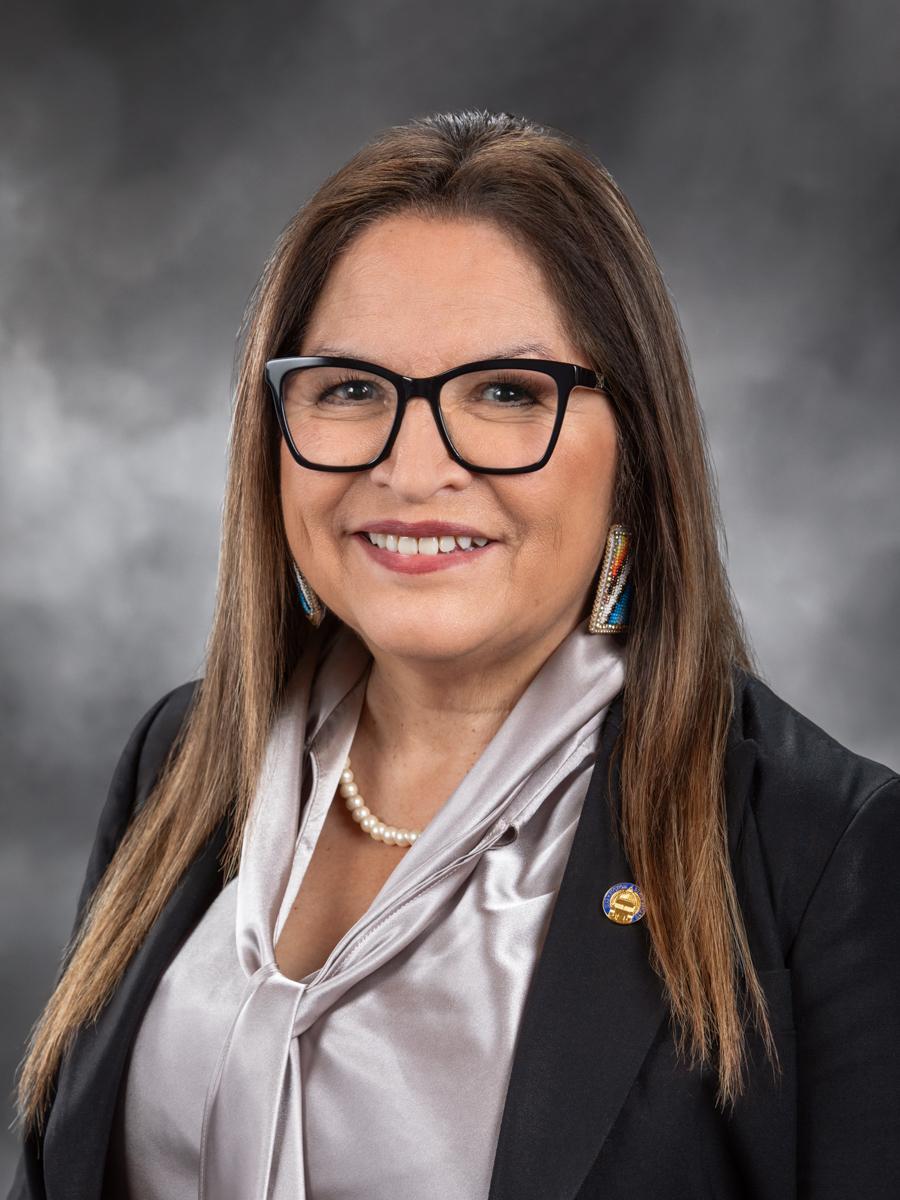
Sen. Claudia Kauffman
Sponsored bills
Maddy summarySB 6118 requires Washington school districts to create cardiac emergency response plans for all schools and athletic facilities, focusing on rapid response to cardiac arrests. The plans must include designated response teams (staff, coaches, nurses), strategic placement of AEDs (aiming for 3-minute access), annual team training per American Heart Association guidelines, and coordination with local emergency services. Implementation depends on state funding for AEDs, staff training, and plan maintenance, with schools updating plans annually. The bill directly affects school districts, staff, and students by mandating concrete emergency protocols to improve cardiac arrest outcomes on school property.
Maddy summarySB 6212 creates a 24-month pilot program providing $300 monthly per child to 1,000 Washington families with school-aged children eligible for free/reduced-price lunch. The Department of Commerce will administer the program, randomly selecting participants while ensuring geographic diversity across urban, rural, and suburban areas. Families in a control group (up to 1,200 households) will receive $20 monthly instead. The pilot aims to evaluate impacts on financial stability, child well-being, and household spending, with a final report due to the legislature by December 2029. The program explicitly prohibits requiring immigration status information for participation.
Maddy summarySB 5852 requires Washington employers to notify workers and their representatives within 72 hours if a federal agency conducts an inspection of employment verification forms (I-9) or worker records. It mandates posting multilingual notices in workplaces and sending written notices to all current and recent workers (within the last three years), including details about the federal agency and inspection. The law aims to ensure immigrant workers are informed during federal immigration enforcement actions, with notices required in the five most commonly used non-English languages in the state. Employers must also provide affected workers with copies of federal inspection results. This applies to all Washington employers, including state agencies and businesses.
Maddy summarySB 6304 requires Washington State’s Investment Board to incorporate ethical investment standards into its management of public retirement and trust funds. It prohibits investments in companies or activities involving serious human rights violations, weapons production, coal energy, tobacco, environmental harm, or other significant ethical risks (as detailed in Section 2). The bill mandates the Board to assess these risks when making investment decisions, develop public proxy voting guidelines supporting ethical standards, and report annually on how these principles are applied. This directly affects how $100+ billion in public funds are managed, ensuring investments align with state values while still aiming for prudent financial returns. The Board must now consider both financial and ethical risks in its investment strategy.
Maddy summarySB 6109 prohibits Washington State's Investment Board from investing state funds in private detention facilities. Starting immediately, the Board cannot make new investments in entities owning or operating such facilities, and must fully divest existing investments by January 1, 2030. The bill requires this transition to avoid financial loss by reinvesting in comparable, productive alternatives. It directly affects state pension and retirement funds managed by the Investment Board, targeting for-profit facilities operating under government contracts.
Maddy summarySB 6175 regulates secondary ticket sales for entertainment and sporting events to prevent consumer deception and price gouging. It caps resale prices at 110% of the original ticket price (including fees) and limits service fees to 10%, while requiring clear disclosures that tickets are purchased from a secondary marketplace, not the original seller. The bill prohibits misleading marketing (e.g., fake "official" sites), bans selling speculative tickets, and mandates resellers notify buyers within 8 hours of event changes. It exempts professional sports teams, small arts organizations ($500,000 annual revenue cap), schools, movie theaters, and tribal venues from most provisions. The law applies to commercial resellers and secondary ticket platforms operating in Washington.
Maddy summaryThis resolution expresses the Washington State Senate's formal appreciation for the National Guard's service. It recognizes their emergency response work (like 2025 flood support in Skagit and Snohomish counties), election security efforts, and youth programs such as the Washington Youth Challenge Academy. The Senate thanks the Guard's families and employers for their support and acknowledges the Guard's contributions to state safety, community well-being, and economic vitality. Adopted in January 2026, this symbolic resolution was sent to state and federal officials but does not create new laws or policies.
Maddy summaryThis Senate Resolution (SR 8674) formally honors India's 2026 Republic Day as a symbolic gesture recognizing shared democratic values between India, Washington State, and the U.S. It directly acknowledges Washington's strong ties to Indian Americans - over 100,000 residents who contribute to the state's economy, cultural diversity, and institutions like healthcare and tech. The resolution highlights India's constitutional commitment to equality and Washington's partnership with India’s Seattle consulate on trade, education, and cultural exchanges. Adopted on January 26, 2026, it has no binding policy effects, serving solely as a ceremonial acknowledgment.
Maddy summarySB 6276 protects dedicated funding for workforce education by requiring all revenues from the workforce investment surcharge (under RCW 82.04.299) and specified sources (RCW 82.04.290(2)(c)) to be deposited directly into a state treasury account. Funds in this account may only be spent on higher education programs, operations, student aid, and workforce development activities like career-connected learning. The bill explicitly prohibits using these funds to replace or reduce existing state, federal, or local education funding - requiring them to "supplement, not supplant" other resources. This amendment to RCW 43.79.195 ensures dedicated support for education and workforce programs without shifting existing budget responsibilities.