

Maddy summaryThis bill requires Washington's Department of Health to allow body scanners in correctional facilities to operate at higher radiation levels than previously permitted, specifically setting minimums of 2 microsieverts (µSv) per scan and 0.25 millisieverts (mSv) annually. It reverses a 2024 rule that reduced scanner power to 1/8th of prior capability, causing unclear images and contributing to safety incidents including near-overdose deaths. The law mandates the health department cannot impose lower radiation limits for these scanners, ensuring they can effectively detect contraband like narcotics while staying below standard safety thresholds. It directly affects all correctional facilities, jails, and detention centers using ionizing radiation screening systems.
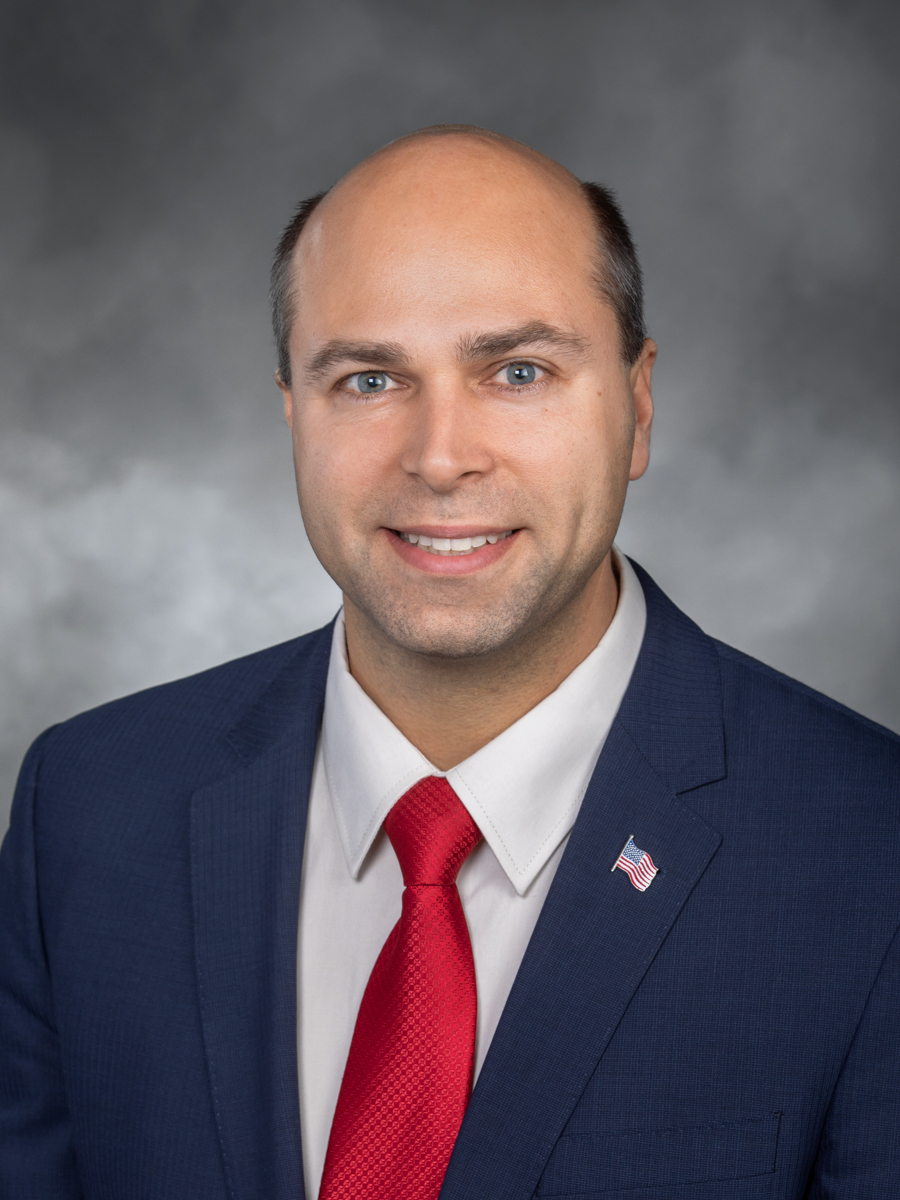
Rep. Andrew Engell
Sponsored bills
Maddy summaryHB 2378 directs Washington's Department of Labor and Industries to clarify that HVAC/refrigeration specialty electricians may perform specific electrical connections between indoor and outdoor units of ductless mini-split HVAC systems. This applies only when work follows manufacturer instructions, uses equipment certified by accredited labs, and is limited to wiring integral to the system. The bill aims to reduce installation delays and costs for residential and light commercial projects while maintaining safety standards. It explicitly limits the scope to these electrical connections and does not override existing electrical codes or certification authority.
Maddy summaryHB 2277 requires insurers in Washington to disclose wildfire risk scores and related details to homeowners. Specifically, insurers must provide property owners with their current wildfire risk score, the score range, who created it, when it was generated, and key factors that increased the score - along with actionable steps to improve it - within 15 days of coverage decisions or renewals. The bill also mandates insurers to file wildfire risk models with the insurance commissioner, explain how these models impact premiums, and incorporate property-specific or community wildfire mitigation efforts (like defensible space or forest treatments) into their scoring systems. Homeowners can appeal inaccurate scores, and insurers must respond to appeals within 30 days. This bill directly affects residential property owners in wildfire-prone areas and insurers selling property insurance in Washington.
Maddy summaryHB 2335 would repeal tax increases on businesses enacted in 2025, specifically targeting provisions from 2025 Chapter 420. It removes a surcharge on businesses with over $250 million in taxable income (RCW 82.04.288) and eliminates an "Advanced Computing Surcharge," along with 13 other tax provisions from the 2025 law. These changes would directly affect high-grossing businesses and financial institutions subject to the repealed tax rates. The bill takes effect April 1, 2026, reversing specific tax increases implemented by the 2025 legislature.
Maddy summaryHB 2184 requires Washington State occupational therapists to obtain a special "intramuscular needling endorsement" before performing this specific pain treatment technique. To qualify, therapists must complete 325 hours of training (including 100 hours of anatomy/pain management education, 75 hours of hands-on technique practice, and 150 supervised patient sessions) plus one year of full-time clinical experience. The endorsement process involves documentation of training and a clinical review by a qualified provider (such as a physician or licensed physical therapist). This bill directly affects occupational therapists seeking to offer intramuscular needling as part of their practice. It does not change other occupational therapy services but adds specific requirements for this technique.
Maddy summaryHB 2115 restores a 1985 tax exemption that removes sales tax from transactions involving precious metal bullion (like gold, silver, platinum, and palladium) and monetized bullion (coins or money made from precious metals). It directly affects businesses selling these items by exempting the bullion itself from state sales tax, though tax applies only to commissions earned on transactions. The bill defines "precious metal bullion" as refined metals (not items like jewelry) and excludes such sales from tax calculations under Washington’s tax code. It applies retroactively from January 1, 2026, to correct a 2025 repeal of the original exemption.
Maddy summaryHB 2101 exempts services involving live animals, birds, and insects from Washington's retail sales tax. This directly affects businesses like petting zoos, animal shows, and educational programs that provide live animal demonstrations. The bill amends the state tax code to explicitly exclude these services from the definition of "retail sale" under RCW 82.04.050. As a result, businesses offering such services will no longer be required to charge customers sales tax on these specific activities.
Maddy summaryHB 2130 repeals specific tax provisions from Senate Bill 5814 (2025 session) that imposed new taxes. It removes sections of Chapter 422, Laws of 2025 (including codified sections 101, 201, 301 and uncodified sections 1, 401-404) that affected taxpayers. The repeal takes effect April 1, 2026, and is declared an emergency to preserve public finances. This bill directly reverses the tax changes enacted by ESSB 5814.
Maddy summaryHB 1363 modifies Washington state licensing requirements for child care and early learning providers. It establishes specific staff-to-child ratios (21 children to 1 staff member for preschoolers, 31 to 1 for school-age children) and sets a minimum 34 square feet of indoor space per child. The bill also clarifies that private schools operating early learning programs without state subsidies are exempt from certain state-mandated educational requirements, though they must still meet basic health and safety standards. Additionally, it creates professional development support for providers to meet new training standards, including scholarships and specialized trainings on topics like inclusion and infant care. These changes directly affect licensed child care centers, family providers, and early learning programs operating under state licensing.
Maddy summaryHB 1681 allows HVAC/refrigeration specialty electricians in Washington to install, repair, replace, or maintain the specific electrical circuits connecting outdoor and indoor units of ductless mini-split HVAC systems in residential and certain multifamily homes. It permits work on single-phase circuits under 250 volts/20 amps, including wiring for condensate pumps and related components, provided the equipment is certified and follows manufacturer specifications. The bill directly affects these specialty electricians (expanding their scope) and benefits homeowners and builders by increasing available labor, reducing costs, and addressing a statewide shortage of certified electricians. Key requirements include adherence to manufacturer wiring instructions and department-designated construction types, without altering the Department of Labor & Industries' oversight authority.