

Maddy summaryHB 2118 prevents homeowners' associations in Washington from imposing stricter rules on unit or lot owners than those in place when the owner purchased their property, unless the owner agrees in writing. Owners claiming this protection must request and pay to record an exception documenting their original restrictions. The law does not apply to rules required by law, and new buyers generally cannot use this protection unless they inherited the property or bought it through foreclosure. The bill expires January 1, 2028, and affects all common interest communities (like condos and planned developments) statewide.
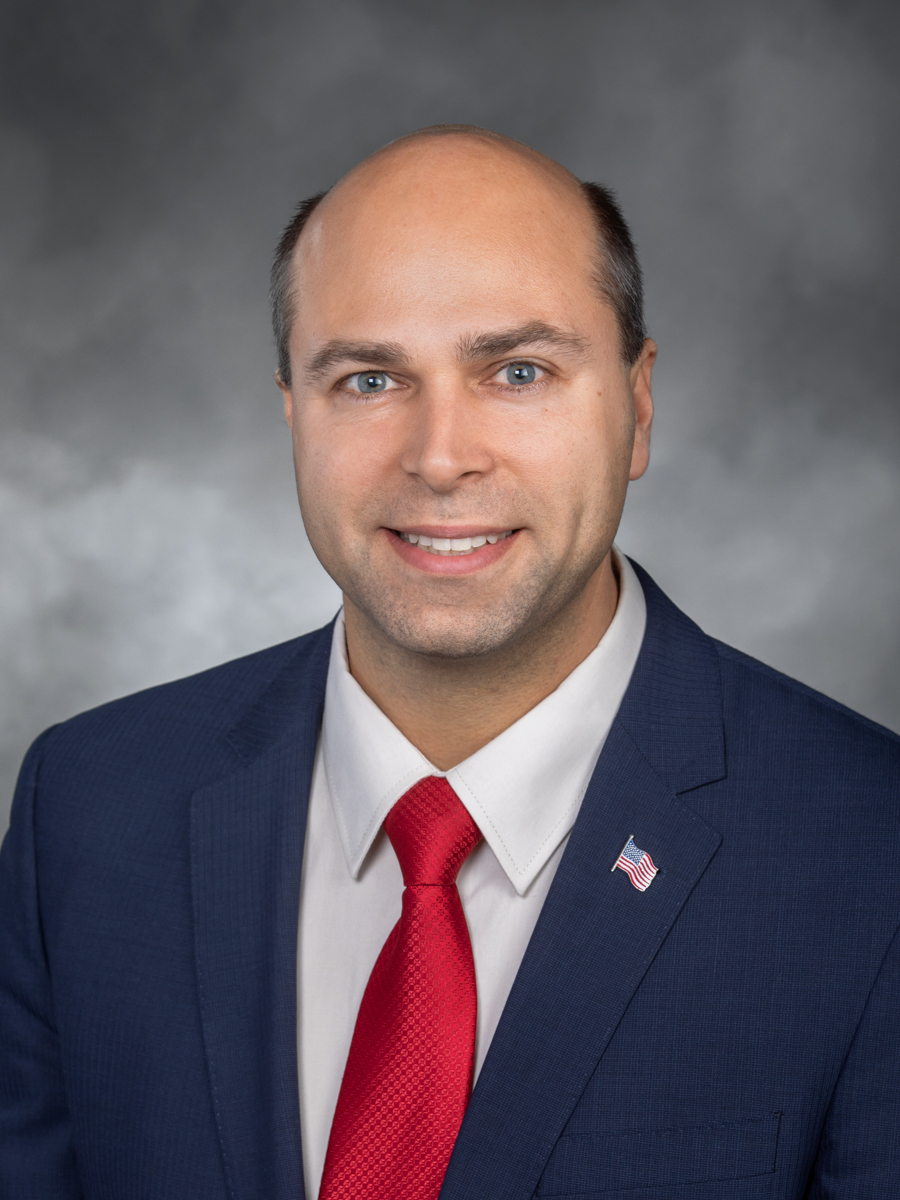
Rep. Andrew Engell
Sponsored bills
Maddy summaryThis is a ceremonial House resolution (not a policy bill) introduced on January 19, 2026, by multiple Washington State Representatives. It formally recognizes Dr. Martin Luther King Jr.'s life, legacy of nonviolent activism, and contributions to civil rights, including his role in the Civil Rights Act of 1964 and Voting Rights Act of 1965. The resolution expresses the House's commitment to upholding Dr. King's ideals of equality, justice, and opportunity for all. As a symbolic gesture, it does not create new laws, allocate funds, or affect any specific individuals or groups.
Maddy summaryThis is a ceremonial House Resolution (not a bill with policy changes), adopted on January 16, 2026. It formally recognizes Washington's joint operating agencies (JOAs) for their role in developing clean energy infrastructure, including renewable sources like solar, wind, and hydroelectric power, as well as new projects like small modular reactors. The resolution highlights JOAs' contributions to reducing greenhouse gas emissions, ensuring affordable energy access, and supporting economic growth in Washington State. It does not create new laws, allocate funds, or impose requirements - its sole purpose is to acknowledge these agencies' historical and ongoing work.
Maddy summaryHB 2461 establishes a Washington state commission on boys and men to address systemic challenges they face in areas like education, health, workforce participation, and justice system involvement. The commission will collect data, analyze disparities (such as higher rates of homelessness or suicide), and develop evidence-based recommendations for policy changes. It will consist of 15 appointed members who must focus on six key areas, including mental health, fatherhood, and reducing overrepresentation in justice systems, and will submit biennial reports to the legislature. The bill directly affects boys, male youth, and men across Washington state by creating a formal mechanism to study and address their specific needs through data-driven policy analysis.
Maddy summaryHB 2488 changes how Washington state pays rural emergency hospitals for services provided to Medicaid patients. It makes these payments dependent on annual state budget appropriations rather than automatic funding. This directly affects rural hospitals federally designated as "rural emergency hospitals" (not critical access hospitals). The bill replaces previous automatic payment rules with a system requiring yearly legislative funding approval for these hospitals to receive Medicaid reimbursement. The change applies to all services provided to Medicaid beneficiaries, regardless of their managed care enrollment.
Maddy summaryHB 2486 aims to reduce construction costs for housing by adjusting Washington's state energy code requirements. It directs the state building code council to prevent cost increases when updating the energy code, specifically prohibiting new requirements that would raise construction costs for homes under 1,700 square feet beyond 2026 baseline levels during 2026 and 2029 code cycles. Code officials can approve less costly energy code alternatives for small residential projects if full compliance would be "economically impractical" (costs wouldn't be recovered through energy savings within 10 years), and must allow affordable housing projects to use older, less expensive energy code versions. The bill directly affects homebuilders, developers, and local code enforcement officials for single-family and small multifamily residential construction.
Maddy summaryHB 1311 changes the regulatory status of gray wolves in Washington from "endangered" to "sensitive" under state wildlife law. This directly affects gray wolves by prohibiting hunting and harassment while prioritizing their conservation, as the "sensitive" classification requires cooperative management and protection under existing law. The bill amends state code to implement the Department of Fish and Wildlife’s 2024 recommendation, maintaining current protections without allowing hunting. The status must be reviewed within two years, and wolves cannot revert to "endangered" unless population declines below current levels. This is a procedural change to wildlife classification, not a new hunting regulation.
Maddy summaryHB 2407 establishes the "Strengthen Washington Homes Program," a grant initiative to help homeowners, contractors, and nonprofits retrofit homes to meet wildfire preparedness standards set by the Insurance Institute for Business & Home Safety (IBHS). The program provides financial grants for wildfire risk mitigation, requiring properties to achieve IBHS certification (like "Wildfire Prepared Home" status) and secure necessary permits before receiving funding. It also prohibits insurers from denying coverage based solely on wildfire risk if a property holds IBHS certification. The bill creates a dedicated program account for funding, funded by state appropriations and eligible grants, with implementation overseen by the Insurance Commissioner.
Maddy summaryHB 2404 reverses a planned tax increase on special fuels (like diesel) that was set to take effect July 1, 2025, by reducing the cumulative tax rate to match levels from July 1, 2016. It directly affects fuel licensees (gas stations and distributors) and businesses using diesel, such as freight haulers and food producers, by lowering their tax burden. The bill amends Washington’s tax code to eliminate the 2025 tax hike and prevent future increases, aiming to reduce fuel costs that impact food and goods prices. This change is intended to keep fuel purchases within Washington, potentially lowering costs for locally produced goods and improving economic competitiveness. The bill does not create new taxes but stops an existing planned increase.
Maddy summaryHB 2424 would exempt temporary staffing services from Washington's retail sales tax. The bill amends state tax code to specifically exclude temporary staffing services from the definition of "sale at retail," meaning businesses hiring temporary workers would no longer pay sales tax on these services. This directly affects temporary staffing companies and their business clients who purchase these services. The change would simplify tax obligations for these businesses by removing a tax previously applied to temporary staffing fees. The bill is currently in committee referral after its first reading.