

Maddy summaryHB 1783 allows Washington law enforcement officers to receive small gifts of appreciation (up to $25 in value) for speaking in specific college and technical school courses outside their official duties. The bill directly affects certified law enforcement officers and institutions offering criminal justice, police science, or forensic-related programs, aiming to strengthen community relationships and inspire future recruits. Key provisions permit officers to share real-world expertise in courses like police science or forensic technology, with gifts only allowed when presentations occur outside work hours and comply with state ethics rules. The bill responds to a 2024 workforce assessment highlighting challenges in connecting law enforcement with educational programs. It creates a limited exception to general rules prohibiting state employees from accepting gifts, focusing on educational engagement rather than compensation.
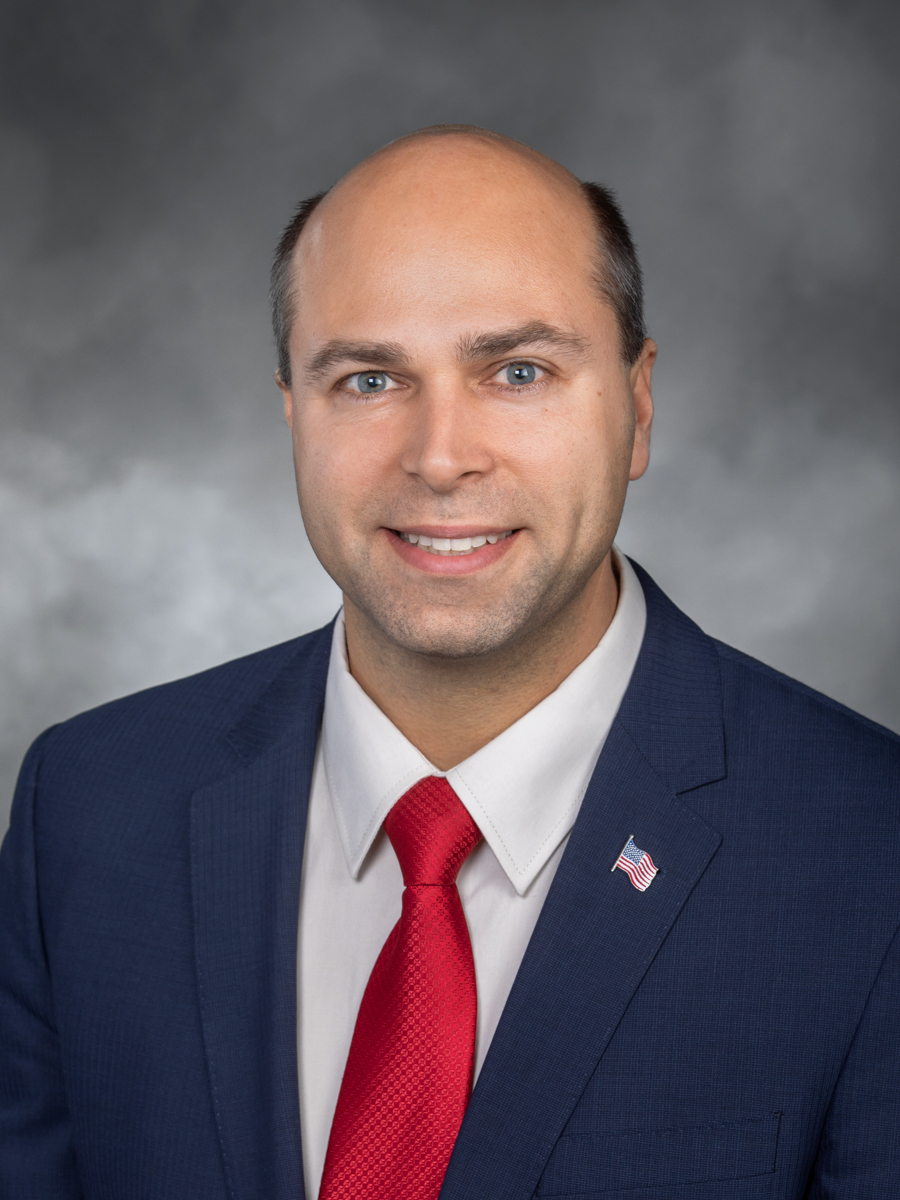
Rep. Andrew Engell
Sponsored bills
Maddy summaryHB 1708 requires Washington cities and counties to use a new state-provided dashboard tool to publicly report specific data on homelessness efforts. The dashboard must display annual metrics including housing unit gaps (needed vs. permitted), spending on housing assistance, households served, addiction treatment access, crime rates near encampments, and encampment locations - especially near schools. The Department of Commerce will contract for the application, and the Municipal Research Center will compile the data for public posting on its website. This policy directly affects all local governments by mandating standardized reporting on homelessness programs, not by providing new funding or services.
Maddy summaryHB 1700 grants Washington cities and counties a six-month extension to update their comprehensive land use plans and development regulations, addressing delays caused by staffing shortages and new requirements. It also creates an opt-out option for very small cities (under 500 people meeting specific population and location criteria) to conduct partial updates instead of full reviews, requiring them only to revise critical areas and transportation elements. The bill amends state law to adjust review timelines while maintaining core requirements for land use planning consistency. This affects all local governments responsible for zoning and growth management under Washington’s Growth Management Act.
Maddy summaryHB 1324 redirects revenues from Washington's Climate Commitment Act (CCA) auction system to fund major state transportation projects, including the I-5 Columbia River bridge replacement and the US 395 North Spokane corridor. The bill amends existing law to require that CCA auction proceeds - previously restricted from road projects - be allocated specifically to highway and bridge infrastructure, rather than solely to climate or environmental programs. Key provisions mandate that funds support projects improving freight movement (like the Gateway freight project) and reducing congestion, which the bill states contributes to lower greenhouse gas emissions. This reallocation changes how CCA revenue is spent but does not alter the underlying auction system or funding amounts.
Maddy summaryHB 1695 amends Washington's Growth Management Act to update land use planning requirements for counties and cities. It requires all comprehensive plans to explicitly address environmental justice, wildfire risk mitigation (including adopting codes like Firewise USA), and housing equity. Specifically, housing elements must now identify racially disparate impacts from local policies, implement anti-displacement strategies, and ensure affordable housing access across income levels. The bill directly affects all jurisdictions subject to the Growth Management Act, including unincorporated areas, by mandating these specific provisions in their planning documents.
Maddy summaryHB 1442 allows Washington counties with established gray wolf populations to collaborate with the Department of Fish and Wildlife (DFW) on localized wolf management, rather than maintaining state endangered species protections. It triggers this shift when the state meets a recovery goal of 15 statewide breeding pairs for three years *and* a specific county has at least three breeding pairs. Counties meeting these criteria must form interlocal agreements with DFW and tribes to develop regional plans within six months, requiring input from ranchers, conservation groups, and tribes. These plans must address minimizing livestock conflicts, improving response times for wolf-related issues, and maintaining stable wolf populations while protecting ranching interests. The bill directly affects rural counties, ranchers, tribes, and DFW, shifting management from state-level to collaborative, community-specific approaches.
Maddy summaryThis bill prohibits foreign adversaries (defined as entities designated by U.S. Commerce Department for national security threats) from acquiring or holding agricultural land in Washington after July 1, 2025. Any such acquisition is invalid, automatically transferring ownership to the state without compensation, and bars the foreign adversary from claiming restitution. It also requires the Washington Department of Agriculture to publish annual reports tracking foreign ownership of farmland, including trends and recommended policy changes. The law defines agricultural land broadly to include farms, ranches, and forests (excluding small plots under $1,000 annual revenue), applying to direct purchases and indirect ownership through entities.
Maddy summaryHB 1911 creates a new special license plate option titled "Washington state honey bees and pollinators" (plate #36) for Washington vehicle owners. This plate, costing $40 for initial registration and $30 annually, would join existing special plates like "Washington apples" and "Seattle Mariners" in the state's license plate program. The bill amends state code to add this plate type and specifies that fees support pollinator research and education efforts. It does not create new funding or policy changes beyond the plate designation and associated fees.
Maddy summaryHB 1438 sets strict time limits for Washington cities and counties to approve housing permit applications, requiring final decisions within 65 days for simple permits, 100 days for those needing public notice, and 170 days for projects requiring public hearings. If deadlines are missed, local governments must refund 10-20% of permit fees based on how long they exceed the timeline. The law applies specifically to housing projects in urban growth areas with residential units and excludes certain permit types or planning processes. It aims to streamline housing development by creating predictable, enforceable review timelines for local governments.
Maddy summaryHB 1779 would allow Washington agricultural employers to select 26 weeks per year during which workers can be employed up to 50 hours weekly without triggering overtime pay. This creates a temporary seasonal exemption from the standard 40-hour overtime rule for all agricultural workers, specifically addressing concerns raised after Washington's 2021 repeal of overtime exemptions. The bill aims to help farms manage time-sensitive labor demands during peak harvest seasons. It directly affects agricultural employers and workers across Washington, which relies heavily on farming as its second-largest industry.