

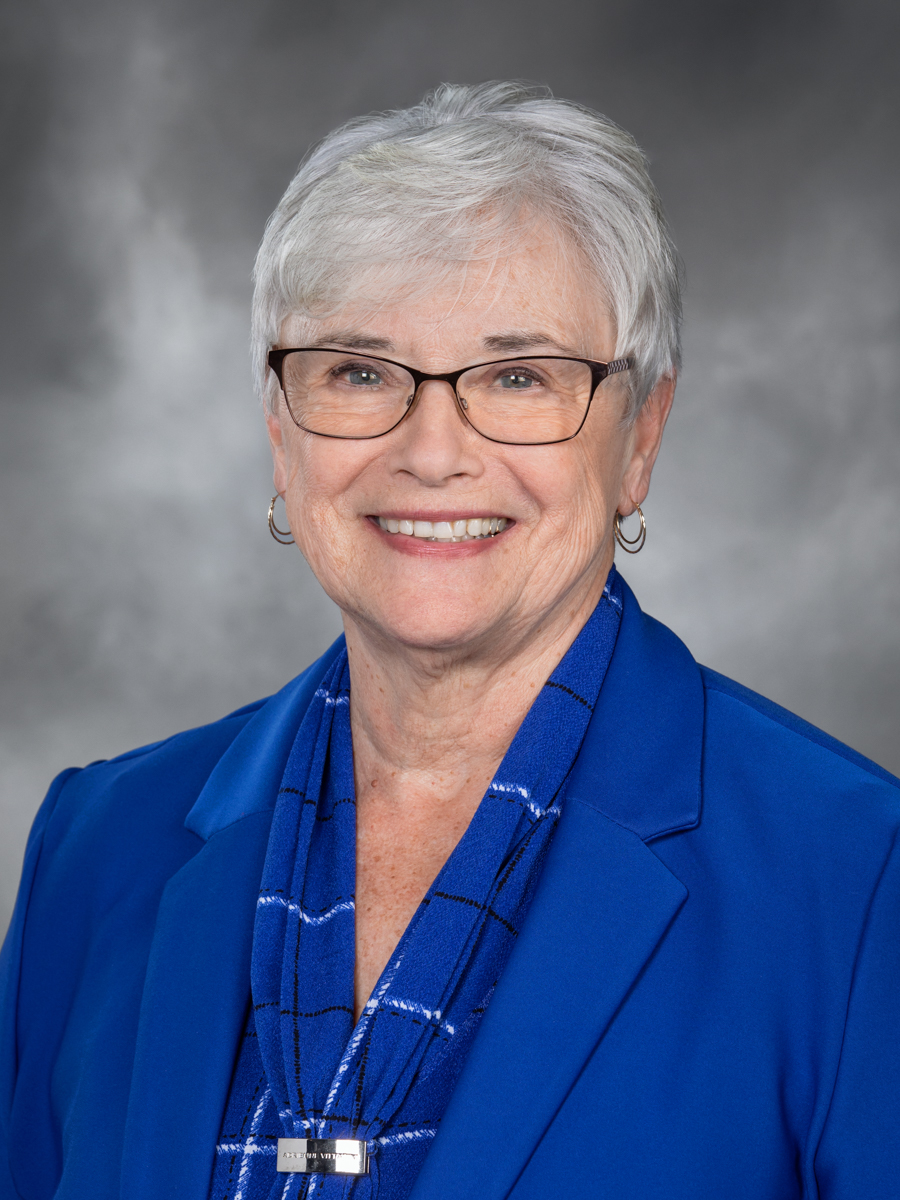
Photo of Carolyn Eslick
R Washington House · District 39

Rep. Carolyn Eslick

Compare
Total votes
5,568
all sessions
Attendance
95%
262 missed
Lower than 96% of chamber peers
With party
94%
of cast votes
Lower than 82% of chamber peers
Bipartisan score
3%
crosses aisle rarely
Higher than 80% of chamber peers
Sponsored
992
bills & resolutions
Near the chamber average
Committees
3
assignments
992 bills and resolutions

Sponsored bills

Total
992
Primary
64
Co-sponsor
928
This page
992
matching current filters
Co-sponsor HB 1852
In committee · Washington House · Co-sponsor
Prohibiting local governments from transferring real property to nongovernment entities without fair consideration.

Maddy summaryHB 1852 requires cities, counties, and code cities in Washington to receive fair market value (or equivalent compensation) when transferring or selling real property to non-government entities or individuals. The bill applies to all local government-owned real property transfers, ensuring such transactions cannot occur at below-market rates without justification. It exempts state forestlands, federally granted educational lands, and properties subject to bond covenants. This policy change directly affects local governments' ability to dispose of surplus public land, mandating fair compensation to prevent undervalued sales.

In committee Jan 12, 2026 1 co-sponsor
Co-sponsor HB 1455
In committee · Washington House · Co-sponsor
Funding the state toxicology laboratories to process submissions for drug and alcohol impairment cases in a timely manner.

Maddy summaryHB 1455 requires Washington's state toxicology laboratories to process drug and alcohol impairment case samples within one week of receipt. The bill directly affects state toxicology labs, the Washington State Patrol, and individuals facing drug/alcohol impairment charges. It mandates the State Patrol to hire sufficient staff to meet this timeline and requires the chief to submit annual funding requests to the Appropriations committees for this purpose. This law creates a concrete deadline for processing times and ties lab funding to that requirement.

In committee Jan 12, 2026 1 co-sponsor
Co-sponsor HB 1245
In committee · Washington House · Co-sponsor
Concerning business development.

Maddy summaryHB 1245 requires large electric utilities (with over 25,000 customers) to develop comprehensive 10-year integrated resource plans. These plans must include detailed forecasts of customer demand, assessments of conservation and renewable energy options, transmission capacity needs, and strategies for meeting clean energy goals. The bill specifically mandates evaluating impacts of zero-emission vehicles, incorporating data from transportation electrification plans, and ensuring plans prioritize "lowest reasonable cost" while maintaining grid reliability. It directly affects utilities serving over 25,000 customers, requiring them to update these plans every four years with annual progress reports. The bill amends existing energy planning laws (RCW 19.280.030) but does not create new funding or direct cost obligations.

In committee Jan 12, 2026 1 co-sponsor
Co-sponsor HB 1787
In committee · Washington House · Co-sponsor
Updating the involuntary treatment commitment standards for individuals suffering from a substance use disorder.

Maddy summaryHB 1787 updates Washington state's involuntary treatment standards for individuals with severe substance use disorders who pose an immediate danger to themselves or others. It establishes new legal criteria for court-ordered treatment, requiring local governments to provide access to appropriate facilities. The bill mandates doubling secure withdrawal management facility beds through targeted funding incentives, specifically addressing geographic gaps in treatment access across rural and urban communities. These changes aim to implement standards previously recognized but not enacted since 2020, ensuring individuals in crisis can receive timely treatment. The policy directly affects people with severe substance use disorders meeting the danger criteria and community treatment providers.

In committee Jan 12, 2026 1 co-sponsor
Co-sponsor HB 1193
In committee · Washington House · Co-sponsor
Increasing protections for child welfare workers.

Maddy summaryHB 1193 strengthens protections for Washington state child welfare workers by adding them as a specific category under assault laws (amending RCW 9A.36.031) and creating new safety protocols. It requires the Department of Children, Youth, and Families to arrange for a second trained individual (like law enforcement or a mental health professional) to accompany workers when they have safety concerns about a family, and prohibits retaliation for making such requests. The bill also mandates updated training for workers on de-escalation and trauma-informed interviewing practices. These changes directly affect child welfare workers who visit homes to provide services, monitor families, or investigate child welfare cases. The law aims to reduce workplace violence risks through concrete safety procedures and training standards.

In committee Jan 12, 2026 1 co-sponsor
Co-sponsor HB 1365
In committee · Washington House · Co-sponsor
Providing rental assistance to manufactured/mobile home park tenants.

Maddy summaryHB 1365 creates a state rental assistance program for low-income tenants in manufactured/mobile home parks who are over 55 and facing rent increases exceeding inflation. The program provides monthly assistance of up to $200 or 50% of their lot rent (whichever is lower), administered by the Department of Commerce. Tenants must reapply annually and report income or rent changes, with eligibility based on household income under 80% of local median income. The program is funded by a $2 million appropriation for fiscal year 2026, separate from existing relocation funds.

In committee Jan 12, 2026 1 co-sponsor
Co-sponsor HB 1184
In committee · Washington House · Co-sponsor
Creating a narrow exemption from overtime provisions for certain nonprofits and small businesses.

Maddy summaryHB 1184 creates a new exemption from Washington state's overtime rules for certain nonprofit organizations and small businesses. It allows these entities to classify some salaried employees as exempt if they earn at least 1.5 times the state minimum wage for a 40-hour workweek ($30.90/hour in 2025, based on $15.45/hour minimum wage) and meet specific duties criteria. The exemption specifically covers nonprofits with 50 or fewer full-time equivalent employees (or those providing essential services like shelters requiring 24/7 staffing) and small businesses with 50 or fewer employees. This change aims to address concerns that the upcoming 2028 overtime salary threshold ($93,000 annually) would force these organizations to reclassify staff or increase pay, potentially jeopardizing their ability to serve communities. The bill does not alter overtime rules for most other employers or industries.

In committee Jan 12, 2026 1 co-sponsor
Co-sponsor HB 1585
In committee · Washington House · Co-sponsor
Requiring verification of citizenship for voter registration.

Maddy summaryHB 1585 requires Washington counties to verify that registered voters have proof of U.S. citizenship by July 1, 2025. It directs county election offices to check if voters have submitted acceptable documentation (like a passport, naturalization certificate, or specific certified U.S. birth certificate) and to send notices if they lack it. Voters without proof face registration cancellation 14 days before the 2025 general election unless they provide documentation. The law expires January 1, 2027, and explicitly rejects birth certificates from Puerto Rico issued before July 2010 and Washington wallet-sized birth registrations as valid proof.

In committee Jan 12, 2026 1 co-sponsor
Co-sponsor HB 1030
In committee · Washington House · Co-sponsor
Concerning the conduct of limited audits of counted ballots during the election certification period.

Maddy summaryHB 1030 requires Washington counties to conduct specific pre-certification audits of election ballots. It mandates that county auditors audit duplicated ballots by comparing them to originals and establishes four permitted audit methods: risk-limiting statistical audits, random checks of counting equipment, independent electronic audits, or audits of direct recording electronic systems. The bill also sets strict procedures for duplicating damaged ballots, including unique control numbers, dual-person handling, and secure storage. These requirements apply directly to county auditors and canvassing boards during election certification. The law aims to ensure ballot accuracy through standardized, verifiable audit processes before election results are finalized.

In committee Jan 12, 2026 1 co-sponsor
Co-sponsor HJR 4207
In committee · Washington House · Co-sponsor
Concerning property tax relief.

Maddy summaryThis constitutional amendment proposal (HJR 4207) would allow Washington voters to approve a homestead property tax exemption for primary residences. If approved, it would permit the legislature to create a tax break reducing the taxable value of qualifying homes by up to $250,000 for state taxes only. The amendment includes safeguards to prevent shifting tax burdens to other properties and allows for annual adjustments to the exemption amount. It requires voter approval at the next general election, as the proposed constitutional change is not yet law.

In committee Jan 12, 2026 1 co-sponsor
Showing 141 to 150 of 992 bills
Previous 1 … 14 15 16 … 100 Next