

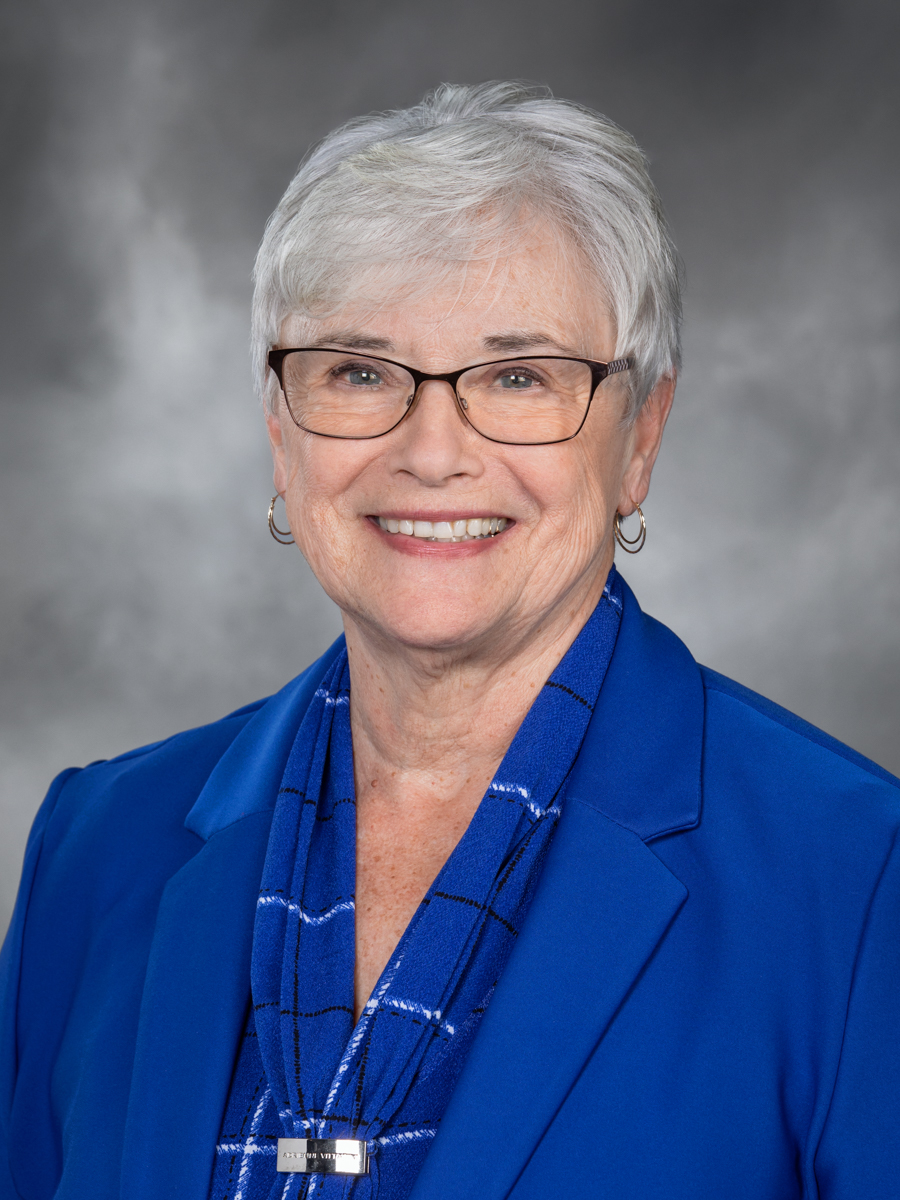
Photo of Carolyn Eslick
R Washington House · District 39

Rep. Carolyn Eslick

Compare
Total votes
5,568
all sessions
Attendance
84%
1,010 missed
Lower than 94% of chamber peers
With party
94%
of cast votes
Lower than 81% of chamber peers
Bipartisan score
3%
crosses aisle rarely
Higher than 79% of chamber peers
Sponsored
992
bills & resolutions
Near the chamber average
Committees
3
assignments
992 bills and resolutions

Sponsored bills

Total
992
Primary
64
Co-sponsor
928
This page
992
matching current filters
Co-sponsor HB 2225
Signed into law · Washington House · Co-sponsor
Concerning regulation of artificial intelligence companion chatbots.

Maddy summaryThis Washington bill requires AI companion chatbots that simulate human relationships to clearly disclose they are artificial at the start of use, every three hours, and at new sessions. For minors (under 18), it mandates hourly reminders about the artificial nature of the chatbot, blocks sexually explicit content, and prohibits manipulative tactics like fake emotional distress or excessive praise to foster dependency. It excludes customer service bots, in-game assistants, and educational tools from these rules. The law aims to prevent emotional dependency and ensure psychological safety while allowing responsible AI development.

Signed into law Mar 24, 2026 1 co-sponsor
Co-sponsor HB 1295
Signed into law · Washington House · Co-sponsor
Using evidence-based instructional practices in reading and writing literacy for public elementary students.

Maddy summaryHB 1295 requires Washington public school districts to implement evidence-based reading and writing literacy programs for kindergarten through fourth grade students. These programs must include phonics, phonemic awareness, fluency, vocabulary, and comprehension instruction, and be fully operational by the 2027-28 school year. The bill also mandates revised teacher training standards for educators to deliver these programs, with new certification requirements by 2026 and educator preparation programs updated by 2027. This directly affects elementary schools, teachers, and students, particularly those identified as reading below grade level, with specific attention to improving equity in dyslexia screening and support.

Signed into law Mar 24, 2026 1 co-sponsor
Co-sponsor HB 1634
Signed into law · Washington House · Co-sponsor
Providing school districts and public schools with assistance to coordinate comprehensive behavioral health supports for students.

Maddy summaryHB 1634 establishes regional school safety centers in Washington state to help public school districts coordinate behavioral health support for students. The centers will provide training for school staff on suicide prevention, facilitate partnerships between schools and community health providers, offer Medicaid billing assistance, and support school-based threat assessment programs. This bill directly affects all public school districts, their staff (including counselors and psychologists), and students needing behavioral health services by improving access to existing resources through coordinated planning. It amends state law to require these centers to work with tribes and community partners to ensure culturally responsive support. The bill focuses on strengthening existing systems rather than creating new programs.

Signed into law Mar 23, 2026 1 co-sponsor
Co-sponsor HB 2525
Signed into law · Washington House · Co-sponsor
Establishing the heritage orchard program.

Maddy summaryWashington State's HB 2525 establishes a heritage orchard program managed by Washington State University to conserve rare and historical apple varieties. The program requires WSU to maintain a registry of orchards meeting specific criteria (either containing at least five trees over 74 years old or one tree of a rare/lost variety) and to track documented rare apple types. This initiative directly affects Washington orchard owners with heritage trees or rare varieties, aiming to preserve agricultural history. The program becomes effective only if dedicated funding is secured by June 30, 2026, as specified in the bill.

Signed into law Mar 20, 2026 1 co-sponsor
Primary HB 2323
Signed into law · Washington House · Lead sponsor
Establishing a blue envelope program.

Maddy summaryHB 2323 establishes a voluntary "blue envelope" program in Washington State to improve communication during traffic stops for neurodiverse individuals. The bill requires the Department of Licensing to create free blue envelopes containing safety tips for holders, interaction guidance for officers, and space for vehicle documents (like registration and insurance). It specifically targets people with neurodiverse conditions such as autism, ADHD, or sensory processing disorders, as defined in the bill. Envelopes will be available at all driver licensing offices, and the program will maintain online resources for public access. The bill focuses on concrete program creation, not legislative changes to traffic laws.

Signed into law Mar 18, 2026 0 co-sponsors
Co-sponsor HB 2429
Signed into law · Washington House · Co-sponsor
Supporting children and youth behavioral health.

Maddy summaryHB 2429 establishes a Children and Youth Behavioral Health Work Group to address barriers in accessing care for children, youth, and young adults in Washington State. The work group, composed of diverse stakeholders including providers, families, youth representatives, tribal leaders, and agency officials, will monitor existing programs, improve coordination between education and health systems, and recommend strategies to expand access to services - particularly for young children (prenatal to age 5) and underserved communities. Key provisions include advising on implementing a statewide strategic plan, removing systemic barriers, and promoting equal insurance coverage for behavioral health compared to physical health. The bill directly affects children and families seeking mental health support by aiming to create a more integrated, equitable system.

Signed into law Mar 18, 2026 1 co-sponsor
Primary HB 2505
Signed into law · Washington House · Lead sponsor
Exempting certain former foster care providers from adult family home licensure.

Maddy summaryHB 2505 exempts certain former foster care providers from needing adult family home licensure when they continue caring for their former foster youth in their homes. It directly affects individuals who previously operated foster family homes for at least three years or held a child-specific license under Washington law. Key provisions require these providers to have no substantiated child or adult protective services findings, care only for their former foster youth, and comply with background checks. The bill amends state law to remove licensure requirements for these specific cases while maintaining safety safeguards.

Signed into law Mar 18, 2026 0 co-sponsors
Co-sponsor HB 2219
Signed into law · Washington House · Co-sponsor
Enhancing the operational efficiency of child care providers.

Maddy summaryHB 2219 creates unified licensing standards for all child care providers in Washington, replacing separate rules for different settings like family care, nature-based programs, and centers. It allows child care centers to combine age groups for up to 4 hours daily (with 90 minutes for staff breaks) while maintaining required staff-to-child ratios, and waives redundant orientation requirements for providers who already completed similar training. The bill directly affects licensed child care providers, early learning programs, and the Department of Children, Youth, and Families, which must implement these standards within available funding. Key changes streamline operations by reducing administrative complexity and aligning quality standards with existing programs like Early Achievers.

Signed into law Mar 17, 2026 1 co-sponsor
Co-sponsor HB 2254
Signed into law · Washington House · Co-sponsor
Providing flexibility in the partnership access line assessment to cover administrative costs.

Maddy summaryHB 2254 proposes changes to how mental health program costs are funded in Washington State. It requires health carriers, self-funded health plans, and employers to pay a proportional share of administrative costs for partnership access lines and psychiatric consultation services based on their share of insured residents served by these programs. The bill allows third-party administrators' reasonable costs to be included in the assessment, but excludes the Health Care Authority's own administrative expenses. This would shift some funding responsibility from state budgets to covered health entities while maintaining state funding for programs under Chapter 74.09 RCW.

Signed into law Mar 16, 2026 1 co-sponsor
Primary HB 2317
Signed into law · Washington House · Lead sponsor
Concerning early learning program licensing requirements.

Maddy summaryHB 2317 amends Washington State's early learning program licensing rules by adding "outdoor nature-based child care" as a defined program type, requiring such programs to operate in approved outdoor spaces for at least four hours daily and follow a nature-based curriculum. It expands the definition of "early learning" to explicitly include services like preschool, child care subsidies, parent education, and nature-based programs. The bill clarifies exemptions for certain providers, including seasonal camps, military-affiliated programs, and nature-based programs meeting specific criteria, removing them from full licensing requirements. These changes directly affect child care centers, family providers, and early learning programs operating under state oversight.

Signed into law Mar 14, 2026 0 co-sponsors
Showing 1 to 10 of 992 bills
1 2 3 100 Next