

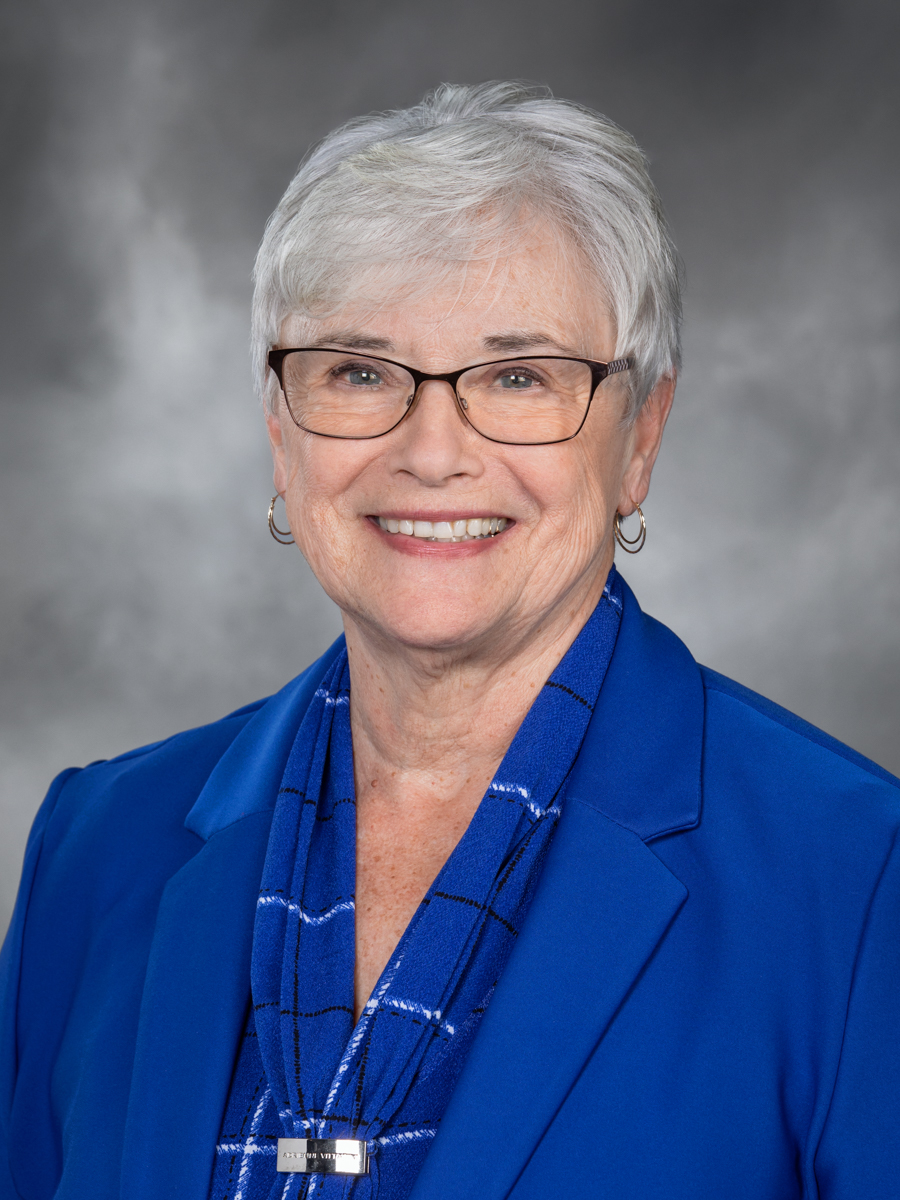
Photo of Carolyn Eslick
R Washington House · District 39

Rep. Carolyn Eslick

Compare
Total votes
5,568
all sessions
Attendance
95%
262 missed
Lower than 96% of chamber peers
With party
94%
of cast votes
Lower than 82% of chamber peers
Bipartisan score
3%
crosses aisle rarely
Higher than 80% of chamber peers
Sponsored
992
bills & resolutions
Near the chamber average
Committees
3
assignments
992 bills and resolutions

Sponsored bills

Total
992
Primary
64
Co-sponsor
928
This page
992
matching current filters
Co-sponsor HB 1016
In committee · Washington House · Co-sponsor
Providing employer tax incentives for the support of veterans and military families.

Maddy summaryHB 1016 creates a 20% tax credit for Washington employers hiring qualified veterans or spouses of active-duty military members, up to $3,000 per employee annually. To qualify, employees must work full-time (35+ hours/week) for two consecutive quarters, and employers must claim credits electronically. The credit is capped at $5 million total per fiscal year across both this bill and a related provision, with credits expiring for tax years after 2036. This directly affects employers in Washington who hire eligible military-affiliated workers, aiming to incentivize veteran/military family employment through tax relief.

In committee Jan 12, 2026 1 co-sponsor
Co-sponsor HB 2036
In committee · Washington House · Co-sponsor
Concerning persons convicted of violent offenses with a firearm.

Maddy summaryHB 2036 prohibits individuals convicted of violent offenses involving a firearm from earning early release credits under Washington's sentencing laws. It directly affects people serving sentences for violent crimes where a firearm was used or involved, as defined by existing law. The bill amends RCW 9.94A.729 to explicitly deny all "good time credits or earned release time" for sentences tied to such offenses. This change modifies current early release eligibility rules, ensuring offenders convicted of firearm-related violent crimes cannot reduce their sentences through earned credits. The policy focuses on restricting sentence reductions for specific high-risk offenses, not altering general sentencing guidelines.

In committee Jan 12, 2026 1 co-sponsor
Co-sponsor HB 1850
In committee · Washington House · Co-sponsor
Facilitating the prompt replacement of defective continuous glucose monitoring equipment.

Maddy summaryHB 1850 requires pharmacies - both physical locations and mail-order services - to maintain sufficient supplies of continuous glucose monitoring (CGM) sensors. This ensures patients with diabetes can quickly get a replacement sensor when their equipment malfunctions or in an emergency requiring immediate use. Physical pharmacies must provide same-day replacements, while mail-order pharmacies must mail replacements by the next business day (or as soon as possible if not feasible). The bill directly affects diabetes patients who rely on CGM devices and the pharmacies that dispense them, creating a clear requirement for timely sensor access without altering insurance coverage or funding.

In committee Jan 12, 2026 1 co-sponsor
Co-sponsor HB 1746
In committee · Washington House · Co-sponsor
Providing local effort assistance for public schools.

Maddy summaryHB 1746 adjusts how Washington state provides supplemental funding to public schools based on local property tax levies. It calculates state assistance by comparing a school district's actual levy rate (per $1,000 assessed value) to a $1.50 threshold, with full funding for districts meeting or exceeding that rate. The bill extends this formula to tribal schools (starting 2022) and charter schools (starting 2025), capping per-student assistance at $2,000 (adjusted for inflation) based on prior-year levy data. This funding is separate from the state's basic education program and directly affects school districts, tribal education compact schools, and charter schools that rely on local levies.

In committee Jan 12, 2026 1 co-sponsor
Co-sponsor HB 1730
In committee · Washington House · Co-sponsor
Directing the deposit of the proceeds from taxes on aircraft fuel to the aeronautics account.

Maddy summaryHB 1730 directs all tax revenue generated from aircraft fuel (as defined in state law) to be deposited into the state's aeronautics account, rather than other designated funds. This bill specifically amends existing tax code sections to mandate this funding stream for aviation-related programs and infrastructure. The change affects how Washington State allocates existing tax proceeds from aircraft fuel sales, ensuring these funds exclusively support aeronautics activities. It does not alter the tax rate or impose new taxes on aircraft fuel. The bill focuses solely on redirecting existing revenue to the aeronautics account, as specified in RCW 82.42.090.

In committee Jan 12, 2026 1 co-sponsor
Primary HB 1204
In committee · Washington House · Lead sponsor
Concerning senior shared housing in manufactured home communities.

Maddy summaryHB 1204 requires manufactured home park landlords to include specific written disclosures in rental agreements for all tenants, including clear closure notices in bold text and historical rent data. It directly affects seniors aged 55+ by prohibiting park rules that block them from having roommates in shared housing arrangements - such as exchanges of services for room and board - while banning entrance/exit fees. The bill also restricts rent increases during closure periods to no more than 1% above the U.S. consumer price index and prohibits fees for guest parking or towing without prior notice. These changes aim to increase housing stability and affordability for seniors in manufactured home communities by standardizing tenant protections.

In committee Jan 12, 2026 0 co-sponsors
Co-sponsor HB 1808
In committee · Washington House · Co-sponsor
Creating an affordable homeownership revolving loan fund program.

Maddy summaryHB 1808 creates a state-funded revolving loan program to support permanently affordable homeownership for low-income households. The program provides loans (up to 50% of project costs) to nonprofit developers building housing that remains affordable for at least 99 years through long-term restrictions on resale and ownership. Loans carry interest rates between 1% and 2.5%, with repayments recycled into the fund to finance new projects. This directly affects low-income homebuyers (defined as households earning ≤80% of local median income) and nonprofit developers who build housing meeting specific affordability standards.

In committee Jan 12, 2026 1 co-sponsor
Co-sponsor HB 1025
In committee · Washington House · Co-sponsor
Reopening the exemption from the long-term services and supports trust program for employees who have purchased long-term care insurance.

Maddy summaryHB 1025 allows Washington employees with long-term care insurance purchased before November 1, 2027, to apply for an exemption from the long-term services and supports trust program premium. This exemption is permanent, meaning these employees will no longer be eligible for coverage under the program. The bill extends the application window for exemptions to December 31, 2028, and requires employees to notify employers of their exemption. Employers must stop deducting premiums after notification and refund any premiums deducted after that point.

In committee Jan 12, 2026 1 co-sponsor
Co-sponsor HB 1451
In committee · Washington House · Co-sponsor
Concerning civil commitment of sexually violent predators.

Maddy summaryHB 1451 amends Washington state law governing the civil commitment of individuals deemed "sexually violent predators" who suffer from mental abnormalities or personality disorders making them likely to commit predatory sexual acts if not confined. The bill clarifies definitions (including "sexually violent offense," "predatory acts," and "less restrictive alternative") and establishes new requirements for conditional release, such as ensuring counties have adequate housing options for released individuals. It also restricts placement near "risk potential" locations like schools, parks, and youth facilities, while defining "secure community transition facilities" for supervised release. The changes aim to balance community safety with structured release options for those subject to civil commitment.

In committee Jan 12, 2026 1 co-sponsor
Co-sponsor HB 1033
In committee · Washington House · Co-sponsor
Authorizing local licensing and regulation of child care providers.

Maddy summaryHB 1033 allows counties in Washington to create and enforce their own licensing and regulatory rules for child care centers and family home providers, beginning July 1, 2026. Counties must meet specific minimum requirements covering facility safety, staff qualifications, child well-being, and record-keeping before adopting local rules. Once implemented, counties - not the state department - will handle licensing and regulation for these providers, with counties required to report quarterly to the state about their rules and licensed providers. The state department will no longer regulate these providers or bear liability for their operations, though it will provide technical assistance and ensure locally licensed providers can access state child care subsidy programs.

In committee Jan 12, 2026 1 co-sponsor
Showing 131 to 140 of 992 bills
Previous 1 … 13 14 15 … 100 Next