

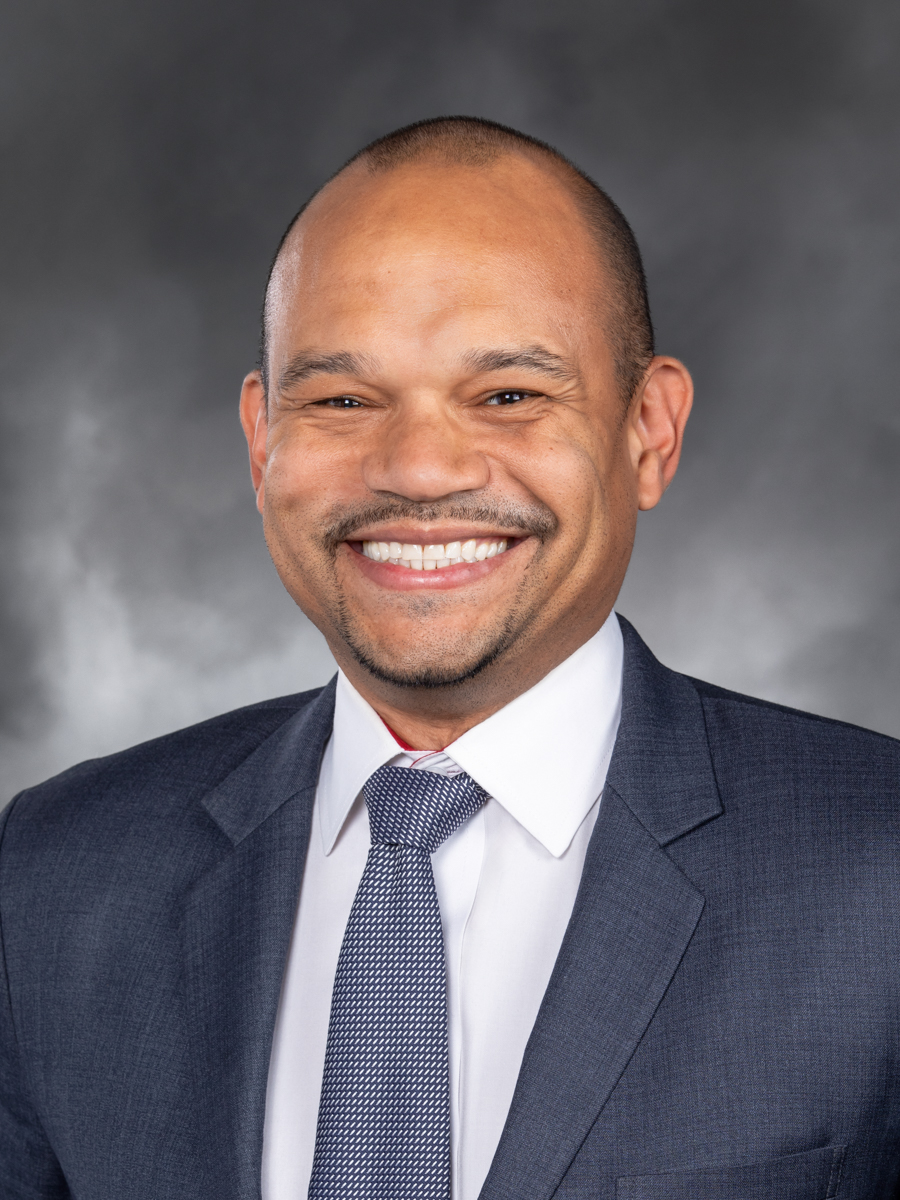
Photo of Chipalo Street
D Washington House · District 37

Rep. Chipalo Street

Compare
Total votes
2,532
all sessions
Attendance
99%
24 missed
Near the chamber average
With party
99%
of cast votes
Higher than 90% of chamber peers
Bipartisan score
0%
crosses aisle rarely
Lower than 92% of chamber peers
Sponsored
370
bills & resolutions
Near the chamber average
Committees
3
assignments
370 bills and resolutions

Sponsored bills

Total
370
Primary
35
Co-sponsor
335
This page
370
matching current filters
Co-sponsor HB 1059
In committee · Washington House · Co-sponsor
Concerning the duties of industrial insurance self-insured employers and third-party administrators.

Maddy summaryHB 1059 strengthens oversight of self-insured employers and their third-party administrators in Washington State by requiring them to act in good faith when handling workers' compensation claims. It creates a new rule that allows the state director to withdraw a self-insurer's certification after three proven violations of good faith within three years (e.g., coercing workers to accept less compensation or hiding injury reports). Employers found violating this duty must pay penalties ranging from 1 to 52 times the worker’s average weekly wage, with investigations triggered by written complaints. The law applies to all workers’ compensation claims regardless of injury date and takes effect January 1, 2026.

In committee Jan 12, 2026 1 co-sponsor
Co-sponsor HB 1557
In committee · Washington House · Co-sponsor
Establishing the Washington guaranteed admissions program and requiring student notifications.

Maddy summaryHB 1557 establishes Washington's Guaranteed Admissions Program, which guarantees admission to public four-year colleges for eligible high school seniors meeting specific criteria. It requires participating colleges (including tribal institutions and state universities) to simplify application processes starting in 2026-27, and mandates high schools to share student data with colleges to identify qualified applicants. The bill also requires all high schools to provide annual notifications to students in grades 9-12 about this program, the Washington College Grant, dual credit options, and other college pathways. Institutions may opt out of the program by reporting their reasons to the legislature, but must still pursue alternative access initiatives.

In committee Jan 12, 2026 1 co-sponsor
Co-sponsor HB 1398
In committee · Washington House · Co-sponsor
Concerning factors which are considered in interest arbitration for adult family home providers.

Maddy summaryHB 1398 amends state law to update rules for interest arbitration panels deciding wages and working conditions for employees at adult family home providers (facilities caring for elderly or disabled individuals). The bill requires panels to consider West Coast wage comparisons for similar workers, regional cost-of-living differences, and the state's financial ability to pay. It also mandates panels to weigh factors like reducing reliance on public assistance programs (e.g., food stamps, housing aid) and promoting workforce stability in long-term care. These changes directly affect arbitration outcomes for caregivers in adult family homes across Washington. The bill does not create new funding but guides how existing resources are allocated during wage negotiations.

In committee Jan 12, 2026 1 co-sponsor
Primary HB 2082
In committee · Washington House · Lead sponsor
Increasing funding to the education legacy trust account by creating a more progressive rate structure for the capital gains tax and estate tax.

Maddy summaryHB 2082 aims to increase funding for public K-12 education, early learning, child care, and higher education in Washington state. The bill proposes to do this by modifying the state's capital gains tax and estate tax. It introduces an additional 2.90% excise tax on an individual's Washington capital gains that exceed $1,000,000, effective January 1, 2025. For the estate tax, it increases the exclusion amount to $3,000,000 for estates of decedents dying on or after January 1, 2025, and intends to raise the top-tier rates up to 35 percent. Revenues generated from these changes would be dedicated to the education legacy trust account.

In committee Jan 12, 2026 0 co-sponsors
Co-sponsor HB 1070
In committee · Washington House · Co-sponsor
Concerning industrial insurance coverage for posttraumatic stress disorders affecting correctional facility workers.

Maddy summaryHB 1070 creates a legal presumption that posttraumatic stress disorder (PTSD) is an occupational disease for correctional facility workers in Washington state, directly affecting staff employed at prisons, jails, or community corrections facilities. The bill establishes that after 90 consecutive days of full-time, compensated employment, PTSD claims for these workers are presumed work-related unless the employer provides evidence to the contrary. It also requires employers to cover reasonable appeal costs (including attorney fees) if workers win their claims in court or before the Industrial Insurance Appeals Board. This applies to claims filed within three months per year of employment, up to a maximum of 60 months after leaving the job. The law takes effect January 1, 2026.

In committee Jan 12, 2026 1 co-sponsor
Co-sponsor HB 1058
In committee · Washington House · Co-sponsor
Providing incentives to improve freight railroad infrastructure.

Maddy summaryHB 1058 creates tax credits for eligible railroads to fund infrastructure improvements. It directly affects small regional railroads (class II/III), public entities like ports/cities, and industrial property owners with rail spurs in Washington. The bill provides a 50% tax credit on qualified expenses for maintenance, new rail development, or modernization projects (e.g., track upgrades, bridges, safety equipment), with annual limits of $500,000 per taxpayer and a total $8 million statewide cap. Credits can be carried forward for up to five years or transferred to other eligible taxpayers.

In committee Jan 12, 2026 1 co-sponsor
Co-sponsor HB 1424
In committee · Washington House · Co-sponsor
Concerning transparency, public safety, and independent oversight of the city, county, and regional jail system in Washington state.

Maddy summaryHB 1424 creates an independent Jail Oversight Board within the governor's office to improve transparency and safety in Washington's city, county, and regional jails. The board, appointed by the governor, will include seven members representing diverse perspectives such as jail administrators, health care providers, and individuals with lived experience of incarceration. Its role is to ensure safe and humane conditions for jail staff and people held in custody while promoting a more rehabilitative approach to jail operations. This new oversight structure replaces the previous system eliminated in 1987 and aligns with practices in 29 other states.

In committee Jan 12, 2026 1 co-sponsor
Co-sponsor HB 2046
In committee · Washington House · Co-sponsor
Creating fairness in Washington's tax by imposing a tax on select financial intangible assets.

Maddy summaryHB 2046 imposes a tax of $8 for every $1,000 in market value on Washington residents' financial intangible assets (like stocks, bonds, and mutual funds) exceeding $50 million in value. It exempts assets such as private company ownership, pensions, retirement accounts, and the first $50 million of holdings. Revenue from this tax will fund K-12 schools, early learning programs, child care, and higher education through the Education Legacy Trust Account. The bill targets high-value financial investments held by residents while excluding common retirement and private business assets.

In committee Jan 12, 2026 1 co-sponsor
Co-sponsor HB 1137
In committee · Washington House · Co-sponsor
Establishing uniform policies and procedures within department of corrections facilities relating to disciplinary proceedings and administrative segregation.

Maddy summaryHB 1137 establishes consistent rules for disciplinary actions and administrative segregation in Washington state correctional facilities. It standardizes procedures for handling inmate misconduct, defines key terms like "contraband" and "physical restraint," and requires individual reentry plans for incarcerated people. The bill directly affects inmates facing disciplinary hearings, correctional staff implementing policies, and facility operations. Key mechanisms include uniform criteria for segregation placement, clearer definitions to prevent arbitrary decisions, and linking privileges (like work programs) to documented "good conduct" and "good performance." This replaces inconsistent local practices with statewide standards under state law.

In committee Jan 12, 2026 1 co-sponsor
Co-sponsor HB 1113
Passed · Washington House · Co-sponsor
Concerning accountability and access to services for individuals charged with a misdemeanor.

Maddy summaryHB 1113, known as the public SAFE-T Act, creates a pathway for individuals charged with certain simple or gross misdemeanors in Washington state to have their charges dismissed. Under this bill, a court may agree to dismiss a misdemeanor charge if the defendant waives their right to a speedy trial and substantially complies with court-ordered conditions and programs for up to 12 months. Full restitution is a required condition for dismissal, although inability to pay due to indigence is not a barrier if progress is made. However, the bill explicitly excludes a wide range of specific offenses, such as domestic violence, DUI-related charges, and certain assault or firearm offenses, from this dismissal process.

Passed Jan 12, 2026 1 co-sponsor
Showing 131 to 140 of 370 bills
Previous 1 … 13 14 15 … 37 Next