

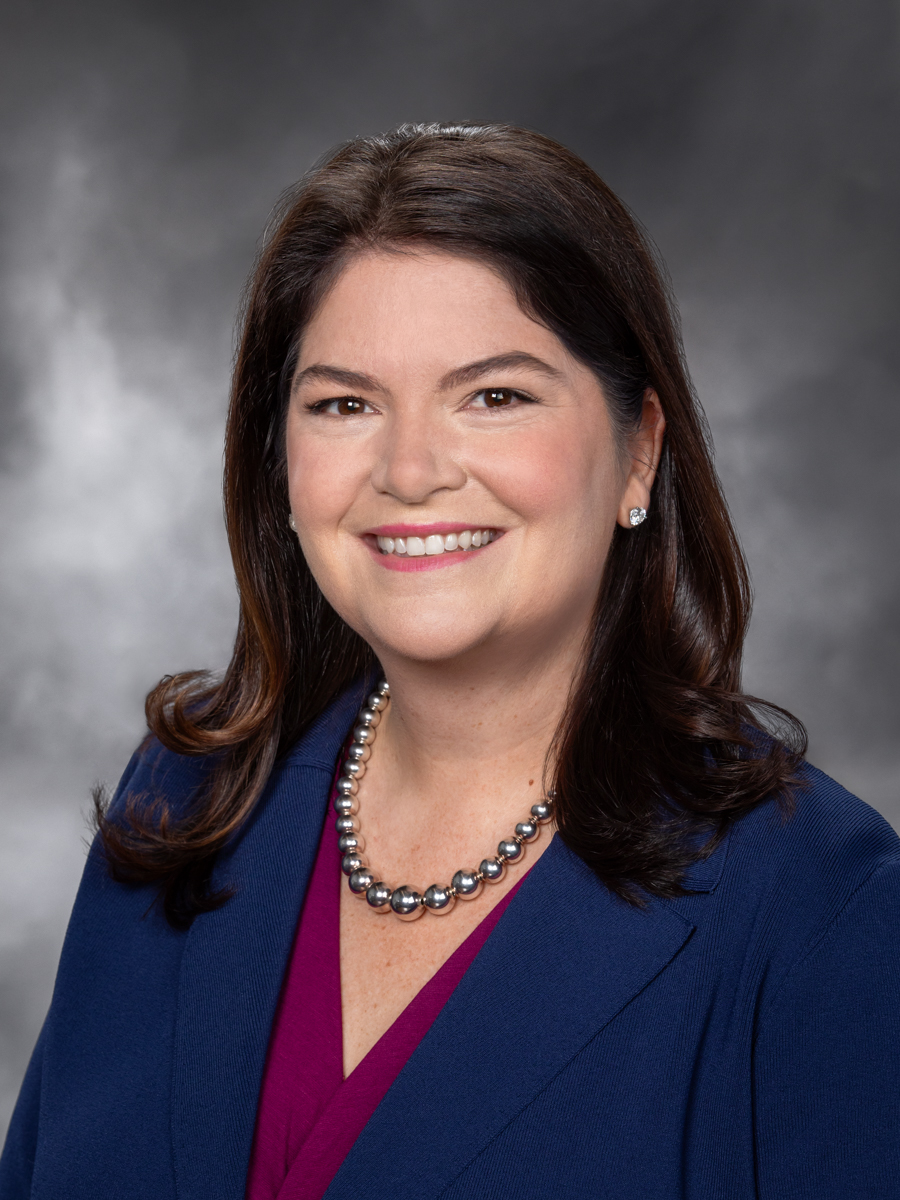
Photo of Liz Berry
D Washington House · District 36 On the 2026 ballot

Rep. Liz Berry

Compare
Total votes
3,509
all sessions
Attendance
100%
17 missed
Higher than 93% of chamber peers
With party
99%
of cast votes
Higher than 80% of chamber peers
Bipartisan score
0%
crosses aisle rarely
Lower than 82% of chamber peers
Sponsored
845
bills & resolutions
Higher than 85% of chamber peers
Committees
4
assignments
845 bills and resolutions

Sponsored bills

Total
845
Primary
42
Co-sponsor
803
This page
845
matching current filters
Co-sponsor HB 1570
Signed into law · Washington House · Co-sponsor
Concerning collective bargaining for certain employees who are enrolled in academic programs at public institutions of higher education.

Maddy summaryHB 1570 grants collective bargaining rights to student employees (those enrolled in academic or certificate programs) at Central Washington University, Eastern Washington University, Western Washington University, and The Evergreen State College. It defines specific bargaining topics, including tuition remission and waivers, while excluding issues like academic calendars, tuition amounts, student admissions, and termination based on academic performance. Compensation agreements must align with legislative budget limits, though institutions may offer additional pay beyond these limits. The bill applies only to employees not already covered by other collective bargaining laws at these institutions.

Signed into law Mar 18, 2026 1 co-sponsor
Co-sponsor HB 2249
Signed into law · Washington House · Co-sponsor
Amending the state civil service statutes to include Washington technology solutions network and security systems employees.

Maddy summaryHB 2249 expands an existing exemption in Washington's civil service rules to include employees of Washington Technology Solutions (WTS) who handle network security, systems integration, and IT management. This specifically affects WTS staff performing IT security, data center management, and network systems engineering duties. The bill amends RCW 41.06.070 to add these positions to a list of state employees already exempt from standard civil service regulations. As a result, these IT workers will not be subject to the same hiring, promotion, and personnel rules that apply to most other state employees.

Signed into law Mar 17, 2026 1 co-sponsor
Co-sponsor HB 2219
Signed into law · Washington House · Co-sponsor
Enhancing the operational efficiency of child care providers.

Maddy summaryHB 2219 creates unified licensing standards for all child care providers in Washington, replacing separate rules for different settings like family care, nature-based programs, and centers. It allows child care centers to combine age groups for up to 4 hours daily (with 90 minutes for staff breaks) while maintaining required staff-to-child ratios, and waives redundant orientation requirements for providers who already completed similar training. The bill directly affects licensed child care providers, early learning programs, and the Department of Children, Youth, and Families, which must implement these standards within available funding. Key changes streamline operations by reducing administrative complexity and aligning quality standards with existing programs like Early Achievers.

Signed into law Mar 17, 2026 1 co-sponsor
Co-sponsor HB 2317
Signed into law · Washington House · Co-sponsor
Concerning early learning program licensing requirements.

Maddy summaryHB 2317 amends Washington State's early learning program licensing rules by adding "outdoor nature-based child care" as a defined program type, requiring such programs to operate in approved outdoor spaces for at least four hours daily and follow a nature-based curriculum. It expands the definition of "early learning" to explicitly include services like preschool, child care subsidies, parent education, and nature-based programs. The bill clarifies exemptions for certain providers, including seasonal camps, military-affiliated programs, and nature-based programs meeting specific criteria, removing them from full licensing requirements. These changes directly affect child care centers, family providers, and early learning programs operating under state oversight.

Signed into law Mar 14, 2026 1 co-sponsor
Co-sponsor HB 2479
Signed into law · Washington House · Co-sponsor
Concerning the recovery of unpaid wages.

Maddy summaryHB 2479 streamlines the process for workers to recover unpaid wages in Washington State. It requires the Department of Labor to investigate wage complaints within 60 days (extendable with notice), limits claims to unpaid wages from the past three years, and mandates employers to pay owed wages plus 1% monthly interest. For willful violations, employers face fines of at least $1,500 or 10% of unpaid wages (adjusted for inflation starting 2030), with penalties deposited into a new "wage recovery account." The bill directly affects workers who haven’t received pay and employers who owe wages, while giving the department expanded authority to investigate multiple violations under a single complaint.

Signed into law Mar 14, 2026 1 co-sponsor
Co-sponsor HR 4714
Passed · Washington House · Co-sponsor
Honoring Representative Graham.

Maddy summaryThis bill is a House resolution that formally recognizes Representative Virginia "Jenny" Graham for her public service in the Washington State House of Representatives. It highlights her eight-year tenure, her advocacy for public safety, and her work on community safety and veterans' issues. The resolution does not create new laws or policies but serves as an official acknowledgment of her contributions and legacy.

Passed Mar 12, 2026 1 co-sponsor
Co-sponsor HR 4713
Passed · Washington House · Co-sponsor
Honoring John Michael Sattgast.

Maddy summaryThis bill is a House resolution that formally honors John Michael Sattgast for his 35 years of dedicated service as a communications professional for the House Republican Caucus in the Washington State Legislature. It recognizes his work producing over 4,000 radio stories and coordinating media coverage for state representatives, as well as his leadership roles with the National Conference of State Legislatures. The resolution acknowledges his contributions to sharing legislative history and public information, noting his receipt of the 2023 Legislative Staff Achievement Award. This measure serves as a commemorative tribute rather than establishing new policy or affecting government operations.

Passed Mar 12, 2026 1 co-sponsor
Co-sponsor HR 4715
Passed · Washington House · Co-sponsor
Honoring Representative Tharinger.

Maddy summaryThis bill formally acknowledges the service of Representative Steve Tharinger to his district and the Washington state legislature. It recognizes his long career in public service, including his time as a Clallam County Commissioner, his work on the House Capital Budget Committee, and his advocacy for environmental protection and healthcare. The resolution serves as a commemorative tribute to his contributions and personal qualities rather than establishing new laws or policies.

Passed Mar 12, 2026 1 co-sponsor
Co-sponsor HB 2374
Passed · Washington House · Co-sponsor
Concerning electric-assisted bicycle and electric motorcycle regulation.

Maddy summaryHB 2374 clarifies Washington state's definitions for e-bikes and electric motorcycles to address regulatory confusion. It creates three e-bike classes: Class 1 (pedal-assist only up to 20 mph), Class 2 (throttle-only up to 20 mph), and Class 3 (pedal-assist up to 28 mph with speedometer). Electric motorcycles are defined as vehicles without operable pedals, exceeding 750W motor power, or providing motor assistance beyond 20 mph without pedal input. The bill directly affects e-bike riders, manufacturers, and law enforcement by establishing clear classification standards for safety and enforcement, while requiring a work group to study enforcement consistency and consumer protections by December 2026.

Passed Mar 12, 2026 1 co-sponsor
Co-sponsor HB 2464
Passed · Washington House · Co-sponsor
Concerning reporting requirements and law enforcement responses for incidents at private detention facilities.

Maddy summaryHB 2464 requires private detention facilities operating under government contracts to meet specific standards for food services, staff training, and infection control, while mandating timely reporting of serious incidents like abuse, death, or injuries to health and law enforcement. Facilities must provide balanced meals with dietary oversight, maintain safety protocols, and post clear policies on detained persons' rights. Starting November 2026, law enforcement agencies must annually report to the health department on how they responded to facility incidents, including whether victims received police reports or prosecutions occurred. The bill directly affects private detention facilities with government contracts, aiming to improve oversight and accountability in their operations.

Passed Mar 12, 2026 1 co-sponsor
Showing 21 to 30 of 845 bills
Previous 1 2 3 4 85 Next