

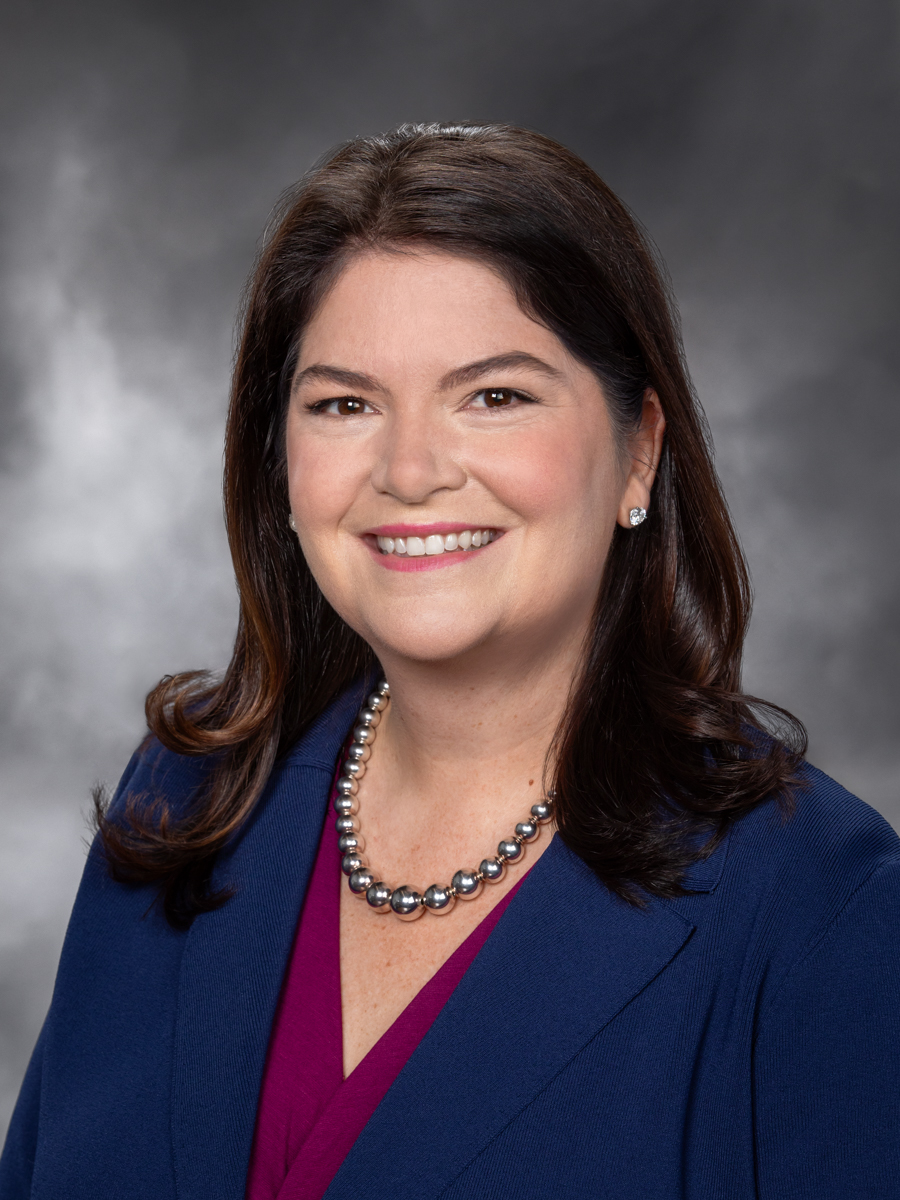
Photo of Liz Berry
D Washington House · District 36 On the 2026 ballot

Rep. Liz Berry

Compare
Total votes
3,509
all sessions
Attendance
100%
17 missed
Higher than 88% of chamber peers
With party
99%
of cast votes
Higher than 79% of chamber peers
Bipartisan score
0%
crosses aisle rarely
Lower than 81% of chamber peers
Sponsored
845
bills & resolutions
Higher than 85% of chamber peers
Committees
4
assignments
845 bills and resolutions

Sponsored bills

Total
845
Primary
42
Co-sponsor
803
This page
845
matching current filters
Co-sponsor HB 1062
In committee · Washington House · Co-sponsor
Providing coverage for biomarker testing.

Maddy summaryHB 1062 requires all health plans in Washington (including commercial plans, public employee coverage, and state Medicaid) to cover biomarker testing starting January 1, 2026. This applies to tests that measure biological markers in tissue or blood (like gene mutations) when used for diagnosis, treatment, or monitoring of a patient’s condition, provided the test is supported by FDA approvals, Medicare guidelines, clinical practice standards, or expert consensus. Plans must ensure coverage without causing unnecessary disruptions, such as requiring multiple biopsies. The bill mandates this coverage uniformly across all plan types under specific evidence-based criteria.

In committee Jan 12, 2026 1 co-sponsor
Co-sponsor HB 1350
In committee · Washington House · Co-sponsor
Modernizing reimbursement rates for the working connections child care program.

Maddy summaryHB 1350 updates Washington's child care subsidy reimbursement rates to better match the actual cost of high-quality care. It requires the state to use a new "cost of quality" rate model that covers full provider costs - including living wages, benefits, staff training, and materials - instead of relying solely on the current 85th percentile market rate. This directly affects licensed child care providers serving families in the Working Connections Child Care program and aims to stabilize the child care workforce. The bill maintains the existing baseline reimbursement rate but mandates future rate recommendations must reflect these updated cost calculations.

In committee Jan 12, 2026 1 co-sponsor
Co-sponsor HB 1398
In committee · Washington House · Co-sponsor
Concerning factors which are considered in interest arbitration for adult family home providers.

Maddy summaryHB 1398 amends state law to update rules for interest arbitration panels deciding wages and working conditions for employees at adult family home providers (facilities caring for elderly or disabled individuals). The bill requires panels to consider West Coast wage comparisons for similar workers, regional cost-of-living differences, and the state's financial ability to pay. It also mandates panels to weigh factors like reducing reliance on public assistance programs (e.g., food stamps, housing aid) and promoting workforce stability in long-term care. These changes directly affect arbitration outcomes for caregivers in adult family homes across Washington. The bill does not create new funding but guides how existing resources are allocated during wage negotiations.

In committee Jan 12, 2026 1 co-sponsor
Co-sponsor HB 1810
In committee · Washington House · Co-sponsor
Concerning seismic hazard risk reduction.

Maddy summaryHB 1810 requires Washington state to study financial incentives for seismic retrofits of older brick buildings (unreinforced masonry structures) and create a statewide inventory of such buildings. It directly affects building owners of vulnerable historic properties, local governments using the inventory for planning, and taxpayers through potential tax changes. Key provisions include a 2026 study on tax modifications (like special valuation or exemptions) to reduce retrofit costs, and a 2030 deadline to catalog all such buildings using existing data and on-site verification. The bill aims to make retrofits more affordable to protect public safety and preserve affordable housing, without mandating retrofits. It expires in 2026 for the study and 2030 for the inventory work.

In committee Jan 12, 2026 1 co-sponsor
Co-sponsor HB 2082
In committee · Washington House · Co-sponsor
Increasing funding to the education legacy trust account by creating a more progressive rate structure for the capital gains tax and estate tax.

Maddy summaryHB 2082 aims to increase funding for public K-12 education, early learning, child care, and higher education in Washington state. The bill proposes to do this by modifying the state's capital gains tax and estate tax. It introduces an additional 2.90% excise tax on an individual's Washington capital gains that exceed $1,000,000, effective January 1, 2025. For the estate tax, it increases the exclusion amount to $3,000,000 for estates of decedents dying on or after January 1, 2025, and intends to raise the top-tier rates up to 35 percent. Revenues generated from these changes would be dedicated to the education legacy trust account.

In committee Jan 12, 2026 1 co-sponsor
Co-sponsor HB 1598
In committee · Washington House · Co-sponsor
Concerning fair access to community solar.

Maddy summaryHB 1598 establishes rules for community solar programs in Washington to ensure equitable access to clean energy. It requires community solar projects (max 5,000 kW capacity) to have at least 30% of their capacity subscribed by low-income households (defined as 80% of area median income or 200% of federal poverty level) and 50% by residential subscribers. The bill creates "community solar bill credits" that automatically apply to subscribers' utility bills, allowing renters and income-qualified households to benefit without installing rooftop solar. It also sets site requirements (e.g., avoiding farmland) and defines key terms like "low-income service provider" to standardize program implementation. This directly affects low-income residents, renters, and communities unable to access traditional solar installations.

In committee Jan 12, 2026 1 co-sponsor
Co-sponsor HB 1070
In committee · Washington House · Co-sponsor
Concerning industrial insurance coverage for posttraumatic stress disorders affecting correctional facility workers.

Maddy summaryHB 1070 creates a legal presumption that posttraumatic stress disorder (PTSD) is an occupational disease for correctional facility workers in Washington state, directly affecting staff employed at prisons, jails, or community corrections facilities. The bill establishes that after 90 consecutive days of full-time, compensated employment, PTSD claims for these workers are presumed work-related unless the employer provides evidence to the contrary. It also requires employers to cover reasonable appeal costs (including attorney fees) if workers win their claims in court or before the Industrial Insurance Appeals Board. This applies to claims filed within three months per year of employment, up to a maximum of 60 months after leaving the job. The law takes effect January 1, 2026.

In committee Jan 12, 2026 1 co-sponsor
Co-sponsor HB 1671
In committee · Washington House · Co-sponsor
Protecting personal data privacy.

Maddy summaryHB 1671 establishes new data privacy rules for Washington residents, requiring businesses to obtain clear "affirmative consent" before collecting or processing personal data. It specifically protects sensitive consumer health data - including gender-affirming care, reproductive health, and biometric information - and bans "dark patterns" designed to trick users into sharing data. Businesses must provide easy-to-understand disclosures about data use, allow consumers to revoke consent easily, and avoid inferring consent from user inaction. The law directly affects Washington consumers and companies handling their personal data, with exemptions for research approved by ethics boards.

In committee Jan 12, 2026 1 co-sponsor
Co-sponsor HB 1334
In committee · Washington House · Co-sponsor
Modifying the annual regular property tax revenue growth limit.

Maddy summaryHB 1334 modifies Washington State's rules for limiting annual growth in local property tax revenue, directly affecting cities, counties, and other taxing districts. The bill replaces the previous inflation measure with the Western Region Consumer Price Index and sets the growth limit at 100% plus population change and inflation (capped at 103%), while small districts (under 10,000 population) remain limited to 101%. It repeals a prior provision allowing some districts to use a 101% limit factor and requires new calculations for tax limits starting in 2026. These changes aim to adjust how property tax revenue growth is calculated for local government funding.

In committee Jan 12, 2026 1 co-sponsor
Co-sponsor HB 1463
In committee · Washington House · Co-sponsor
Expanding time limit exemptions applicable to cash assistance programs.

Maddy summaryHB 1463 expands exemptions allowing families to continue receiving Washington's Temporary Assistance for Needy Families (TANF) cash aid beyond the standard 60-month time limit. It directly affects low-income households nearing or exceeding this limit due to specific hardships. Key provisions add new exemption criteria, including homelessness (per federal McKinney-Vento Act), periods when Washington's unemployment rate was 7% or higher (starting March 2020), family violence, and having a child under age two requiring infant/toddler care. The bill requires recipients to have already received 52 months of aid before qualifying for these extensions, ensuring exemptions apply only to those with significant, documented hardship.

In committee Jan 12, 2026 1 co-sponsor
Showing 191 to 200 of 845 bills
Previous 1 … 19 20 21 … 85 Next