

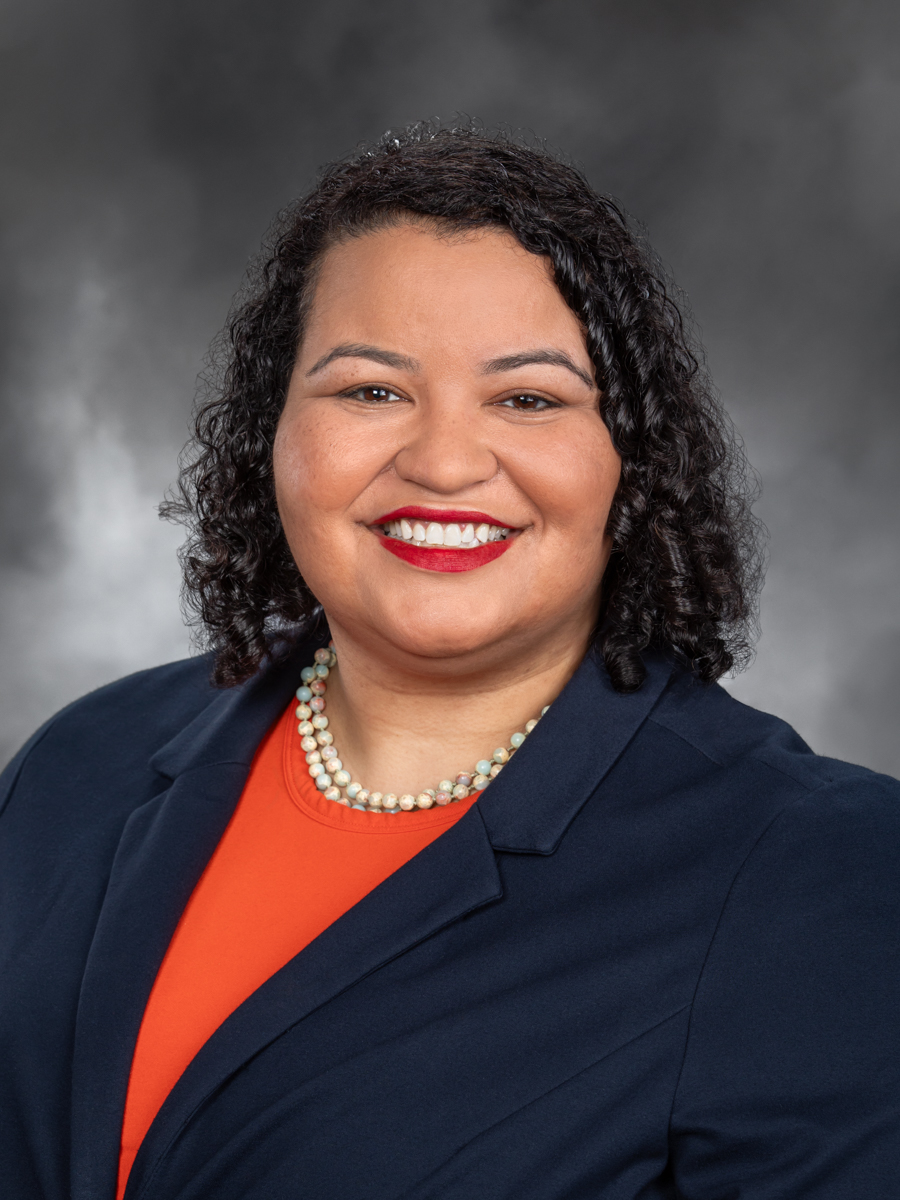
Photo of Julia Reed
D Washington House · District 36 On the 2026 ballot

Rep. Julia Reed

Compare
Total votes
2,532
all sessions
Attendance
99%
15 missed
Near the chamber average
With party
98%
of cast votes
Near the chamber average
Bipartisan score
1%
crosses aisle rarely
Near the chamber average
Sponsored
1,244
bills & resolutions
Higher than 97% of chamber peers
Committees
4
assignments
1,244 bills and resolutions

Sponsored bills

Total
1,244
Primary
42
Co-sponsor
1,202
This page
1,244
matching current filters
Co-sponsor HB 2420
Signed into law · Washington House · Co-sponsor
Increasing small works roster contract limits.

Maddy summaryHB 2420 increases the dollar limit for state and local government contracts using simplified "small works roster" procedures, which allow direct contracting without full competitive bidding for minor construction projects. It phases in higher limits starting at $350,000 (through 2026) and rising to $650,000 by 2030. The bill also requires state agencies and local governments to prioritize contracting with small, minority-owned, women-owned, and veteran-owned businesses when the project cost is under $150,000, while documenting annual efforts to meet this goal. These changes apply to construction, renovation, or repair work on real property valued under the new thresholds.

Signed into law Mar 18, 2026 1 co-sponsor
Co-sponsor HB 2338
Signed into law · Washington House · Co-sponsor
Authorizing community scaled weatherization projects.

Maddy summaryHB 2338 authorizes community-scale weatherization projects that cover multiple homes in the same neighborhood facing shared environmental, social, or economic challenges. Sponsors like community groups, tribes, or utilities can apply for state funds to implement energy efficiency upgrades, structural repairs, and healthy housing improvements across entire neighborhoods - rather than just single homes. The department must prioritize proposals serving areas with environmental health disparities and low-income households (defined as 80% of median income), requiring data-driven community assessments. Projects must include energy audits and avoid charging households for weatherization services, while aligning with federal energy efficiency programs.

Signed into law Mar 18, 2026 1 co-sponsor
Co-sponsor HB 2429
Signed into law · Washington House · Co-sponsor
Supporting children and youth behavioral health.

Maddy summaryHB 2429 establishes a Children and Youth Behavioral Health Work Group to address barriers in accessing care for children, youth, and young adults in Washington State. The work group, composed of diverse stakeholders including providers, families, youth representatives, tribal leaders, and agency officials, will monitor existing programs, improve coordination between education and health systems, and recommend strategies to expand access to services - particularly for young children (prenatal to age 5) and underserved communities. Key provisions include advising on implementing a statewide strategic plan, removing systemic barriers, and promoting equal insurance coverage for behavioral health compared to physical health. The bill directly affects children and families seeking mental health support by aiming to create a more integrated, equitable system.

Signed into law Mar 18, 2026 1 co-sponsor
Co-sponsor HB 1570
Signed into law · Washington House · Co-sponsor
Concerning collective bargaining for certain employees who are enrolled in academic programs at public institutions of higher education.

Maddy summaryHB 1570 grants collective bargaining rights to student employees (those enrolled in academic or certificate programs) at Central Washington University, Eastern Washington University, Western Washington University, and The Evergreen State College. It defines specific bargaining topics, including tuition remission and waivers, while excluding issues like academic calendars, tuition amounts, student admissions, and termination based on academic performance. Compensation agreements must align with legislative budget limits, though institutions may offer additional pay beyond these limits. The bill applies only to employees not already covered by other collective bargaining laws at these institutions.

Signed into law Mar 18, 2026 1 co-sponsor
Co-sponsor HB 2248
Signed into law · Washington House · Co-sponsor
Concerning corporate filings and other documents processed by the secretary of state's corporations and charities division.

Maddy summaryHB 2248 amends Washington State laws governing corporate filings processed by the Secretary of State's Corporations and Charities Division. It requires trademark assignments to be recorded with the Secretary of State to be valid against subsequent purchasers, adds specific information requirements for international student exchange organizations seeking registration, and clarifies procedures for submitting entity filings and annual reports (including details like registered agent addresses and business descriptions). The bill directly affects businesses, nonprofits, and international student placement organizations that file documents with the Secretary of State. Key changes include standardizing filing timelines, requiring updated information for registered entities, and specifying how the Secretary of State must handle rejected filings.

Signed into law Mar 17, 2026 1 co-sponsor
Co-sponsor HB 2249
Signed into law · Washington House · Co-sponsor
Amending the state civil service statutes to include Washington technology solutions network and security systems employees.

Maddy summaryHB 2249 expands an existing exemption in Washington's civil service rules to include employees of Washington Technology Solutions (WTS) who handle network security, systems integration, and IT management. This specifically affects WTS staff performing IT security, data center management, and network systems engineering duties. The bill amends RCW 41.06.070 to add these positions to a list of state employees already exempt from standard civil service regulations. As a result, these IT workers will not be subject to the same hiring, promotion, and personnel rules that apply to most other state employees.

Signed into law Mar 17, 2026 1 co-sponsor
Co-sponsor HB 2436
Signed into law · Washington House · Co-sponsor
Concerning requirements of oil tankers operating in restricted waters.

Maddy summaryHB 2436 regulates oil tanker operations in Washington state waters by establishing size-based escort requirements. It prohibits tankers over 125,000 deadweight tons from operating east of a line from Discovery Island to New Dungeness Light without U.S. Coast Guard authorization. Tankers between 40,000-125,000 deadweight tons must use tugs with minimum 3,000 horsepower or 5% of the tanker’s deadweight tonnage (whichever is greater) in Puget Sound, including Rosario Strait. Smaller tankers (5,000-40,000 deadweight tons) and certain oil barges in Rosario Strait face similar escort rules, with exceptions for bunkering vessels, cargo barges, and ballast vessels. The bill clarifies definitions for terms like "oil tanker" and "articulated tug barge" to apply these rules consistently.

Signed into law Mar 16, 2026 1 co-sponsor
Co-sponsor HB 2410
Signed into law · Washington House · Co-sponsor
Establishing a commercial truck safety and education council.

Maddy summaryHB 2410 establishes a Washington State Commercial Truck Safety and Education Council within the Washington Traffic Safety Commission. The council, composed of state agency representatives (including the State Patrol and Transportation departments), trucking industry leaders, and public members, will develop safety programs to address rising truck collision rates and improve driver training. It will use existing funds from the commercial vehicle safety account to coordinate industry initiatives, analyze crash trends, and provide grants for safety education - without creating new taxes or fees. The council must report annually to the legislature starting in 2028 on its activities and recommendations.

Signed into law Mar 16, 2026 1 co-sponsor
Co-sponsor HB 2254
Signed into law · Washington House · Co-sponsor
Providing flexibility in the partnership access line assessment to cover administrative costs.

Maddy summaryHB 2254 proposes changes to how mental health program costs are funded in Washington State. It requires health carriers, self-funded health plans, and employers to pay a proportional share of administrative costs for partnership access lines and psychiatric consultation services based on their share of insured residents served by these programs. The bill allows third-party administrators' reasonable costs to be included in the assessment, but excludes the Health Care Authority's own administrative expenses. This would shift some funding responsibility from state budgets to covered health entities while maintaining state funding for programs under Chapter 74.09 RCW.

Signed into law Mar 16, 2026 1 co-sponsor
Co-sponsor HB 2309
Signed into law · Washington House · Co-sponsor
Reducing barriers to state employment by eliminating postgraduate degree requirements that are unnecessary.

Maddy summaryHB 2309 eliminates unnecessary postgraduate degree requirements for most state jobs in Washington. It directly affects state job applicants and current employees by changing hiring standards to allow qualification through experience or other means, unless a degree is legally required for the job's essential functions. The bill amends state law to require that classification plans for state positions not mandate postgraduate degrees as the sole qualification method. This aims to broaden the pool of eligible candidates and align hiring with actual job needs rather than arbitrary educational requirements. The bill passed unanimously in the House during the 2026 legislative session.

Signed into law Mar 14, 2026 1 co-sponsor
Showing 51 to 60 of 1,244 bills
Previous 1 5 6 7 125 Next