

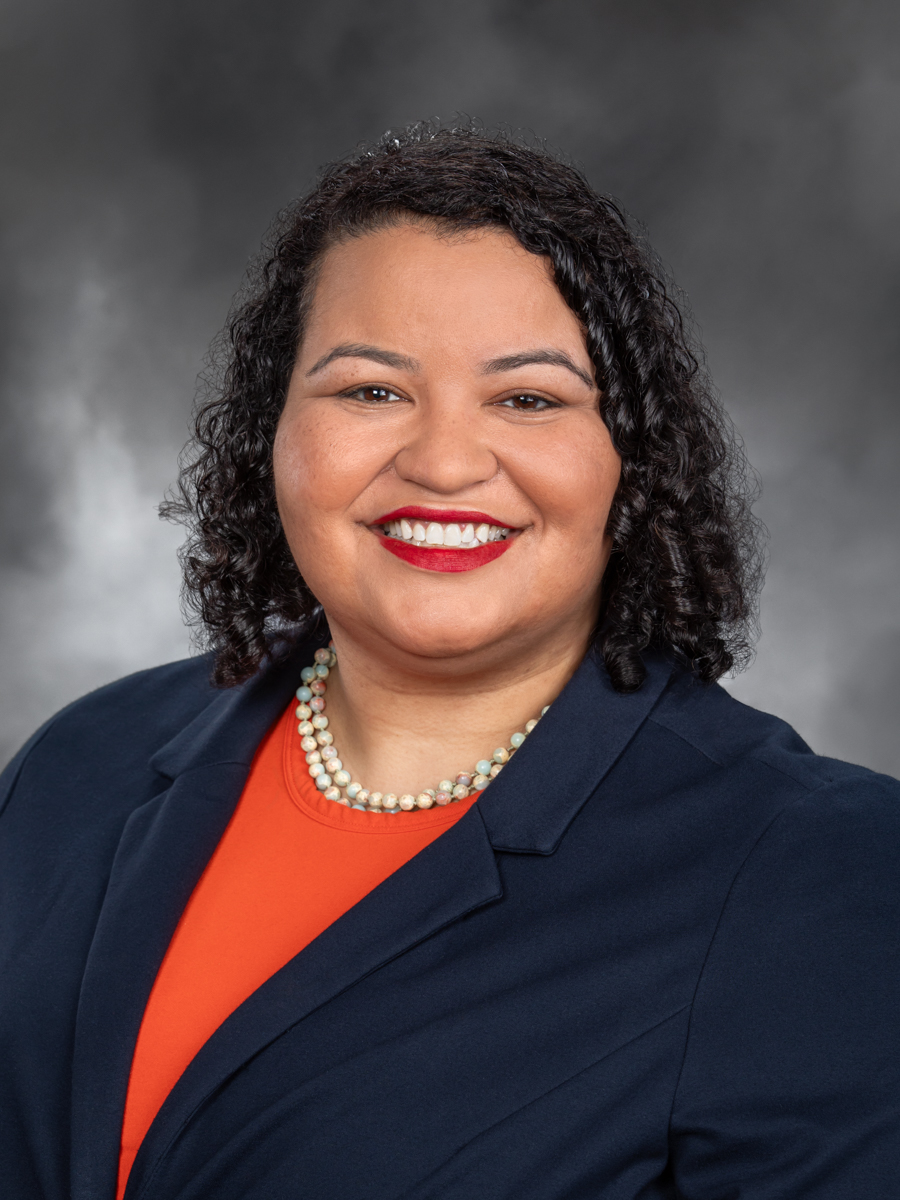
Photo of Julia Reed
D Washington House · District 36 On the 2026 ballot

Rep. Julia Reed

Compare
Total votes
2,532
all sessions
Attendance
99%
15 missed
Near the chamber average
With party
98%
of cast votes
Near the chamber average
Bipartisan score
1%
crosses aisle rarely
Near the chamber average
Sponsored
1,244
bills & resolutions
Higher than 97% of chamber peers
Committees
4
assignments
1,244 bills and resolutions

Sponsored bills

Total
1,244
Primary
42
Co-sponsor
1,202
This page
1,244
matching current filters
Co-sponsor HB 2499
In committee · Washington House · Co-sponsor
Modernizing conservation district election procedures and requiring financial disclosures from district supervisors and candidates for district supervisor.

Maddy summaryHB 2499 modernizes election procedures for conservation district supervisors in Washington by extending their terms from three to four years and requiring financial disclosures from both current supervisors and candidates. The bill amends state laws to adjust election timing, term assignments (such as awarding the top vote-getter a four-year term in initial elections), and voting rules, while mandating transparency through financial disclosures. This directly affects conservation districts and their supervisors, updating outdated election processes to increase accountability in local governance.

In committee Feb 6, 2026 1 co-sponsor
Co-sponsor HB 2422
In committee · Washington House · Co-sponsor
Concerning private security guards.

Maddy summaryHB 2422 shifts the cost of private security guard licensing fees from individual workers to their employers. The bill requires security companies to pay all application, renewal, and endorsement fees ($101 initial, $95 annual) for employees, prohibiting employers from deducting these costs from wages or requiring reimbursement. This applies to all security guards employed by licensed companies, aiming to reduce financial barriers for workers in an industry with modest pay and high turnover. Violating employers face $500 penalties per violation, with repeated offenses risking license suspension. The law takes effect November 1, 2026.

In committee Feb 6, 2026 1 co-sponsor
Co-sponsor HB 2144
In committee · Washington House · Co-sponsor
Requiring notices to employees when electronic monitoring is used to assist employers conducting performance evaluations.

Maddy summaryHB 2144 requires Washington employers to provide written notice to employees before using electronic monitoring (such as AI tools, cameras, or software) to assist in performance evaluations. Employers must give at least 30 days' notice before starting new monitoring, 60 days for existing monitoring, and notify new hires at the time of the job offer. The notice must explain how monitoring is used (e.g., tracking productivity) and how data is verified. Violations can result in Department of Labor investigations and civil penalties up to $5,000 for willful violations, with enforcement applying to all employers in Washington state.

In committee Feb 6, 2026 1 co-sponsor
Co-sponsor HR 4680
Passed · Washington House · Co-sponsor
Recognizing the value of the domestic maritime industry.

Maddy summaryThis is a symbolic resolution (not a law), introduced by Washington state House representatives. It recognizes the domestic maritime industry's role in disaster response - citing examples like evacuations after 9/11 and aid delivery during Maui wildfires - and highlights its economic impact (22,500 jobs, $1.5B in labor income). The resolution states the industry's value in supporting community resilience during natural disasters but contains no new laws, funding, or binding requirements. It directs the resolution to be sent to U.S. Congress members as a statement of support.

Passed Feb 5, 2026 1 co-sponsor
Co-sponsor HB 2724
In committee · Washington House · Co-sponsor
Establishing a tax on millionaires.

Maddy summaryHB 2724 proposes a new tax on Washington residents with annual adjusted gross income of $1 million or more, affecting approximately the top 0.5% of households. The tax revenue would be deposited into the state general fund to support K-12 education, health care, higher education, human services, and the working families' tax credit. Key provisions include exempting sales of family-owned small businesses and real property from the tax, aligning the state definition of taxable income with federal rules (modified for state purposes), and reducing other taxes like sales tax on essential items. The bill aims to make the state tax system less regressive by shifting more burden to high earners while maintaining current tax rates for lower-income residents.

In committee Feb 4, 2026 1 co-sponsor
Co-sponsor HB 2586
In committee · Washington House · Co-sponsor
Modifying funding for the passport to careers program and eligibility for the Washington college grant.

Maddy summaryHB 2586 modifies eligibility for Washington's College Grant program by automatically qualifying students already enrolled in the Passport to Careers program. It amends RCW 28B.92.200 to add Passport to Careers eligibility as a pathway for College Grant access starting in the 2026-27 academic year. This change directly affects Washington students participating in the Passport to Careers initiative, removing the need for separate financial eligibility assessments. The bill streamlines access to college grant funding without altering the Passport to Careers program's structure or funding levels.

In committee Feb 4, 2026 1 co-sponsor
Co-sponsor HB 2453
In committee · Washington House · Co-sponsor
Concerning psychiatric pharmacists.

Maddy summaryHB 2453 amends multiple sections of Washington’s behavioral health statutes (RCW 71.05.020, 71.05.148, etc.) to update definitions related to mental health services. The bill primarily revises terms like "antipsychotic medications," "behavioral health service provider," and "crisis stabilization unit" without establishing new requirements for psychiatric pharmacists. It does not specify changes to pharmacists' practice authority or direct patient care protocols. The bill's focus is on clarifying terminology within existing mental health frameworks rather than creating new policy for psychiatric pharmacists.

In committee Feb 4, 2026 1 co-sponsor
Co-sponsor HB 2489
In committee · Washington House · Co-sponsor
Establishing statewide standards for when local governments may enforce laws regulating the use of public space for life-sustaining activities.

Maddy summaryHB 2489 establishes statewide rules preventing local governments from penalizing people for basic life-sustaining activities (like sleeping or eating in public) when no adequate shelter is available. It requires cities to prove shelter space existed before enforcing public space laws, and invalidates citations or prosecutions that violate this rule. The bill protects individuals experiencing homelessness from punishment for necessary activities while ensuring enforcement actions are limited to immediate safety risks. It does not create a right to shelter, but mandates cities to document shelter availability and coordinate with service providers to address homelessness.

In committee Feb 4, 2026 1 co-sponsor
Co-sponsor HB 2369
In committee · Washington House · Co-sponsor
Promoting the use of local foods in public schools.

Maddy summaryHB 2369 creates a Washington local food for schools program under the Superintendent of Public Instruction to help public school food authorities (like school districts) buy more locally grown food for school meals. The program establishes a catalog of Washington-grown, unprocessed foods and coordinates ordering through existing federal food systems to reduce administrative work for schools. It requires voluntary participation by schools in the national school lunch program, applies geographic preferences for local products where federal rules allow, and mandates collaboration between education, agriculture, and university departments to improve procurement and distribution. The bill directly affects school districts, Washington farmers, and state agencies by streamlining access to local food sources while aligning with federal nutrition requirements.

In committee Feb 4, 2026 1 co-sponsor
Co-sponsor HB 2567
In committee · Washington House · Co-sponsor
Concerning the Washington college grant and college bound scholarship program for students attending private four-year not-for-profit institutions of higher education in Washington.

Maddy summaryHB 2567 updates Washington's college grant program to adjust funding for students attending private four-year non-profit institutions. Starting in the 2026-27 academic year, the maximum grant amount for these students will be set at 50% of the average award given to students at public four-year institutions, replacing the previous fixed amount of $9,739 (adjusted annually for tuition growth). This change directly affects students enrolled at eligible private non-profit universities in Washington state who qualify for financial aid. The bill amends existing grant formulas to align private institution funding more closely with public institution awards, effective after the 2025-26 academic year.

In committee Feb 4, 2026 1 co-sponsor
Showing 151 to 160 of 1,244 bills
Previous 1 … 15 16 17 … 125 Next