

Maddy summaryThis is a ceremonial House resolution (not a policy bill) introduced on January 19, 2026, by multiple Washington State Representatives. It formally recognizes Dr. Martin Luther King Jr.'s life, legacy of nonviolent activism, and contributions to civil rights, including his role in the Civil Rights Act of 1964 and Voting Rights Act of 1965. The resolution expresses the House's commitment to upholding Dr. King's ideals of equality, justice, and opportunity for all. As a symbolic gesture, it does not create new laws, allocate funds, or affect any specific individuals or groups.
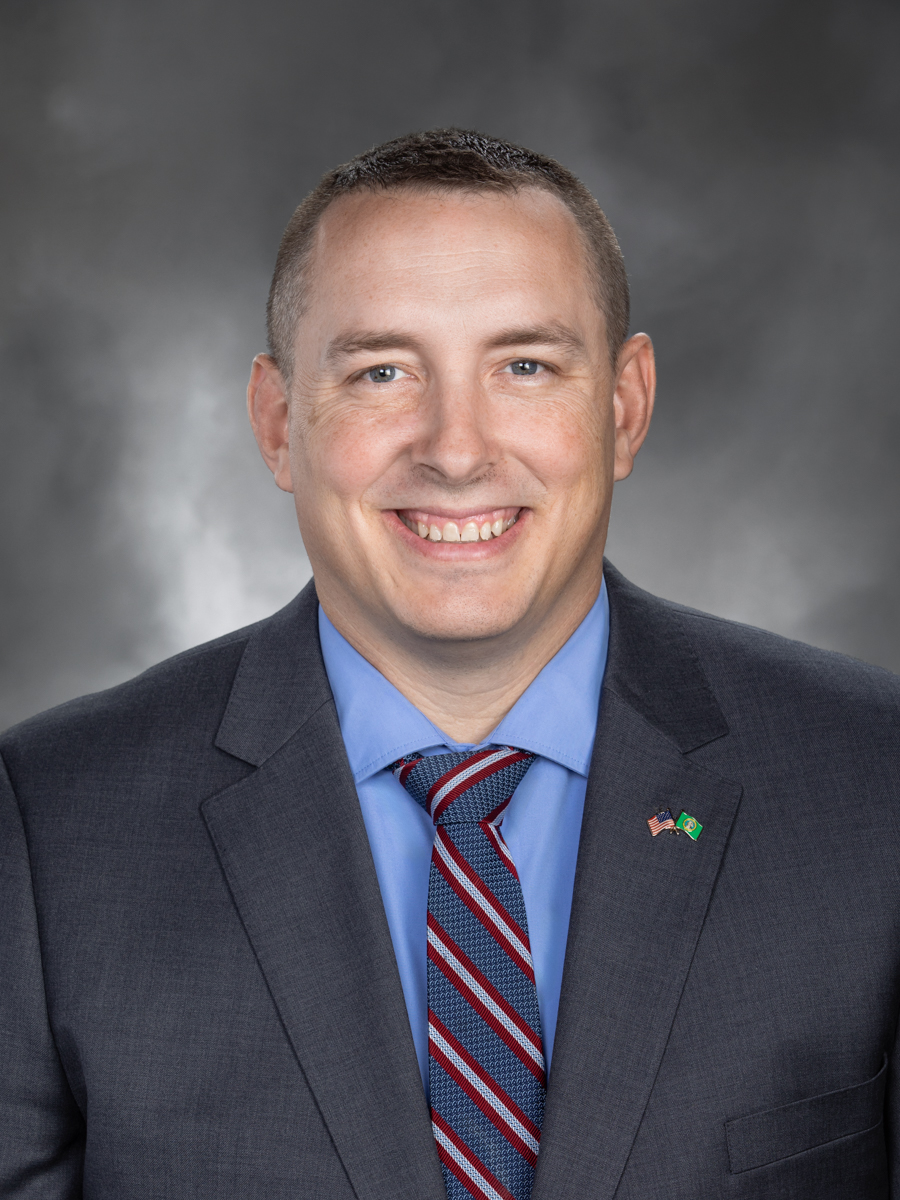
Rep. Josh Penner
Sponsored bills
Maddy summaryThis is a ceremonial House Resolution (not a bill with policy changes), adopted on January 16, 2026. It formally recognizes Washington's joint operating agencies (JOAs) for their role in developing clean energy infrastructure, including renewable sources like solar, wind, and hydroelectric power, as well as new projects like small modular reactors. The resolution highlights JOAs' contributions to reducing greenhouse gas emissions, ensuring affordable energy access, and supporting economic growth in Washington State. It does not create new laws, allocate funds, or impose requirements - its sole purpose is to acknowledge these agencies' historical and ongoing work.
Maddy summaryHB 2518 prohibits vehicle manufacturers from discriminating against dealers in pricing, allocation, or service fees. It bans practices like charging different prices for identical vehicles or parts to different dealers, using unfair promotion plans, or preventing dealers from requesting service fees on certain programs. The law also restricts manufacturers from competing with dealers by owning or operating dealerships, except in limited cases like temporary transitions (up to 2 years), diversity partnerships with capital investment requirements, or heavy-truck dealerships. This bill directly affects Washington-based vehicle manufacturers and their new vehicle dealers by requiring fair treatment under state law.
Maddy summaryHB 2331 requires Washington's Medicaid program to cover specific pediatric and behavioral health screenings and assessments, including autism and developmental delay screenings for children, annual depression screenings for youth aged 12-18, maternal depression screenings for mothers of infants under six months, and mental health assessments for children under five, all subject to available funding. The bill also explicitly prohibits cuts to life-sustaining services like prescription medications, oxygen, and respiratory supplies. This directly affects children, adolescents, and families enrolled in Medicaid by ensuring continued access to these critical health services. The law amends existing Medicaid coverage rules to prevent reductions in pediatric care access, focusing on evidence-based screening requirements.
Maddy summaryThis bill requires Washington state agencies to allow legislators to visit specific state-run and contracted facilities within 10 business days of a written request. It applies to facilities operated by Corrections, Children’s Services, and Social Health Services, including prisons, group homes, assisted living centers, and residential care facilities. Agencies cannot deny access due to staffing shortages or administrative convenience, and must provide written reasons for denials based on safety concerns. The law aims to support legislators’ oversight role by ensuring timely access to facilities serving constituents.
Maddy summaryHB 2202 establishes a dental care pilot program at Washington's Rainier School residential habilitation center for individuals with developmental disabilities who have high medical or behavioral needs requiring anesthesia or face barriers to community dental care. Eligible participants must meet specific criteria, including documented medical needs or unavailability of community dental services, and may use short-term stays (up to 24 hours) with respite care authorization. The program will operate under Medicaid billing, with federal matching funds deposited into the state general fund, and requires a legislative report by October 2028 detailing outcomes, challenges, and future needs. The pilot expires July 1, 2028, with the bill's full provisions expiring July 1, 2029.
Maddy summaryHB 2166 amends Washington State law to grant state employees two unpaid religious holidays per year for observance of faith-based practices. It specifically adds a provision allowing employees to select two days annually for religious observance (e.g., Hanukkah, Eid al-Fitr, Passover) after consulting with employers, unless the absence would cause undue hardship. The bill does not create new paid holidays but expands existing unpaid holiday options for state workers, including those in schools and public institutions. It reaffirms existing state legal holidays while listing additional recognized days (like Hanukkah and Eid) that are not legally designated as paid holidays.
Maddy summaryHB 2187 creates a tax credit for Washington employers who provide child care assistance to their employees. It allows businesses to claim a 50% credit against their business and occupation tax for costs paid to registered child care providers, with key limits: a $50,000 annual cap per business and a $5 million statewide annual cap. The credit initially targets small businesses (under 100 full-time employees) and those joining child care consortiums (grouped businesses pooling resources) through 2028, then expands to all qualifying employers starting in 2029. The program expires on January 1, 2033, and requires electronic filing without separate applications.
Maddy summaryHB 2149 declares an emergency due to the April 2025 closure of the Fairfax Bridge on State Route 165. It directs the transportation department to restore access "as soon as possible" and grants the secretary emergency authority to waive specific rules - including liability agreements, inspection fees, utility regulations, and tax deadlines - to speed up rebuilding. This waiver power applies only to actions necessary for the bridge replacement and cannot override federal requirements or First Amendment rights. The bill directly affects travelers, local governments, and state agencies managing Route 165 infrastructure, with no mention of broader funding or unrelated provisions like the climate account amendment.
Maddy summaryHB 1236 increases penalties for littering in Washington State by creating tiered fines: a class 2 civil infraction for ≤1 cubic foot, a misdemeanor for 1-10 cubic yards, and a gross misdemeanor for >10 cubic yards. Offenders must pay restitution equal to 4x cleanup costs for misdemeanors or 2x for gross misdemeanors, with funds distributed to landowners and law enforcement. The bill also establishes a littering solutions task force under the Department of Ecology, requiring input from state agencies, counties, and industry groups (like waste management, retail, and tourism) to develop recommendations by November 2026. The task force must address specific issues like cigarette butts, road cleanup costs, and reducing litter at public sites such as parks and roadways.