

Maddy summaryHouse Bill 1102 aims to increase the number of veterans in Washington State who are aware of and receiving federal benefits. It expands the state's Veterans Service Officer (VSO) program, prioritizing funding for counties where a lower percentage of veterans currently receive federal disability or pension compensation. The bill requires the Department of Veterans Affairs to proactively inform recently discharged veterans about available benefits and to provide county-specific service information online. It also mandates biennial reports on veteran service access and requires counties with state-funded VSOs to serve veterans from adjacent counties.
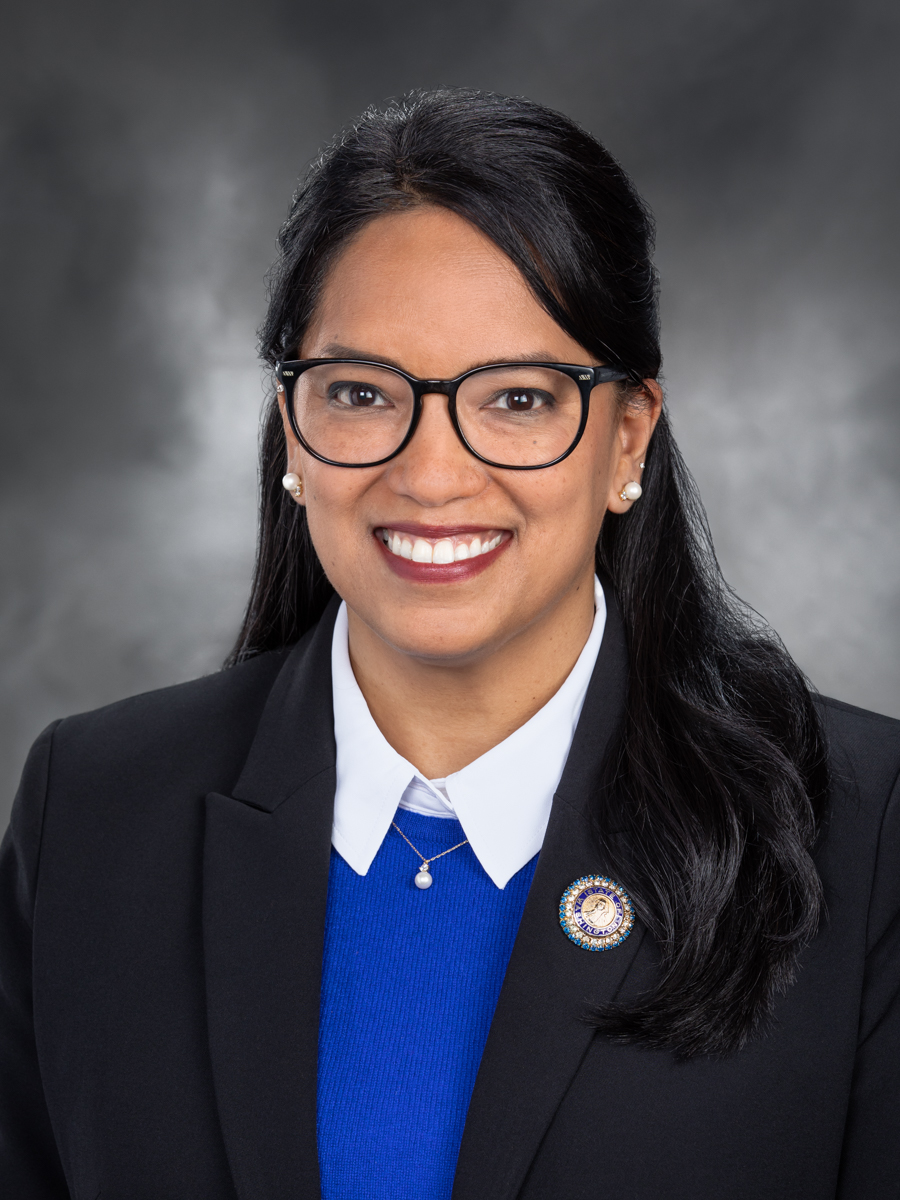
Rep. Kristine Reeves
Sponsored bills
Maddy summaryHB 1633 modifies bidding requirements for prime contractors on public works projects costing $1,000,000 or more for state and local entities. It requires prime contractors to submit the names and proof of license for HVAC, plumbing, and electrical subcontractors *at* the bid submittal time, allowing 48 hours for license corrections. Additionally, prime contractors must submit names of structural steel and rebar subcontractors within 48 hours after the bid submittal. The bill prohibits "bid shopping" or "bid peddling" and specifies valid reasons for substituting a listed subcontractor.
Maddy summaryHouse Bill 1539 establishes a work group to study and develop recommendations for wildfire mitigation and resiliency standards in Washington state. This work group, composed of state officials, insurance industry representatives, landowners, and utilities, is tasked with coordinating state wildfire mitigation standards with national guidelines and enhancing community-level efforts. It will also focus on improving consumer transparency regarding wildfire risk and insurance non-renewals. Additionally, the group will recommend a framework for a grant program to help homeowners retrofit their properties against wildfire damage. The work group must submit its report of recommendations to the legislature by December 1, 2025, and the section creating the work group expires at the end of 2025.
Maddy summaryHB 1912 establishes a system for tracking and reporting sales of fuel used for agricultural purposes, which are exempt from the state's Climate Commitment Act. Fuel sellers, including retail stations and suppliers, can register with the Department of Ecology to track and report these exempt sales. Registered sellers must make exempt fuel available at a differential rate or credit purchasers to reflect the absence of associated compliance costs under the climate act. This ensures the agricultural exemption is properly applied and monitored, affecting fuel sellers, suppliers, and agricultural users starting January 1, 2026.
Maddy summaryHouse Bill 1587 encourages local governments, including municipalities, counties, and federally recognized Indian tribes, to establish their own "promise scholarship programs" for Washington students. These local programs will operate within the existing Washington state opportunity scholarship program, which will administer the scholarships, but local governments can set their own student eligibility rules and determine which educational programs to support. The scholarships aim to cover tuition and fees not met by other state aid, with local governments having the option to provide additional funds for expenses like books. The bill also authorizes state matching funds, up to $300,000 per local program annually, to support these efforts and expand access to postsecondary education.
Maddy summaryHB 1308 enhances the rights of employees and recent former employees in Washington state to access their own personnel records. It requires most employers to provide copies of personnel files, which explicitly include records like job applications, performance evaluations, and payroll, within 21 calendar days of a request at no cost. The bill also allows employees to petition for the removal of irrelevant information and to add rebuttals to their files. To ensure compliance, it establishes a private cause of action for violations, enabling individuals to sue employers for statutory damages ranging from $250 to $1,000, along with attorney's fees.
Maddy summaryHouse Bill 1079 permits school districts with online programs to offer remote testing options for statewide assessments to their students, starting in the 2027-28 school year. This measure aims to reduce travel burdens and costs for students and families enrolled in online education. The Office of the Superintendent of Public Instruction (OSPI) is required to develop comprehensive policies by April 1, 2027, to ensure the security and integrity of these remote tests. These policies will address requirements for testing personnel, student-to-proctor ratios, remote testing environments, device specifications, and parental consent.
Maddy summaryHouse Bill 1052 clarifies the definition of a hate crime offense in Washington state, applying to individuals who commit malicious and intentional acts against others based on perceived protected characteristics. It specifies that assault, property damage, or threats made due to a person's perceived race, religion, gender, sexual orientation, or disability constitute a hate crime. The bill also outlines specific acts, such as burning a cross or defacing property with Nazi symbols, that can be used to infer intent to threaten a victim based on their perceived characteristics. Commission of a hate crime offense is established as a Class C felony.
Maddy summaryHouse Bill 1023 adopts the Cosmetology Licensure Compact, creating a new multistate licensing program for cosmetologists. This compact allows licensed cosmetologists to practice in any participating member state with a single license issued by their home state, aiming to reduce licensing burdens and enhance mobility for professionals, including military spouses. It establishes a commission to set uniform requirements and facilitate cooperation among states for licensure, investigations, and discipline. The bill's purpose is to improve public access to, and safety of, cosmetology services while addressing workforce shortages. Washington State's adoption of this compact will become effective on June 1, 2028.
Maddy summaryHB 1395 streamlines the background check process for home care workers, long-term care providers, and others working with vulnerable adults and children in Washington state. It prevents the Department of Social and Health Services (DSHS) from automatically disqualifying individuals for certain past criminal convictions, such as specific theft or assault charges, once a specified number of years have passed. However, DSHS or authorized entities can still consider these convictions during a "character, competence, and suitability review," and clients must be informed of an approved provider's background check results before services begin. The bill also allows some providers to work for up to 30 days while their review is pending, with client notification, and limits when new suitability reviews are required for previously cleared non-disqualifying issues.