

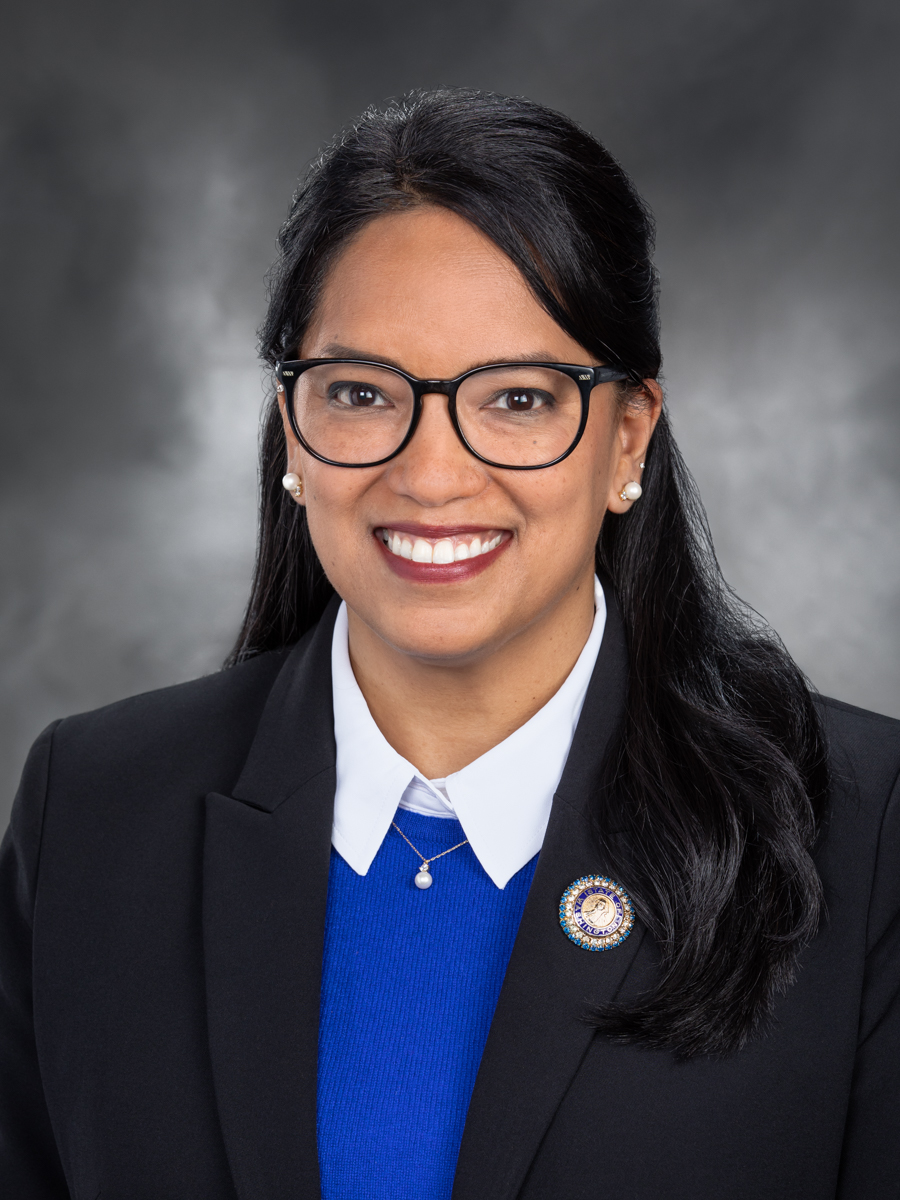
Photo of Kristine Reeves
D Washington House · District 30 On the 2026 ballot

Rep. Kristine Reeves

Compare
Total votes
4,679
all sessions
Attendance
96%
187 missed
Lower than 80% of chamber peers
With party
98%
of cast votes
Near the chamber average
Bipartisan score
1%
crosses aisle rarely
Near the chamber average
Sponsored
1,000
bills & resolutions
Higher than 81% of chamber peers
Committees
6
assignments
1,000 bills and resolutions

Sponsored bills

Total
1,000
Primary
138
Co-sponsor
862
This page
1,000
matching current filters
Primary HB 2068
In committee · Washington House · Lead sponsor
Regulating tobacco and nicotine products.

Maddy summaryHB 2068 prohibits the sale of all flavored tobacco and nicotine products (including menthol cigarettes, flavored vapes, cigars, and hookah) and entertainment vapor products with gaming features. It increases taxes on all tobacco products to reduce youth access and addiction, directly affecting retailers who must stop selling these items and youth who use them. The bill targets products marketed with kid-friendly flavors like cotton candy or bubble gum, which the legislature cites as driving youth initiation. Key provisions include banning flavored products, raising tobacco excise taxes, and requiring retailers to verify ages for all tobacco sales.

In committee Jan 12, 2026 0 co-sponsors
Co-sponsor HB 1810
In committee · Washington House · Co-sponsor
Concerning seismic hazard risk reduction.

Maddy summaryHB 1810 requires Washington state to study financial incentives for seismic retrofits of older brick buildings (unreinforced masonry structures) and create a statewide inventory of such buildings. It directly affects building owners of vulnerable historic properties, local governments using the inventory for planning, and taxpayers through potential tax changes. Key provisions include a 2026 study on tax modifications (like special valuation or exemptions) to reduce retrofit costs, and a 2030 deadline to catalog all such buildings using existing data and on-site verification. The bill aims to make retrofits more affordable to protect public safety and preserve affordable housing, without mandating retrofits. It expires in 2026 for the study and 2030 for the inventory work.

In committee Jan 12, 2026 1 co-sponsor
Co-sponsor HB 1120
In committee · Washington House · Co-sponsor
Determining state allocations for school staff salaries.

Maddy summaryHB 1120 sets new minimum state salary allocation targets for school staff in Washington's basic education program, directly affecting all public school districts. It requires the state to gradually increase minimum salary allocations to reach $67,325 (adjusted for inflation from 2023-24) for classified staff (e.g., office, support roles) starting in the 2025-26 school year, with further increases to $99,164 for classified administrative staff by 2027-28. The bill mandates annual inflation adjustments and regional cost-of-living adjustments based on school district housing values, as specified in the annual budget. These changes aim to align state funding with actual staffing costs, replacing previous formulas that expired after the 2017-18 school year. The bill is currently pending in the Appropriations Committee after being prefaced in December 2024.

In committee Jan 12, 2026 1 co-sponsor
Co-sponsor HB 1070
In committee · Washington House · Co-sponsor
Concerning industrial insurance coverage for posttraumatic stress disorders affecting correctional facility workers.

Maddy summaryHB 1070 creates a legal presumption that posttraumatic stress disorder (PTSD) is an occupational disease for correctional facility workers in Washington state, directly affecting staff employed at prisons, jails, or community corrections facilities. The bill establishes that after 90 consecutive days of full-time, compensated employment, PTSD claims for these workers are presumed work-related unless the employer provides evidence to the contrary. It also requires employers to cover reasonable appeal costs (including attorney fees) if workers win their claims in court or before the Industrial Insurance Appeals Board. This applies to claims filed within three months per year of employment, up to a maximum of 60 months after leaving the job. The law takes effect January 1, 2026.

In committee Jan 12, 2026 1 co-sponsor
Co-sponsor HB 1444
In committee · Washington House · Co-sponsor
Concerning rapid whole genome sequencing.

Maddy summaryHB 1444 requires Washington health insurers to cover rapid whole genome sequencing for infants under one year old in intensive care units who meet specific medical criteria, such as unexplained epilepsy, multiple congenital abnormalities, or suspected genetic disorders. It mandates coverage starting January 1, 2026, for cases where timely diagnosis is critical to treatment, including pre- and post-test counseling. The bill ensures separate payment for this service (not bundled into existing hospital payments) and defines "rapid" sequencing as delivering results in under 14 days. It directly affects low-income families enrolled in medical assistance programs by removing financial barriers to faster diagnosis of rare genetic conditions.

In committee Jan 12, 2026 1 co-sponsor
Co-sponsor HB 1058
In committee · Washington House · Co-sponsor
Providing incentives to improve freight railroad infrastructure.

Maddy summaryHB 1058 creates tax credits for eligible railroads to fund infrastructure improvements. It directly affects small regional railroads (class II/III), public entities like ports/cities, and industrial property owners with rail spurs in Washington. The bill provides a 50% tax credit on qualified expenses for maintenance, new rail development, or modernization projects (e.g., track upgrades, bridges, safety equipment), with annual limits of $500,000 per taxpayer and a total $8 million statewide cap. Credits can be carried forward for up to five years or transferred to other eligible taxpayers.

In committee Jan 12, 2026 1 co-sponsor
Co-sponsor HB 2046
In committee · Washington House · Co-sponsor
Creating fairness in Washington's tax by imposing a tax on select financial intangible assets.

Maddy summaryHB 2046 imposes a tax of $8 for every $1,000 in market value on Washington residents' financial intangible assets (like stocks, bonds, and mutual funds) exceeding $50 million in value. It exempts assets such as private company ownership, pensions, retirement accounts, and the first $50 million of holdings. Revenue from this tax will fund K-12 schools, early learning programs, child care, and higher education through the Education Legacy Trust Account. The bill targets high-value financial investments held by residents while excluding common retirement and private business assets.

In committee Jan 12, 2026 1 co-sponsor
Co-sponsor HB 1348
In committee · Washington House · Co-sponsor
Concerning employee ownership of licensed cannabis businesses.

Maddy summaryHB 1348 allows cannabis businesses in Washington to be fully or partially owned by employee stock ownership plans (ESOPs), enabling employees to gain ownership stakes. It directly affects cannabis businesses seeking licenses and employees participating in ESOPs by changing who must undergo licensing vetting. The key provision revises licensing rules to require only corporate officers/directors of ESOP-owned businesses to be vetted - employees, ESOP administrators, and trustees are exempt from criminal background checks, residency requirements, and other owner-level screenings. This simplifies the licensing process while maintaining oversight of business control. The bill aims to align cannabis business ownership with other industries that use ESOPs for employee engagement and wealth-building.

In committee Jan 12, 2026 1 co-sponsor
Primary HB 1599
In committee · Washington House · Lead sponsor
Concerning consumer debt adjusters and debt resolution services providers.

Maddy summaryHB 1599 regulates debt adjusters and debt resolution services providers in Washington State, directly affecting consumers seeking help managing unsecured debt and the businesses offering these services. The bill sets a 15% fee cap on total debt adjustment services (including fees from financial institutions), limits initial charges to $25, and prohibits fees on rent or utility payments. It clarifies distinctions between "debt adjusters" (who manage debt) and "debt resolution services providers" (who renegotiate debt terms), while defining key terms like "dedicated account" and "fair share" contributions. The law also prohibits fee retention until all creditors are notified and imposes penalties for violations.

In committee Jan 12, 2026 0 co-sponsors
Co-sponsor HB 1019
In committee · Washington House · Co-sponsor
Concerning tax incentives for farmers.

Maddy summaryHB 1019 creates a 25% tax credit for Washington farmers purchasing eligible items like new equipment, seeds, and conservation infrastructure. To qualify, farmers must participate in a state conservation program or receive conservation grant funds from the Washington State Conservation Commission. The credit, which cannot exceed annual tax liability, can be carried forward for up to two years if unused. The tax incentive expires on January 1, 2036, and applies only to farmers meeting specific conservation program participation criteria.

In committee Jan 12, 2026 1 co-sponsor
Showing 211 to 220 of 1,000 bills
Previous 1 … 21 22 23 … 100 Next