

Maddy summaryHB 1335 adds "military spouse status" to Washington's anti-discrimination law, making it illegal for employers to discriminate against military spouses in hiring, firing, or employment conditions. The bill explicitly includes military spouses as a protected class under existing laws that prohibit discrimination based on race, gender, disability, and other factors. It amends Washington’s civil rights statute (RCW 49.60) to guarantee military spouses the right to "obtain and hold employment without discrimination" and provides legal recourse for violations. This change directly affects military spouses in Washington and all employers covered by the state’s anti-discrimination law.
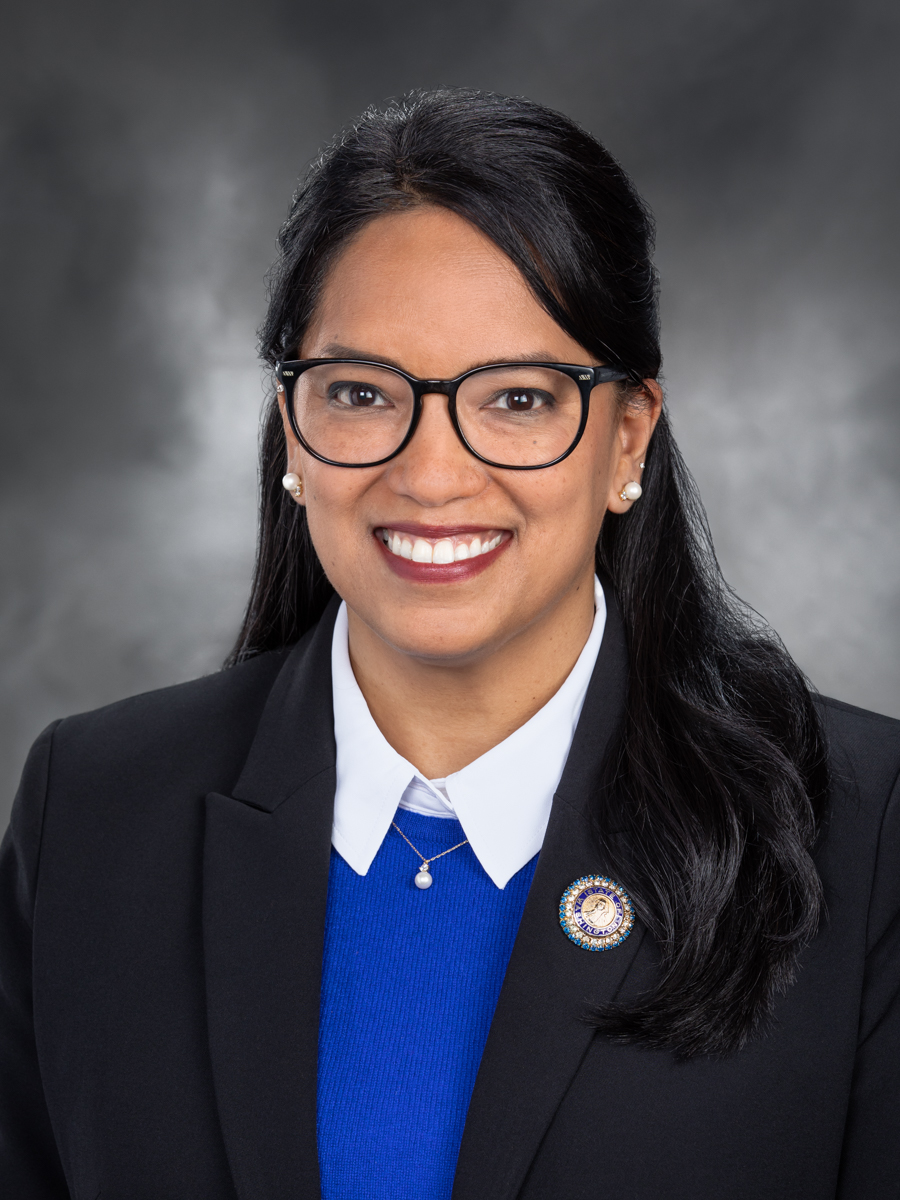
Rep. Kristine Reeves
Sponsored bills
Maddy summaryHB 1043 extends the state's commute trip reduction tax credit program for employers and property managers until 2035. This program allows eligible entities to claim a tax credit for providing financial incentives to employees who use alternative commuting methods like ride-sharing, public transportation, car-sharing, or non-motorized transport. The bill changes the credit calculation so that the full amount paid to or on behalf of an employee, up to $60 per employee annually, can be credited (previously 50%). It also reduces the maximum credit a single entity can claim per fiscal year from $100,000 to $50,000.
Maddy summaryHB 1661 establishes a pilot project to provide $25,000 grants to eligible Washington residents born into poverty. It directly affects individuals who were enrolled in Medicaid or CHIP before age one and remain enrolled at application, are Washington residents, and are 18-36 years old. The grants, administered through the State Treasurer's Office, can be used for education, home purchases, or starting a business in Washington, with funds not counting as assets for public assistance eligibility. The pilot will randomly select participants across geographic regions, require financial coaching, and include impact evaluations by the University of Washington. This is a limited-time study to test whether such grants improve economic stability for people facing intergenerational poverty.
Maddy summaryHB 1310 eliminates the enrollment cap on students eligible for state special education funding in Washington, directly affecting all public school districts and students with disabilities. The bill increases funding multipliers for districts serving students with disabilities in inclusive settings (80%+ time in general education), raising the multiplier from 1.12 to 1.5289 for those students, while lowering it to 1.447 for less inclusive placements. It also requires the state superintendent to monitor racial disproportionality in special education identification and provide technical assistance to districts. These changes aim to ensure equitable state funding without requiring local district contributions and support inclusive educational practices.
Maddy summaryHB 1504 requires individuals in Washington to demonstrate financial responsibility before purchasing or possessing a firearm, directly affecting most gun owners. It mandates one of three options per firearm: a $25,000 liability insurance policy or bond, self-insurance certification (for owners of 25+ firearms), or a $25,000 certificate of deposit. Proof of compliance must be provided to dealers or law enforcement via an identification card (paper or electronic), with failure to show it constituting a class 1 civil infraction. The bill exempts antique firearms, active law enforcement officers, and military personnel on duty.
Maddy summaryHB 1318 exempts children's diapers from Washington State's sales and use taxes, directly benefiting parents and caregivers who purchase diapers for infants and toddlers who cannot control bladder or bowel movements. The bill adds specific exemptions to the state's tax code, removing diapers from both sales tax (RCW 82.08) and use tax (RCW 82.12) requirements. It defines "diaper" as reusable or disposable absorbent garments marketed for young children with incontinence needs. The exemption takes effect January 1, 2026.
Maddy summaryHouse Bill 1551 extends Washington's cannabis social equity program, which aims to help certain applicants obtain cannabis licenses, until July 1, 2034. The bill requires the Liquor and Cannabis Board to evaluate the program, including public feedback, and submit a report with findings and policy options to the Governor and Legislature by December 1, 2025. To facilitate this review, new license application windows through the program will be paused until June 30, 2026. Additionally, the waiver of annual licensing fees for social equity licenses is extended through the program's new end date.
Maddy summaryHB 1623 prohibits employers from deducting credit card processing fees from employee tips. It requires that when customers pay tips via credit card, employees receive the full amount indicated on the credit card slip, without any reduction for transaction fees charged by the credit card company. This law directly affects tipped workers in Washington, such as servers and bartenders, and applies to all employers accepting credit card tips. The bill amends state law to ensure tips paid by credit card are paid in full to employees, eliminating employer deductions for processing costs.
Maddy summaryHB 1082 allows licensed child care providers in Washington to use documented work experience instead of formal early childhood education certificates to meet licensing requirements until August 1, 2028. To qualify, providers must show continuous employment since August 1, 2021 (or seven cumulative years), active work requiring such certificates, and completion of required health/safety training. The bill also requires the Department of Children, Youth, and Families to form a stakeholder group - including providers, training organizations, and community advocates - to review and improve staff qualification systems, with a report due by December 2026. This law expires July 1, 2028, and does not apply to providers serving the Early Childhood Education and Assistance Program (ECEAP).
Maddy summaryHB 1404 expands access to free school meals in Washington state by removing income-based eligibility requirements. It mandates that all public school students who request a meal receive it at no cost, regardless of family income, to address food insecurity and support academic success. The bill amends several education funding statutes (including RCW 28A.235.135 and 28A.235.160) to align meal access with this new policy. It directly affects every public school student in Washington, ensuring no child experiences hunger during the school day. The policy change replaces previous tiered eligibility systems with universal free meals for all requesting students.