

Maddy summaryHB 2305 clarifies that travel vans - vehicles designed as compact living spaces with a shorter front-to-body distance than trucks - are legally distinct from motor homes for vehicle registration and tax purposes. The bill adds a specific definition of "travel van" to state law and explicitly excludes these vehicles from the motor vehicle excise tax, which currently applies to motor homes but not to campers or travel trailers. This change directly affects owners of travel vans who previously might have been incorrectly classified under motor home tax rules. The policy ensures travel van owners, who typically pay tax on other vehicles, are not subject to additional excise tax based on their van's use. The bill amends Washington’s vehicle registration and tax statutes to formally include travel vans in the existing tax exemptions.
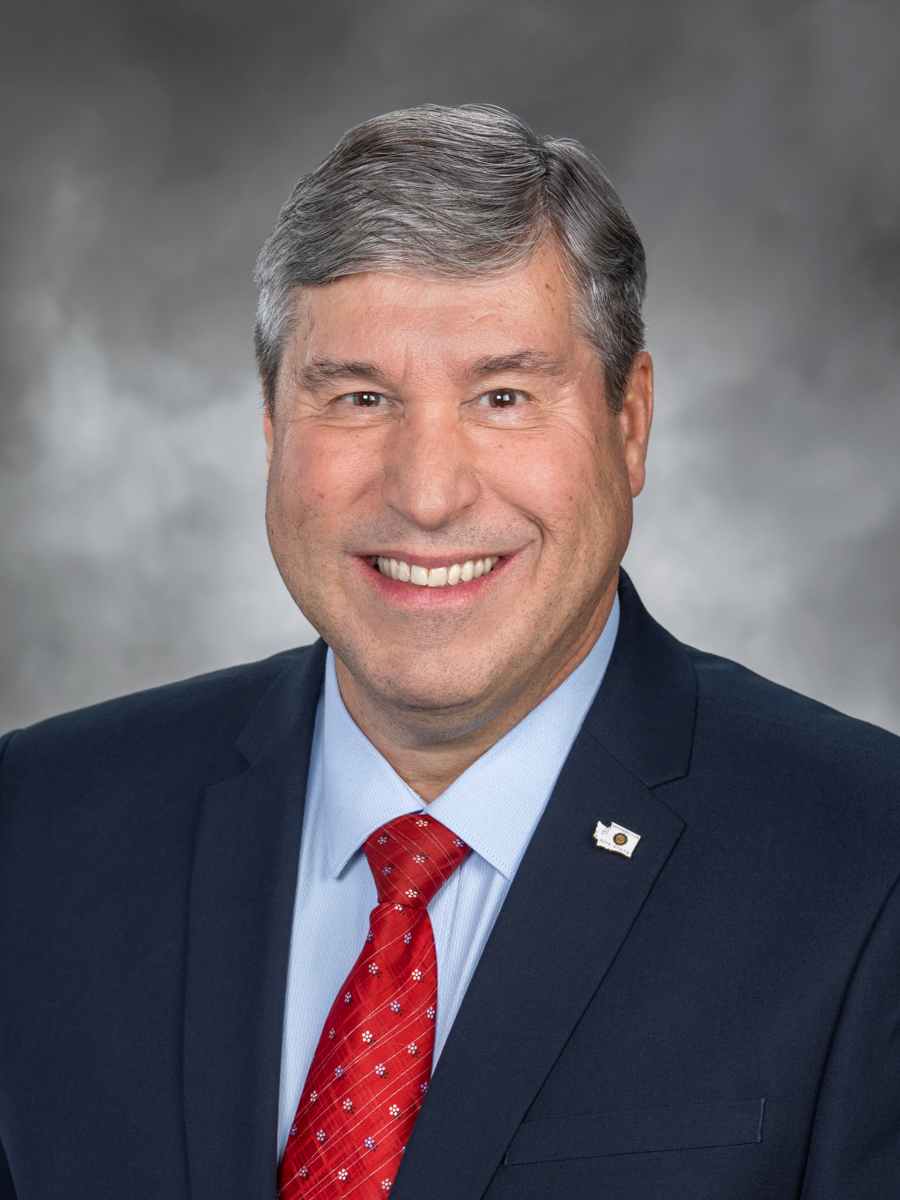
Rep. Michael Keaton
Sponsored bills
Maddy summaryHouse Resolution 4675, adopted on January 28, 2026, is a ceremonial resolution expressing the Washington State House of Representatives' gratitude to the Washington National Guard for their service. It specifically acknowledges the Guard's roles in emergency response (including flood operations and search-and-rescue missions), disaster recovery efforts (like adapting from the Oso landslide), and national defense support (such as aerial refueling capabilities). The resolution directs copies to the Adjutant General, Governor, and other officials but does not create new laws or alter policies. It directly honors National Guard members, their families, and employers without imposing any financial or operational requirements.
Maddy summaryHB 2349 requires Washington state agencies to provide written community notification 3 months before releasing or discharging individuals classified as sexually violent predators. It mandates that agencies share detailed records (including institutional history, mental health evaluations, and criminal history) with local law enforcement, county officials, legislators, and victims (if they request it) prior to release. The bill directly affects counties, law enforcement, and victims by requiring timely disclosure of release dates and relevant background information. Key provisions include standardized notification to sheriffs, county administrators, legislators, and law enforcement via the Washington Crime Information Center, ensuring consistent community awareness. This focuses on procedural transparency rather than altering commitment standards or penalties.
Maddy summaryHJM 4013 is a joint memorial urging Governor Ferguson to opt Washington state into a federal tax-credit scholarship program for K-12 education. It would direct approximately $732 million annually in unused federal funds to Washington students from working-class and middle-class families (household income ≤300% of area median income) through tax credits for donors. The program requires no state funding, imposes no budget obligation, and mandates scholarship organizations to spend at least 90% of funds on student expenses like tutoring and technology while meeting strict federal accountability standards. Failure to opt in would prevent Washington families from accessing these federal resources, which would instead benefit students in states that have joined the program.
Maddy summaryHB 2627 streamlines the repair and maintenance of Washington's aging highway infrastructure, particularly bridges that are over 80 years old, structurally deficient, or rated in fair or poor condition. It exempts certain bridge repairs from standard regulatory requirements if done within the existing right-of-way or outside it for engineering/environmental needs without adding lanes, and allows the state Department of Transportation and local governments to use expedited contracting for emergency repairs without public bidding. The bill also requires contracts over $700,000 to be reviewed by the Office of Financial Management and mandates prequalification for contractors. This aims to prevent highway closures that disrupt community access to essential services like medical care and food.
Maddy summaryThis is a ceremonial House resolution (not a policy bill) introduced on January 19, 2026, by multiple Washington State Representatives. It formally recognizes Dr. Martin Luther King Jr.'s life, legacy of nonviolent activism, and contributions to civil rights, including his role in the Civil Rights Act of 1964 and Voting Rights Act of 1965. The resolution expresses the House's commitment to upholding Dr. King's ideals of equality, justice, and opportunity for all. As a symbolic gesture, it does not create new laws, allocate funds, or affect any specific individuals or groups.
Maddy summaryThis is a ceremonial House Resolution (not a bill with policy changes), adopted on January 16, 2026. It formally recognizes Washington's joint operating agencies (JOAs) for their role in developing clean energy infrastructure, including renewable sources like solar, wind, and hydroelectric power, as well as new projects like small modular reactors. The resolution highlights JOAs' contributions to reducing greenhouse gas emissions, ensuring affordable energy access, and supporting economic growth in Washington State. It does not create new laws, allocate funds, or impose requirements - its sole purpose is to acknowledge these agencies' historical and ongoing work.
Maddy summaryHB 2448 establishes a new annual spending cap for Washington's state general fund, limiting growth to inflation and population changes starting in 2027. The cap automatically adjusts each November based on actual spending and economic forecasts, requiring the state treasurer to prevent overspending. It allows temporary 24-month exceptions only for declared natural disasters, not for routine budgeting. The bill does not change tax rates but aims to control budget growth through this spending limit.
Maddy summaryHB 2450 creates a Washington state food assistance program to replace federal SNAP benefits for specific vulnerable groups disqualified due to federal work requirements. It directly affects seniors (55+), foster youth (age 24 or younger who were in foster care at 18), veterans, homeless individuals, and families with children under 18. The bill allows the state to mirror federal SNAP rules but exempts these groups from work requirements, limits state benefits to the remaining federal work requirement period, and permits using the federal coupon system or state vouchers. This policy change ensures continued food assistance for those losing federal eligibility due to federal policy changes.
Maddy summaryHB 2449 requires Washington state agencies to conduct zero-based budget reviews for 20% of state programs every two years, starting in 2026, ensuring every program receives a review at least once every decade. The legislature selects which programs are reviewed each biennium (e.g., by area like education or health care), and agencies must submit detailed reports analyzing each program's purpose, costs, effectiveness, and alignment with agency goals. These reports must include data on funding, staffing, performance measures, and service levels, with public hearings required for review consideration. The governor and legislature must factor these reviews into budget decisions, aiming to improve transparency and efficiency in state spending.