

Maddy summaryThis bill requires courts to consider recommendations from the county prosecutor before approving housing for a sexually violent predator under a less restrictive alternative, such as conditional release. Specifically, the prosecutor in the county where proposed housing is located must be given the opportunity to comment on whether the housing meets community safety standards. The court must weigh these recommendations and, if its decision differs materially from the prosecutor's input, provide a written explanation for its reasoning. This change applies only to housing-related decisions in conditional release cases and does not alter other requirements, such as treatment plans or supervision. The bill targets court proceedings involving sexually violent predators seeking reduced restrictions under Washington law.
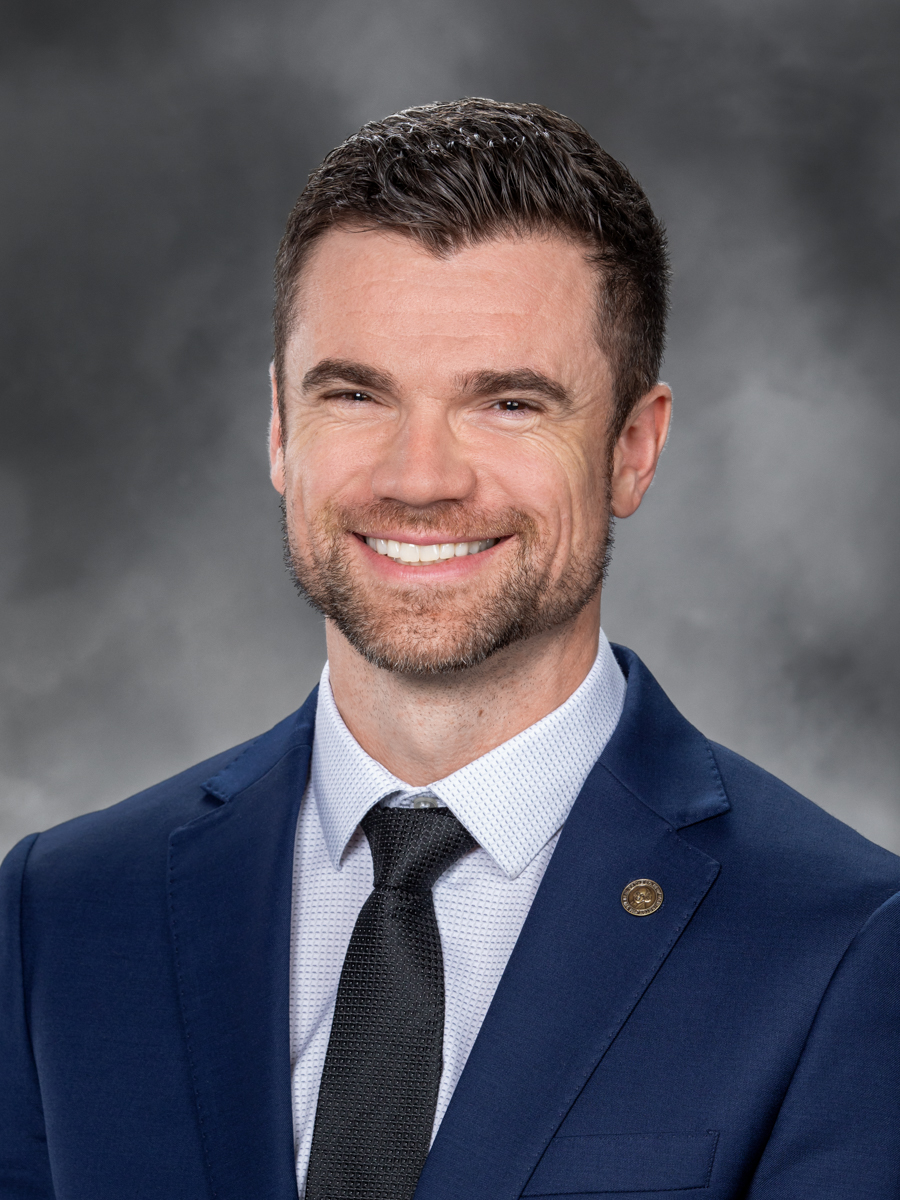
Rep. Skyler Rude
Sponsored bills
Maddy summaryHB 2694 prohibits sexually violent predators on conditional release (community-based supervision) from residing within 500 feet of, or having a sight line to, K-12 schools, child care facilities, or recreational facilities. The bill requires courts to impose specific conditions, including 500-foot distance restrictions and electronic monitoring with real-time tracking, to protect community safety during conditional release. It amends Washington’s conditional release laws (RCW 71.09.096) to mandate these location-based restrictions as part of court-ordered release conditions. The law applies directly to individuals previously committed under Washington’s sexually violent predator statute who seek placement in less restrictive community settings.
Maddy summaryHB 2460 changes how vacancies in partisan county offices (like county commissioner or council seats) are filled. If a vacancy occurs after an election but before the new term starts, the person appointed must belong to the same political party as the previous officeholder. This rule applies to county-level partisan races but not to nonpartisan offices or state-level positions. The bill takes effect January 1, 2027, only if a related constitutional amendment is approved by voters in November 2026.
Maddy summaryHB 2687 sets safety conditions for individuals conditionally released into community settings from secure facilities. It requires a 500-foot buffer from schools (K-12) and child care facilities, prohibits the person's residence from being adjacent to a home with a minor, and mandates electronic monitoring with real-time tracking and exclusion zones. These rules aim to protect community safety, particularly for children, while allowing for community-based treatment. The bill applies to individuals under court-ordered conditional release, such as those in Washington’s commitment system.
Maddy summaryHB 2349 requires Washington state agencies to provide written community notification 3 months before releasing or discharging individuals classified as sexually violent predators. It mandates that agencies share detailed records (including institutional history, mental health evaluations, and criminal history) with local law enforcement, county officials, legislators, and victims (if they request it) prior to release. The bill directly affects counties, law enforcement, and victims by requiring timely disclosure of release dates and relevant background information. Key provisions include standardized notification to sheriffs, county administrators, legislators, and law enforcement via the Washington Crime Information Center, ensuring consistent community awareness. This focuses on procedural transparency rather than altering commitment standards or penalties.
Maddy summaryHJM 4013 is a joint memorial urging Governor Ferguson to opt Washington state into a federal tax-credit scholarship program for K-12 education. It would direct approximately $732 million annually in unused federal funds to Washington students from working-class and middle-class families (household income ≤300% of area median income) through tax credits for donors. The program requires no state funding, imposes no budget obligation, and mandates scholarship organizations to spend at least 90% of funds on student expenses like tutoring and technology while meeting strict federal accountability standards. Failure to opt in would prevent Washington families from accessing these federal resources, which would instead benefit students in states that have joined the program.
Maddy summaryThis is a ceremonial House resolution (not a policy bill) introduced on January 19, 2026, by multiple Washington State Representatives. It formally recognizes Dr. Martin Luther King Jr.'s life, legacy of nonviolent activism, and contributions to civil rights, including his role in the Civil Rights Act of 1964 and Voting Rights Act of 1965. The resolution expresses the House's commitment to upholding Dr. King's ideals of equality, justice, and opportunity for all. As a symbolic gesture, it does not create new laws, allocate funds, or affect any specific individuals or groups.
Maddy summaryThis is a ceremonial House Resolution (not a bill with policy changes), adopted on January 16, 2026. It formally recognizes Washington's joint operating agencies (JOAs) for their role in developing clean energy infrastructure, including renewable sources like solar, wind, and hydroelectric power, as well as new projects like small modular reactors. The resolution highlights JOAs' contributions to reducing greenhouse gas emissions, ensuring affordable energy access, and supporting economic growth in Washington State. It does not create new laws, allocate funds, or impose requirements - its sole purpose is to acknowledge these agencies' historical and ongoing work.
Maddy summaryHB 2461 establishes a Washington state commission on boys and men to address systemic challenges they face in areas like education, health, workforce participation, and justice system involvement. The commission will collect data, analyze disparities (such as higher rates of homelessness or suicide), and develop evidence-based recommendations for policy changes. It will consist of 15 appointed members who must focus on six key areas, including mental health, fatherhood, and reducing overrepresentation in justice systems, and will submit biennial reports to the legislature. The bill directly affects boys, male youth, and men across Washington state by creating a formal mechanism to study and address their specific needs through data-driven policy analysis.
Maddy summaryHB 1311 changes the regulatory status of gray wolves in Washington from "endangered" to "sensitive" under state wildlife law. This directly affects gray wolves by prohibiting hunting and harassment while prioritizing their conservation, as the "sensitive" classification requires cooperative management and protection under existing law. The bill amends state code to implement the Department of Fish and Wildlife’s 2024 recommendation, maintaining current protections without allowing hunting. The status must be reviewed within two years, and wolves cannot revert to "endangered" unless population declines below current levels. This is a procedural change to wildlife classification, not a new hunting regulation.