

Maddy summaryHB 1584 would end automatic mail-in voting for nonabsentee voters (those not absent from their county, such as most registered voters) in Washington, requiring them to vote in person at polling places or voting centers on election day. The bill maintains limited absentee voting for voters who are absent (e.g., military personnel or overseas citizens) but removes mail-in ballots as the default option for all registered voters. It aims to address ballot security concerns and restore public trust in elections, as stated in the legislature’s findings. The bill amends multiple election laws to implement these changes, including updating voting definitions and ensuring accessibility for voters with disabilities at in-person locations.
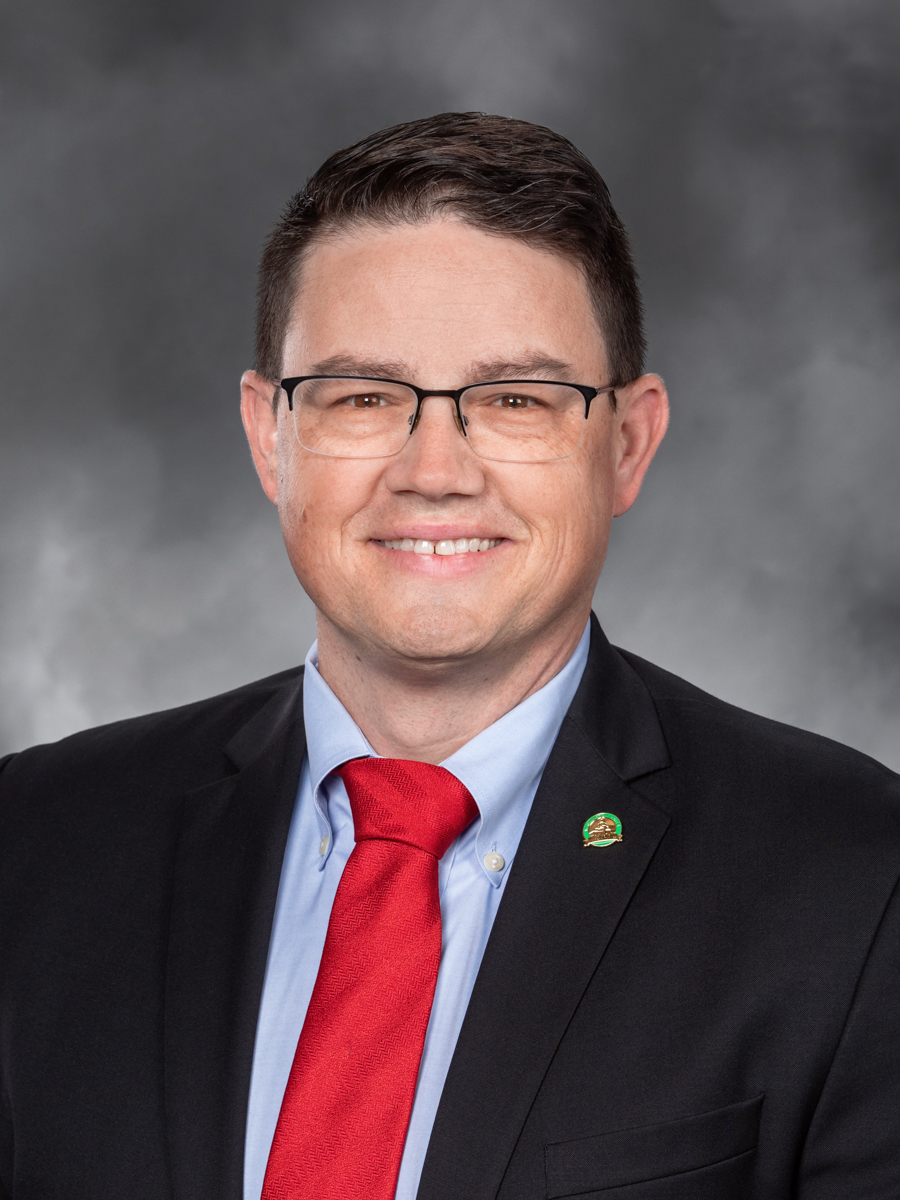
Rep. Chris Corry
Sponsored bills
Maddy summaryHB 1115 clarifies that recording surcharges paid by clients to title and escrow businesses for document recording fees are not subject to Washington's sales, use, or business and occupation taxes. The bill directly affects title companies and escrow businesses, which were previously assessed back taxes for failing to collect these taxes on surcharges. It explicitly states that such surcharges - determined by a court to be an excise tax (not a fee) - cannot be taxed under state law. The law aims to prevent future tax assessments against these small businesses, resolving uncertainty created by the Department of Revenue's enforcement actions.
Maddy summaryHB 2029 prohibits Washington state governmental entities (including courts, the legislature, and agencies) from granting or recognizing legal personhood to non-human entities. The bill specifically bans this for artificial intelligence, inanimate objects, bodies of water, land, real property, atmospheric gases, astronomical objects, weather, plants, nonhuman animals, and other non-human taxonomic groups. Legal personhood - defined as the rights and obligations of a natural person under state law - is explicitly barred from being extended to these categories. This bill directly affects how state agencies and courts may legally treat non-human entities, preventing them from being granted personhood status. The law takes effect immediately upon enactment.
Maddy summaryHB 1062 requires all health plans in Washington (including commercial plans, public employee coverage, and state Medicaid) to cover biomarker testing starting January 1, 2026. This applies to tests that measure biological markers in tissue or blood (like gene mutations) when used for diagnosis, treatment, or monitoring of a patient’s condition, provided the test is supported by FDA approvals, Medicare guidelines, clinical practice standards, or expert consensus. Plans must ensure coverage without causing unnecessary disruptions, such as requiring multiple biopsies. The bill mandates this coverage uniformly across all plan types under specific evidence-based criteria.
Maddy summaryHB 1005 requires funeral homes in Washington to hold 80% of money paid in advance for prearranged funeral services in separate, insured trust accounts, not as business funds. This protects consumers' payments if a funeral home closes or faces financial issues. Funeral homes may keep up to 20% of the prepayment for their operations but must deposit the rest into the trust within 20 days of receipt. The bill directly affects funeral homes that sell prepaid plans and the people who purchase them, ensuring their funds are safeguarded for future services.
Maddy summaryHB 1176 allows 17-year-olds in Washington to consent to specific health services without parental permission. It expands existing rights for minors aged 17 and older to seek treatment for sexually transmitted infections/HIV, mental health care, and substance use disorders without parental consent. Healthcare facilities must notify parents in most cases but may withhold notification if they believe it would harm the minor, while still checking missing persons databases. The bill directly affects 17-year-olds seeking these services and requires healthcare providers to follow new consent and notification procedures.
Maddy summaryHouse Bill 2080 aims to prevent the Washington state legislature from enacting taxes that specifically target a single individual, business, or entity. The bill prohibits the assessment of any new excise tax if it is intended to, or has the effect of, applying only to one specific individual, business, or a group of individuals affiliated with a singular business. This measure would ensure that state tax policy provides for common welfare rather than being used to target particular entities. It affects the state's ability to levy highly specific taxes and protects individual businesses from such targeted taxation.
Maddy summaryHB 2026, the "Fairness in Education Funding Act," aims to create equitable school funding by replacing local levies (which disproportionately benefit wealthier districts) with uniform state-funded allocations. The bill sets new minimum state salary levels for school staff that will apply equally to all public school districts, charter schools, and state-tribal education compact schools starting in the 2026-27 school year. Specifically, it establishes baseline salaries of $100,033 (adjusted for inflation) for certificated instructional staff, $179,857 for certificated administrative staff, and $71,082 for classified staff. Regional adjustments to these salaries will phase out after the 2025-26 school year, ensuring all districts receive identical state funding for staff compensation regardless of location or local wealth.
Maddy summaryHB 1444 requires Washington health insurers to cover rapid whole genome sequencing for infants under one year old in intensive care units who meet specific medical criteria, such as unexplained epilepsy, multiple congenital abnormalities, or suspected genetic disorders. It mandates coverage starting January 1, 2026, for cases where timely diagnosis is critical to treatment, including pre- and post-test counseling. The bill ensures separate payment for this service (not bundled into existing hospital payments) and defines "rapid" sequencing as delivering results in under 14 days. It directly affects low-income families enrolled in medical assistance programs by removing financial barriers to faster diagnosis of rare genetic conditions.
Maddy summaryHB 1058 creates tax credits for eligible railroads to fund infrastructure improvements. It directly affects small regional railroads (class II/III), public entities like ports/cities, and industrial property owners with rail spurs in Washington. The bill provides a 50% tax credit on qualified expenses for maintenance, new rail development, or modernization projects (e.g., track upgrades, bridges, safety equipment), with annual limits of $500,000 per taxpayer and a total $8 million statewide cap. Credits can be carried forward for up to five years or transferred to other eligible taxpayers.