

Maddy summaryHB 1699 (Defending equity in interscholastic sports) requires Washington public school districts to verify a student’s biological sex through a healthcare provider’s statement (based on reproductive anatomy, genetics, or testosterone levels) before allowing biologically male students to participate in female-identified sports. It permits schools to prohibit biologically male students from competing in sports with separate male/female classifications, while mandating equal resources (equipment, facilities, coaching, etc.) for all gender-segregated teams. The bill amends existing laws (RCW 28A.600.200 and 28A.640.020) to align with these provisions and requires the superintendent to develop guidelines eliminating sex discrimination in school activities. It directly affects public school students, athletic programs, and district policies governing interscholastic sports participation.
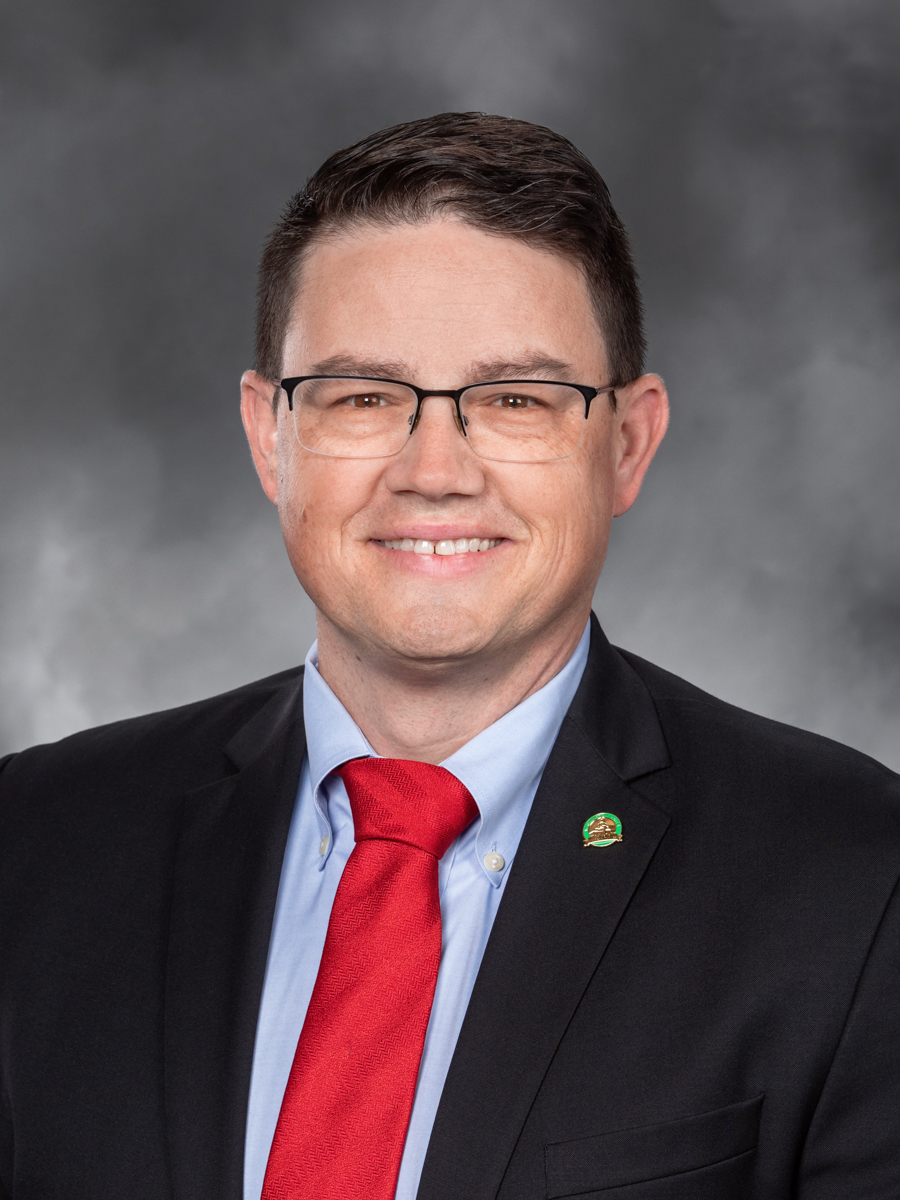
Rep. Chris Corry
Sponsored bills
Maddy summaryHB 1348 allows cannabis businesses in Washington to be fully or partially owned by employee stock ownership plans (ESOPs), enabling employees to gain ownership stakes. It directly affects cannabis businesses seeking licenses and employees participating in ESOPs by changing who must undergo licensing vetting. The key provision revises licensing rules to require only corporate officers/directors of ESOP-owned businesses to be vetted - employees, ESOP administrators, and trustees are exempt from criminal background checks, residency requirements, and other owner-level screenings. This simplifies the licensing process while maintaining oversight of business control. The bill aims to align cannabis business ownership with other industries that use ESOPs for employee engagement and wealth-building.
Maddy summaryHB 1377 declares a state of emergency for Washington State Ferries due to delays in procuring new electric ferries, creating a backup plan if spring 2025 contracts fail. It authorizes the governor to declare an emergency, allowing the department to bypass standard procurement rules to expedite buying at least two nonhybrid electric ferries for delivery within two years - using existing Olympic-class designs to avoid new engineering. The bill also directs postponing conversions of certain vessels to prioritize operational reliability and requires warranty work to be done within Washington state when possible. This directly affects Washington State Ferries' procurement process and the public relying on ferry services.
Maddy summaryHB 1599 regulates debt adjusters and debt resolution services providers in Washington State, directly affecting consumers seeking help managing unsecured debt and the businesses offering these services. The bill sets a 15% fee cap on total debt adjustment services (including fees from financial institutions), limits initial charges to $25, and prohibits fees on rent or utility payments. It clarifies distinctions between "debt adjusters" (who manage debt) and "debt resolution services providers" (who renegotiate debt terms), while defining key terms like "dedicated account" and "fair share" contributions. The law also prohibits fee retention until all creditors are notified and imposes penalties for violations.
Maddy summaryHB 1435 creates a state grant program to help local and tribal law enforcement agencies hire more officers. It provides up to 75% of entry-level salaries and benefits (capped at $125,000 per officer position) for 36 months, requiring a 25% local cash match. Grants cannot cover non-salary costs or fund officers recently hired by the same agency. The program requires agencies to apply through a formal process, report on hiring impacts, and includes a $100 million appropriation for fiscal year 2026.
Maddy summaryHB 1908 permanently maintains four state-operated residential facilities for developmentally disabled individuals - Lakeland Village (Spokane), Rainier School (Pierce), Yakima Valley School (Yakima), and Fircrest School (King) - by removing a provision that would have allowed Yakima Valley School to close under certain conditions. The bill repeals the closure trigger for Yakima Valley School and amends state law to ensure these facilities remain open to accept new residents, directly addressing a shortage of affordable care options. It specifically targets underutilized, well-regarded facilities to provide immediate relief to families with no other viable, cost-effective care alternatives. The bill does not create new facilities but expands capacity at existing, operational centers.
Maddy summaryHB 1063 creates a new licensing and regulatory framework for businesses that offer "earned wage access services" in Washington State. These services allow workers to receive advance payments of wages they’ve already earned but haven’t been paid by their employer (e.g., via apps or employer partnerships). Starting July 1, 2026, providers must obtain a license from the Department of Financial Institutions, undergo background checks for key personnel, and comply with specific fee and reporting rules. The law directly affects businesses offering these services and protects consumers by requiring transparency and oversight, while excluding traditional banks, credit unions, and payroll services. It does not apply to employers who directly pay employees early or to services that merely verify earnings without funding advances.
Maddy summaryHB 1436 allows Washington cities and counties to impose a 0.10% sales tax to fund additional commissioned law enforcement officers. Local governments must use the revenue to hire more officers if their officer-to-population ratio is below the national average, or for other criminal justice programs (like domestic violence services or homelessness initiatives) if their ratio is already above average. The state collects the tax and returns the funds directly to the local jurisdiction. This bill aims to address Washington’s low ranking in law enforcement staffing per capita and high crime rates by creating a dedicated funding mechanism for local governments.
Maddy summaryHB 1872 expands exemptions from certain firearm restrictions for specific groups in Washington State. It exempts current and retired peace officers, military personnel, veterans, shooting sports instructors, and concealed pistol license holders from background check waiting periods after they’ve already passed background checks. The bill also creates new exemptions for these groups regarding restrictions on "excess capacity magazines" and "assault weapons" under existing law. These changes directly affect the named groups by reducing regulatory barriers for firearm access and use while maintaining existing background checks. The bill does not change the definition of "assault weapon" but clarifies exemptions for authorized individuals under the new provisions.
Maddy summaryHB 1117 repeals Washington State's adoption of California's motor vehicle emissions standards, which had caused registration barriers for vehicles meeting federal standards. The bill directly affects vehicle owners who previously needed 407,541 exemptions to register their vehicles and government agencies managing registrations. Key provisions require the Department of Licensing to register previously prohibited vehicles (if they meet state requirements) and direct the Department of Ecology to repeal all rules implementing California standards. This eliminates administrative burdens on both the public and government, allowing vehicles to be registered without exemptions under federal standards. The bill takes immediate effect as an emergency measure.