

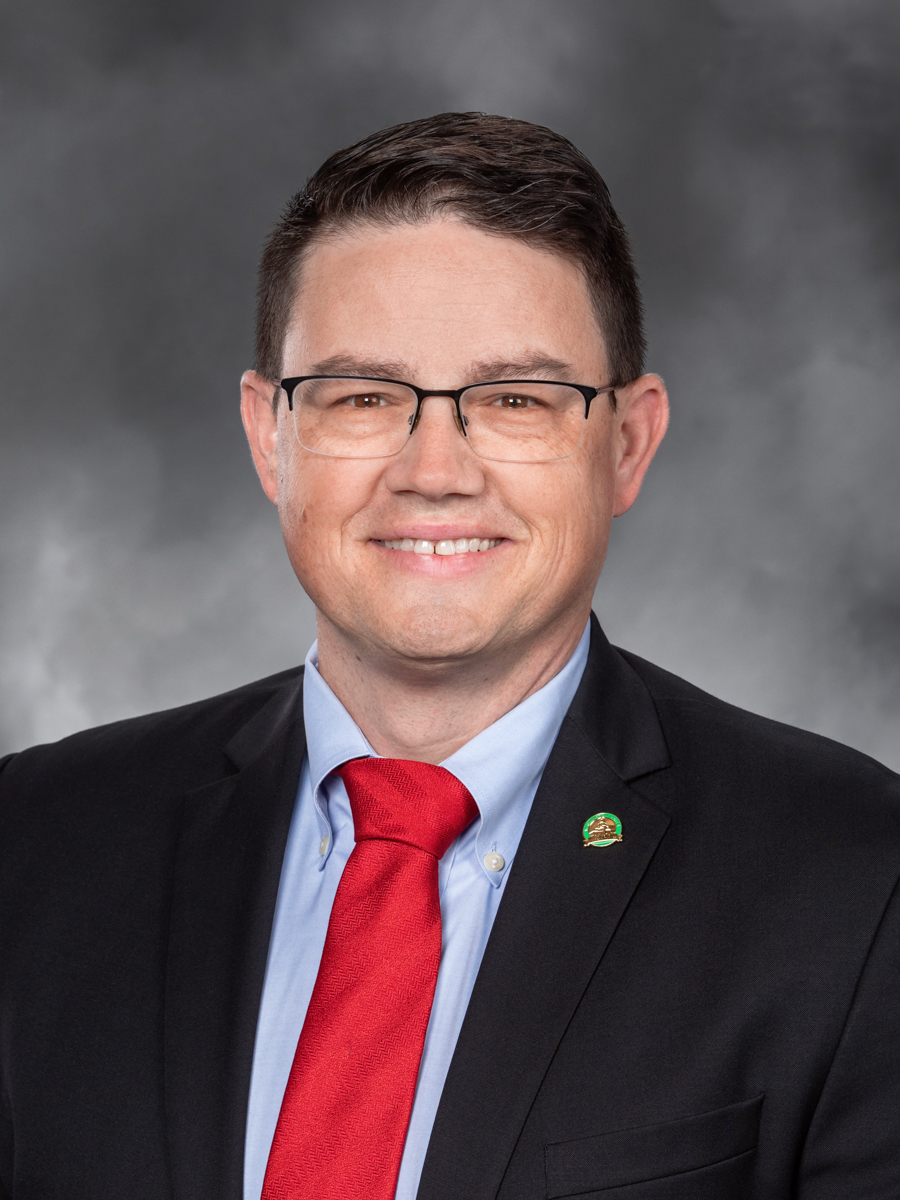
Photo of Chris Corry
R Washington House · District 15 On the 2026 ballot

Rep. Chris Corry

Compare
Total votes
4,956
all sessions
Attendance
96%
209 missed
Lower than 89% of chamber peers
With party
94%
of cast votes
Lower than 83% of chamber peers
Bipartisan score
3%
crosses aisle rarely
Higher than 80% of chamber peers
Sponsored
450
bills & resolutions
Near the chamber average
Committees
5
assignments
450 bills and resolutions

Sponsored bills

Total
450
Primary
43
Co-sponsor
407
This page
450
matching current filters
Co-sponsor HB 2010
In committee · Washington House · Co-sponsor
Creating a safe drinking water grant program for economically distressed communities.

Maddy summaryHB 2010 creates a state grant program to help public water systems in economically distressed communities fix unsafe drinking water infrastructure. Eligible systems must be located in distressed areas and fail to meet current state drinking water standards. The program provides grants covering capital costs for building, repairing, or redesigning water systems, requiring applicants to first secure a planning grant or submit construction documents. Projects will be prioritized based on water quality issues and financial need, with applications due by 2026 and funding requests starting in 2027.

In committee Jan 12, 2026 1 co-sponsor
Co-sponsor HB 1363
In committee · Washington House · Co-sponsor
Modifying licensing requirements for child care and early learning providers.

Maddy summaryHB 1363 modifies Washington state licensing requirements for child care and early learning providers. It establishes specific staff-to-child ratios (21 children to 1 staff member for preschoolers, 31 to 1 for school-age children) and sets a minimum 34 square feet of indoor space per child. The bill also clarifies that private schools operating early learning programs without state subsidies are exempt from certain state-mandated educational requirements, though they must still meet basic health and safety standards. Additionally, it creates professional development support for providers to meet new training standards, including scholarships and specialized trainings on topics like inclusion and infant care. These changes directly affect licensed child care centers, family providers, and early learning programs operating under state licensing.

In committee Jan 12, 2026 1 co-sponsor
Co-sponsor HB 1933
In committee · Washington House · Co-sponsor
Providing universal access to overdose information to law enforcement and emergency services providers.

Maddy summaryHB 1933 requires the Washington Department of Health to create an interface connecting the state's emergency medical services system with an overdose detection mapping tool. This would provide law enforcement and emergency services agencies with universal access to aggregated overdose data (both fatal and nonfatal), organized by zip code to comply with privacy laws. The bill does not share individual patient information but enables agencies to view broader geographic trends in overdose incidents. It directly affects emergency response coordination by giving agencies data to inform resource allocation and community safety planning.

In committee Jan 12, 2026 1 co-sponsor
Co-sponsor HB 2067
In committee · Washington House · Co-sponsor
Concerning the document recording fee.

Maddy summaryHB 2067 changes Washington state's document recording fee from a tax to a true cost-recovery charge. It requires county auditors to charge no more than $30 per document or their actual $21 cost per document, whichever is lower, instead of higher fees that previously funded unrelated programs. The bill repeals six existing surcharges (like those for historical preservation, mortgage fraud prosecution, and library accounts) that had transformed the fee into a tax. This change takes effect June 30, 2026, directly affecting people recording deeds, mortgages, and other legal documents in Washington counties.

In committee Jan 12, 2026 1 co-sponsor
Co-sponsor HB 1221
In committee · Washington House · Co-sponsor
Increasing legislative involvement in gubernatorial proclamations relating to a state of emergency.

Maddy summaryHB 1221 changes how Washington's state of emergency declarations end. It requires that any emergency proclamation automatically terminate 60 days after the governor signs it unless the legislature passes a concurrent resolution extending it. If the legislature isn't in session, only the top four legislative leaders (senate majority/minority leaders and house speaker/minority leader) can temporarily extend the emergency for up to 60 days until the legislature acts. The bill also prevents the governor from redeclaring the same emergency after it's terminated without legislative approval. This directly affects governors' emergency powers and requires legislative action to maintain long-term emergency declarations.

In committee Jan 12, 2026 1 co-sponsor
Co-sponsor HB 1877
In committee · Washington House · Co-sponsor
Eliminating the offices, agencies, programs, and services of the public education system that do not have direct daily interaction with students.

Maddy summaryHB 1877 would eliminate most non-teaching administrative offices in Washington state's public education system that do not involve daily student interaction, such as educational service districts and certain programs. By December 31, 2025, the state auditor must identify these offices and dissolve them, with the exception of the constitutionally required superintendent position. The bill states this change aims to reduce costs and administrative burdens, directing any education-related functions to be relocated into student-facing roles. This proposal is currently in committee review after its first reading on February 7, 2025.

In committee Jan 12, 2026 1 co-sponsor
Co-sponsor HB 2076
In committee · Washington House · Co-sponsor
Creating the Washington department of government efficiency.

Maddy summaryHB 2076 creates the Washington Department of Government Efficiency (WADOGE) to review state agency operations and identify inefficient or unnecessary policies, rules, and expenditures. Each state agency must form a team by March 2026 to assess its rules and statutes, reporting obsolete or unnecessary items to WADOGE for analysis. WADOGE will then compile recommendations and submit a final report to the legislature by January 2028, aiming to improve government efficiency and ensure agencies operate within their statutory authority. This bill directly affects all state agencies through mandatory reviews and reporting requirements.

In committee Jan 12, 2026 1 co-sponsor
Co-sponsor HB 1586
In committee · Washington House · Co-sponsor
Modifying joint administrative rules review committee provisions.

Maddy summaryHB 1586 modifies Washington's joint administrative rules review committee structure and expands how agency rules can be reviewed. It requires the committee to hold quarterly meetings and specifies its composition (four senators, four representatives, max two per party). The bill creates two new review pathways: (1) allowing petitions for review of emergency rules or rules lacking adequate public input (e.g., insufficient testimony time or short hearing notice), and (2) enabling legislators to request review of any rule filed under state rulemaking rules or emergency rules adopted in the past five years. These changes directly affect state agencies creating rules and the legislative committee responsible for oversight.

In committee Jan 12, 2026 1 co-sponsor
Co-sponsor HB 1783
In committee · Washington House · Co-sponsor
Concerning law enforcement officers participating in college and technical school programs.

Maddy summaryHB 1783 allows Washington law enforcement officers to receive small gifts of appreciation (up to $25 in value) for speaking in specific college and technical school courses outside their official duties. The bill directly affects certified law enforcement officers and institutions offering criminal justice, police science, or forensic-related programs, aiming to strengthen community relationships and inspire future recruits. Key provisions permit officers to share real-world expertise in courses like police science or forensic technology, with gifts only allowed when presentations occur outside work hours and comply with state ethics rules. The bill responds to a 2024 workforce assessment highlighting challenges in connecting law enforcement with educational programs. It creates a limited exception to general rules prohibiting state employees from accepting gifts, focusing on educational engagement rather than compensation.

In committee Jan 12, 2026 1 co-sponsor
Co-sponsor HB 1880
In committee · Washington House · Co-sponsor
Protecting the sole authority of the legislature to determine and make appropriations.

Maddy summaryHB 1880 prevents courts from ordering the legislature to appropriate additional state funds or redirect existing funds. It directly affects any entity or individual suing the state over funding disputes, such as local governments or service providers. The bill establishes that the legislature alone holds authority over all budget decisions and blocks legal claims seeking court mandates for increased funding or reallocation of state money. This policy change removes judicial remedies for challenges to budget allocations, ensuring legislative control over appropriations.

In committee Jan 12, 2026 1 co-sponsor
Showing 41 to 50 of 450 bills
Previous 1 4 5 6 45 Next