

Maddy summaryThis bill amends the Victims of Crime Act to expand compensation for "angel families" - immediate family members of homicide victims caused by undocumented immigrants (under INA 212(a)(6)(A)(i)) or international drug cartel members (under Controlled Substances Act). It adds coverage for emotional distress-related wage loss and medical expenses, alongside existing medical, funeral, and physical injury costs. The bill also creates a new Victims of Immigration Crime Engagement Office within Homeland Security to provide victims and families with support services, referrals, and criminal history information, while requiring annual reports tracking crime demographics, locations, and perpetrator patterns. These changes directly affect families of homicide victims where the perpetrator fits the specified categories of immigration or drug trafficking violations.
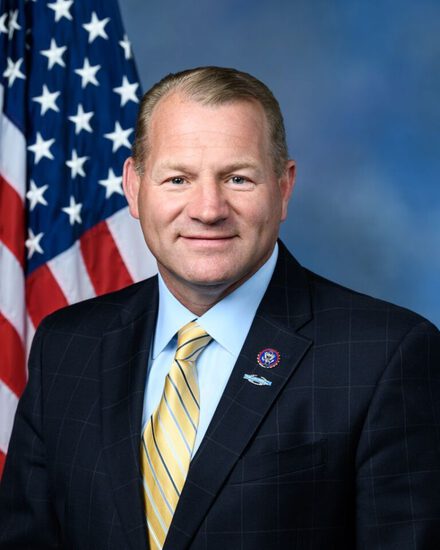
Rep. Troy E. Nehls
Sponsored bills
Maddy summaryHR 276, the Gulf of America Act, would rename the Gulf of Mexico to the Gulf of America in all U.S. federal documents and maps. It requires all federal agencies to update their records, maps, and publications within 180 days of enactment to reflect this new name. The bill directly affects federal agencies responsible for geographic naming and documentation, such as the Department of the Interior and the Board on Geographic Names. This is a procedural change with no impact on policy, environmental regulations, or affected communities.
Maddy summaryHRES 402 is a symbolic House resolution honoring mothers and recognizing the significance of motherhood on Mother's Day. It affirms that mothers are women who raise children, supports policies recognizing mothers as mothers, and encourages the public to celebrate mothers' contributions to families and society. The resolution does not create new laws, allocate funds, or affect specific policies - it is a ceremonial gesture expressing support for traditional definitions of motherhood. It directly addresses the public and the House's recognition of mothers, with no concrete policy changes or impacts on individuals or programs.
Maddy summaryHR 3277, the Ensuring Lasting Smiles Act, requires group health plans and health insurance issuers to cover medically necessary outpatient and inpatient treatments for congenital anomalies or birth defects primarily affecting the eyes, ears, teeth, mouth, or jaw. This includes reconstructive procedures, dental/orthodontic support during treatment, and follow-up care, but excludes purely cosmetic surgery not tied to a medical diagnosis. Cost-sharing (like copays) for these services must not be stricter than for other medical benefits. The law takes effect for plan years beginning January 1, 2026, and mandates insurers to provide notice about this coverage to beneficiaries.
Maddy summaryHR 3294, the "Justice for Victims of Illegal Alien Murders Act," amends federal murder sentencing to mandate the death penalty or life imprisonment for first-degree murder, and life or long-term imprisonment for second-degree murder, committed by non-citizens classified as inadmissible (e.g., due to prior criminal convictions) or deportable under specific immigration laws. The bill directly affects non-citizens who fall under these immigration categories and are convicted of murder in the U.S. It changes sentencing provisions under Title 18, U.S. Code, by adding these mandatory penalties for such offenses. The law focuses solely on modifying criminal penalties for specific convicted non-citizens, not on immigration enforcement or new legal standards. It does not alter immigration status requirements or create new procedures.
Maddy summaryHR 3231, the American Energy Act, streamlines oil and gas drilling permit processing by requiring the government to approve applications even during pending lawsuits (unless a court has already canceled the lease), and limits court challenges to lease sales. It sets a four-year expiration for drilling permits and bars courts from halting development or lease awards based on environmental lawsuits (like those under NEPA) after bids are opened, unless imminent environmental harm is proven with no other remedy. This directly affects oil and gas companies seeking permits, federal agencies managing leases, and courts handling related litigation. The bill changes procedural rules for permits and lease sales without altering environmental standards.
Maddy summaryHR 3237, the "No Student Visas for Sanctuary Cities Act of 2025," blocks F-1 student visas (for academic studies) and M-1 visas (for vocational training) for international students seeking to attend schools in jurisdictions designated as "sanctuary jurisdictions." The bill defines a sanctuary jurisdiction as any state or local government with laws obstructing immigration enforcement, such as refusing to comply with ICE detainers or denying access to incarcerated immigrants. The Department of Homeland Security would identify these jurisdictions annually, and institutions located in them would be barred from receiving new student visas under the F or M categories. This policy directly affects international students and educational institutions in designated areas, with no visa issuance permitted for those locations during the fiscal year unless the jurisdiction is reclassified.
Maddy summaryThis bill increases mandatory prison sentences for non-citizens convicted of certain crimes after entering the U.S. without authorization or being deported. It raises the minimum sentence from 2 to 5 years for those who improperly enter the U.S. and later commit a crime punishable by over one year in prison. For non-citizens previously deported who commit crimes, it increases the minimum sentence from 2 to 10 years and mandates at least 10 years for offenses including aggravated felonies, state/federal felonies, or crimes punishable by over one year. These changes apply to all non-citizens convicted under these circumstances, regardless of jurisdiction.
Maddy summaryHR 3246, "Violet’s Law," amends the Animal Welfare Act to require federal research facilities to create plans for placing eligible animals (dogs, cats, nonhuman primates, guinea pigs, hamsters, or rabbits) no longer needed for research. It directs federal departments and agencies operating such facilities to develop standards within one year of enactment to facilitate adoption or placement with qualified organizations like animal rescue groups, sanctuaries, or shelters. Animals must be certified by a licensed veterinarian as free of infectious disease or physical issues endangering health before release. This applies directly to all U.S. federal agencies conducting animal research, mandating concrete steps to transition animals out of research settings into permanent care.
Maddy summaryHRES 337 is a symbolic House resolution honoring linemen for their critical role in maintaining power infrastructure and responding to emergencies. It recognizes them as first responders who work in dangerous conditions 24/7 to keep electricity flowing, supporting schools and businesses during storms. The resolution formally supports designating April 18, 2025, as "National Lineman Appreciation Day" to publicly acknowledge their contributions. As a non-binding resolution, it has no direct policy impact or effect on affected individuals.