

Maddy summaryHR 2841, the "Putting Trust in Transparency Act," requires nonprofits receiving any federal funding to publicly disclose unredacted donor information (including name, zip code, and contribution amount) within 60 days of filing their annual IRS Form 990. This applies specifically to tax-exempt organizations that receive federal funds, making their major donors' details accessible to the public. Nonprofits failing to file the required Schedule B of Form 990 face automatic revocation of their tax-exempt status after a 60-day grace period. The bill aims to increase transparency around how federal funds are leveraged by nonprofits, requiring disclosure that was previously restricted under IRS rules. It amends tax code provisions to enforce this disclosure and maintain public access to donor information.
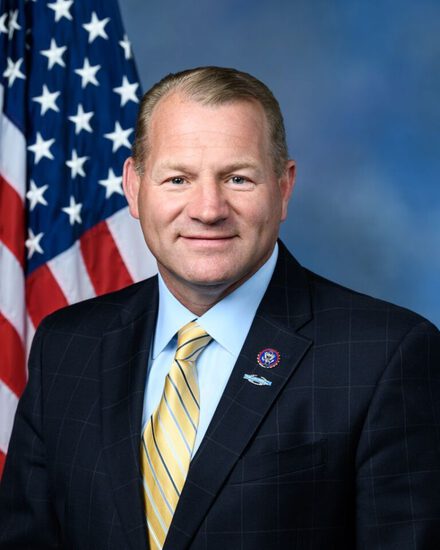
Rep. Troy E. Nehls
Sponsored bills
Maddy summaryThe Safeguarding Charity Act clarifies that tax exemptions for charitable organizations under the Internal Revenue Code (such as 501(c) status) do not count as "federal financial assistance" for regulatory purposes. This means tax-exempt charities and nonprofits will no longer be subject to federal rules or requirements typically applied to organizations receiving direct federal funding. The bill amends U.S. Code to explicitly exclude tax benefits from the definition of "federal financial assistance" unless a law specifically states otherwise. It does not change tax status or funding for these organizations but prevents misclassification under existing regulations. The law applies to all organizations with tax-exempt status under sections 501(c) or 401(a) of the Internal Revenue Code.
Safeguard American Voter Eligibility Act or the SAVE Act This bill requires individuals to provide documentary proof of U.S. citizenship when registering to vote in federal elections. Specifically, the bill prohibits states from accepting and processing an application to register to vote in a federal election unless the applicant presents documentary proof of U.S. citizenship. The bill specifies what documents are considered acceptable proof of U.S. citizenship, such as identification that complies with the REAL ID Act of 2005 that indicates U.S. citizenship. Further, the bill (1) prohibits states from registering an individual to vote in a federal election unless, at the time the individual applies to register to vote, the individual provides documentary proof of U.S. citizenship; and (2) requires states to establish an alternative process under which an applicant may submit other evidence to demonstrate U.S. citizenship. Each state must take affirmative steps on an ongoing basis to ensure that only U.S. citizens are registered to vote, which shall include establishing a program to identify individuals who are not U.S. citizens using information supplied by certain sources. Additionally, states must remove noncitizens from their official lists of eligible voters. The bill allows for a private right of action against an election official who registers an applicant to vote in a federal election who fails to present documentary proof of U.S. citizenship. The bill establishes criminal penalties for certain offenses, including registering an applicant to vote in a federal election who fails to present documentary proof of U.S. citizenship.
Maddy summaryThis bill amends federal law (18 U.S.C. § 1362) to explicitly include broadband internet access service infrastructure under protections against destruction. It directly affects entities that operate or damage broadband facilities, such as internet service providers, infrastructure owners, and individuals who might intentionally destroy such infrastructure. Key changes expand the definition of protected "means of communication" to specifically cover broadband facilities and broaden liability to include "any other person or entity" beyond government-controlled systems. The amendment removes the prior exemption for infrastructure used in "military or civil defense functions," ensuring all broadband infrastructure receives equal legal protection. This strengthens existing penalties for damaging broadband networks but does not create new regulatory requirements for service providers.
Maddy summaryHR 2735, the Strengthening Child Exploitation Enforcement Act, updates federal laws to better protect children from exploitation. It amends kidnapping statutes to include deception in abduction definitions and explicitly states that consent is not a defense for offenses involving victims under 16. The bill adds a new provision (2243(f)) making it illegal to intentionally touch a minor under 16 without clothing for sexual purposes in specific settings like prisons or federal facilities. These changes apply retroactively to conduct occurring before, on, or after the law’s enactment.
Maddy summaryHR 2666, the CBO Scoring Accountability Act, requires the Congressional Budget Office (CBO) to annually analyze and publicly report on the actual costs and revenue impacts of major federal legislation for the first 10 years after it becomes law. It mandates that the CBO compare actual spending/revenue results against prior estimates, and if discrepancies exceed 10% for costs or revenue, the CBO must explain the causes in a report to Congress. This applies to bills projected to affect at least 0.25% of U.S. GDP in spending or revenue (defined as "major legislation"), and federal agencies must provide data to support these analyses. The bill aims to improve transparency around budget estimates without altering legislative processes.
Maddy summaryThis bill codifies Executive Order 14249 (signed March 25, 2025) into law, making its provisions about preventing fraud, waste, and abuse in federal spending legally binding. It directly affects all federal agencies managing taxpayer funds by requiring them to implement the order's specific measures. The key mechanism is converting the executive order into permanent statutory law, ensuring its requirements have enforceable legal effect rather than relying on executive authority alone. This does not create new spending rules but formalizes existing directives for oversight of government financial operations.
Maddy summaryThis bill designates certain South African residents as Priority 2 refugees, specifically targeting Caucasian minorities who have faced persecution or fear persecution due to race, ethnicity, or ancestry, along with their eligible immediate family members (spouses, children, and South African citizen parents). It establishes key mechanisms including processing applications in South Africa or third countries, exempting these refugees from U.S. immigration numerical caps, and preventing denial of refugee status based on other visa eligibility. The bill also requires the State and Homeland Security Departments to submit regular public reports detailing pending applications, processing wait times, and denial reasons. This policy directly affects eligible South African nationals seeking U.S. refugee status under this specific humanitarian category.
Maddy summaryThis bill creates a $500 non-refundable tax credit for homeowners who purchase emergency generators for their primary residence. It applies only to individuals whose homes were in areas affected by two or more federally declared major disasters (excluding public health emergencies) within the past five years, and who previously received individual disaster assistance. The credit phases out for higher-income households ($300,000 joint filer limit, $150,000 for others) and expires two years after the bill becomes law. The credit covers generator costs up to $500 per household, aiming to help disaster-prone communities prepare for power outages.
Maddy summaryHRES 285 is a symbolic House resolution condemning multiple recent attacks on Tesla vehicles and facilities across the U.S. It specifically references at least 80 incidents of vandalism or arson involving Tesla cars and 10+ attacks on dealerships or charging stations in 9 states between February and March 2025, including Molotov cocktails, gunfire, and hate speech. The resolution does not create new laws or policies but formally expresses the House’s condemnation of these acts as domestic terrorism. It directly addresses the targeted destruction of Tesla property but has no legal effect on preventing future incidents or altering Tesla’s operations.