

Maddy summaryHR 3600, the LOOTER Act of 2025, adds federal penalties for theft committed during declared natural disaster emergencies. It makes it a federal offense to commit petty larceny (small theft) or grand larceny (large theft) in any county where a disaster emergency has been declared under the Stafford Act. Offenders face up to 1 year in prison for petty larceny or up to 5 years for grand larceny, using state definitions of these crimes. The law directly affects individuals who steal from vulnerable communities during active disaster response efforts. It applies only during federally declared emergencies, not regular circumstances.
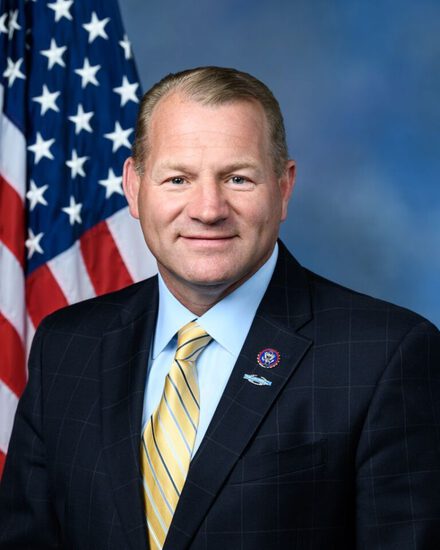
Rep. Troy E. Nehls
Sponsored bills
Maddy summaryThe TEENS Act amends child labor rules to allow teenagers working during school sessions to work up to 24 hours per week, with specific time restrictions. It directly affects teen workers in part-time jobs, setting a maximum weekly hour limit and requiring work to start no earlier than 7:00 a.m. and end no later than 9:00 p.m. in their local time zone. These provisions prevent employers from being deemed in violation of "oppressive child labor" rules under the Fair Labor Standards Act when following these limits. The bill creates a clear, time-bound framework for teen work hours during school terms.
Maddy summaryHCONRES 30 is a symbolic resolution expressing congressional support for local law enforcement officers. It does not create new laws or policies but formally recognizes their work through four non-binding actions: thanking officers and families for service, honoring those who died in the line of duty, and encouraging community-law enforcement collaboration. The resolution directly addresses Congress's acknowledgment of law enforcement efforts, not any specific group affected by a policy change. It has no legal effect or funding implications, serving solely as a statement of appreciation. This is a procedural resolution, not a legislative bill with concrete policy changes.
Maddy summaryThis resolution (HRES 433) is a symbolic congressional statement condemning former FBI Director James Comey for a social media post described in the bill as inciting violence against President Trump. It claims Comey's post - featuring the phrase "86-47" with "cool shell formation" - seemed to call for eliminating the president, jeopardizing his security during a foreign trip. The resolution formally condemns this as "indefensible," urges barring Comey from future federal employment, and requests a DOJ investigation into his post. As a non-binding resolution, it does not change laws but reflects the sponsors' position on the matter. The bill focuses on the stated claims within its text, not on verified facts about the post or Comey's intent.
Maddy summaryHR 3518 would deny federal funding to graduate medical schools that require certain diversity, equity, and inclusion (DEI) policies. Specifically, schools must certify they do not compel students or staff to affirm specific beliefs about race, gender, or systemic racism; require "diversity statements" for admission or employment; establish DEI offices; or discriminate based on race in programs. This affects graduate medical schools at institutions of higher education seeking federal financial aid, including student loan programs. The bill permits schools to teach about medical conditions related to race or collect demographic data, but prohibits policies mandating DEI-related pledges or offices.
Maddy summaryHR 3437, the Insurance Data Protection Act, prevents duplicate data collection from insurance companies by requiring federal financial regulators to coordinate with state insurance regulators before gathering data already available through other channels. It reinforces confidentiality by ensuring that sharing nonpublic data with federal regulators does not waive privacy protections under federal or state law, and maintains existing confidentiality agreements. The bill also establishes that data shared with regulators can only be provided to state regulators through new agreements that comply with privacy laws. This directly affects insurance companies (as "covered entities"), federal financial regulators, and state insurance regulators. The key change is creating a formal process to avoid redundant data requests while strengthening data privacy for the insurance industry.
Maddy summaryHR 3392, the STOP Screwworms Act, requires the U.S. Department of Agriculture to build modular facilities for rearing sterile New World screwworm flies within 180 days of enactment. These facilities will disperse sterile flies into at-risk agricultural areas - identified based on migratory patterns and suitability for dispersal - to prevent infestations that threaten livestock. The bill authorizes $300 million in funding for construction, operation, and annual reporting to Congress on threat assessments and effectiveness. It directly affects livestock producers and agricultural regions vulnerable to screwworm fly migration, using sterile insect technique as a preventive measure.
Maddy summaryHCONRES 31 is a symbolic resolution expressing congressional support for U.S. law enforcement officers. It acknowledges the risks they face - including over 79,000 assaults on officers in 2023 and a 54% higher suicide rate among officers - while highlighting their service and sacrifices. The resolution calls for honoring fallen officers and advocates for increased safety measures, training, equipment, and mental health resources, though it does not create new laws or allocate funding. It directly affects law enforcement professionals by affirming their value and safety needs, but remains a non-binding expression of support.
Maddy summaryHRES 364 is a non-binding resolution urging local communities to support nonprofits that provide resources to Gold Shield Families. These families include relatives of fallen first responders - such as police officers, firefighters, EMTs, and emergency dispatchers - who died while serving in the line of duty. The resolution does not create new laws but encourages community engagement with existing support organizations. It aims to assist these families during their time of hardship and grief by promoting the use of available resources.
Maddy summaryHR 3353, the Lieutenant Osvaldo Albarati Stopping Prison Contraband Act, increases penalties for providing prohibited items like phones to prisoners in federal custody, imposing up to two years in prison for violations involving such items. The bill requires the Bureau of Prisons to review and update its policies within one year of enactment to better address contraband possession by inmates, aiming to improve safety for both incarcerated individuals and staff. It specifically amends federal law to clarify penalties for trafficking prohibited objects, including phones, under Section 1791 of Title 18. The legislation directly affects federal prison operations, inmates, and staff by targeting contraband trafficking and mandating policy reforms.