

Maddy summaryHR 2633 requires the U.S. President to conduct a review of U.S.-South Africa relations within 120 days of enactment. The bill mandates a presidential certification within 30 days confirming whether South Africa's actions undermine U.S. interests, along with a comprehensive report on bilateral relations. It also requires a separate report identifying South African officials who may face sanctions under the Global Magnitsky Act for corruption or human rights abuses. The bill does not change current policy but triggers a formal review process based on findings about South Africa's diplomatic ties with Hamas, Russia, and China. This is a procedural measure focused on assessing and potentially adjusting U.S. engagement with South Africa.
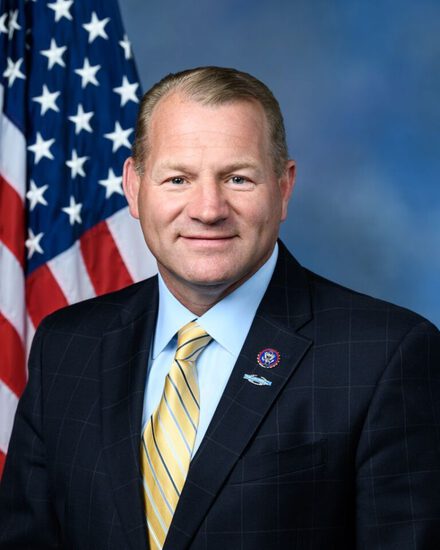
Rep. Troy E. Nehls
Sponsored bills
Maddy summaryHRES 588 is a non-binding House resolution condemning the slogan "Globalize the Intifada" as a call to violence against Israeli and Jewish people worldwide. It urges U.S. national, state, and local leaders to publicly denounce the slogan, which the resolution characterizes as undermining safety and security. The resolution cites historical context of violence during past intifadas and recent antisemitic incidents to support its position. As a symbolic measure, it has no legal effect but aims to encourage leaders to reject the slogan.
Maddy summaryHR 1919, the "Anti-CBDC Surveillance State Act," prohibits the Federal Reserve from developing, testing, or issuing any central bank digital currency (CBDC) or similar digital assets. It specifically bans the Fed from offering direct financial products to individuals, maintaining individual accounts, or issuing CBDCs directly or indirectly through intermediaries like banks. The bill also blocks the Fed from using any digital asset for monetary policy and clarifies that physical currency's privacy protections remain intact. This policy directly affects the Federal Reserve System's ability to create or manage digital monetary tools.
Maddy summaryHR 4468, the Federal Interviews Reform Act, requires U.S. Department of Justice (DOJ) officers to electronically record all interviews with people suspected of federal crimes during investigations - whether the person is in custody or not, and even if they're abroad. This applies to interviews related to federal offenses or joint investigations with state/local agencies, but excludes communications with confidential informants. Unrecorded statements cannot be used as evidence in federal court, and recordings must be kept for 10 years (or indefinitely if related to a capital case). The law aims to increase transparency in federal law enforcement interviews without requiring consent from the person being interviewed.
Maddy summaryThis resolution (HRES 583) condemns the July 7, 2025, attack on a U.S. Border Patrol facility in McAllen, Texas, where Ryan Louis Mosqueda injured agents and police. It expresses support for the affected personnel, wishes them a full recovery, and reaffirms the House’s backing of Border Patrol officers in their border security mission. The resolution directly addresses the McAllen community and Border Patrol staff impacted by the violence, serving as a symbolic statement of solidarity without creating new laws or policies.
Maddy summaryHR 4363, the Defend Girls Athletics Act, requires public K-12 schools and colleges to certify annually that they comply with Executive Order 14201, which mandates keeping men out of women's sports. Schools must submit written compliance certifications by August 15 each year (for K-12) or July 1 (for colleges), with states reporting non-compliant agencies to the federal government. Schools or colleges failing to certify or violating the rule risk losing federal education funding, including returning unobligated funds and becoming ineligible for future federal support. The bill directly affects all public schools and colleges receiving federal education funds by tying their eligibility to adherence to this sports participation requirement.
Maddy summaryHR 3179 proposes renaming the Anahuac National Wildlife Refuge in Texas to the "Jocelyn Nungaray National Wildlife Refuge." The bill directly affects the refuge's official name and all federal references to it, including documents and maps. It cites findings about 12-year-old Jocelyn Nungaray's murder in Houston and states the renaming honors her, given her love of animals and local connection. The key mechanism is a straightforward name change for all federal records, with no new policies or funding impacts.
Maddy summaryThis bill adds a new penalty for using fire or incendiary devices during certain federal crimes. Specifically, it mandates an extra minimum of one year in prison for anyone who knowingly uses fire or such devices while committing federal offenses involving property damage, obstruction of government operations, or public endangerment - including burning the U.S. flag as part of that crime. The law explicitly excludes First Amendment-protected expressive conduct (like peaceful flag desecration not tied to criminal acts) from this penalty. It applies only to individuals already charged with federal crimes where fire use escalates the offense.
Maddy summaryHR 875 amends immigration law to make non-citizens with DUI convictions inadmissible (preventing entry) and deportable (requiring removal after entry). It applies to any conviction for driving while intoxicated or impaired under state, tribal, or local law, regardless of whether the offense is classified as a misdemeanor or felony. The bill directly affects non-citizens convicted of driving under the influence of alcohol or drugs, including impairment from other substances. This policy change expands immigration consequences for DUI offenses beyond current standards.
Maddy summaryHR 4201, the TPS Reform Act of 2025, changes how Temporary Protected Status (TPS) is granted to immigrants from foreign countries facing crises. It requires Congress, not the executive branch, to pass a specific law designating a country for TPS, based on strict criteria like ongoing armed conflict, major natural disasters, or extraordinary conditions preventing safe return. The law sets clear time limits: initial designations last up to 18 months, with extensions capped at 12 months, and mandates Congress to find that crisis conditions continue for any extension. This directly affects immigrants from designated countries who would otherwise be allowed to live and work temporarily in the U.S. due to unsafe conditions in their home countries. The bill also shifts administration from the Attorney General to the Secretary of Homeland Security.